
Artwork from Amplifer by Tataya Fazlalizadeh
By Erin O.
This week I spent time thinking about where whiteness shows up in our everyday lives. I’m not talking the major stuff like in the White House, although it is currently a gruesome shade of white. White supremacy doesn’t always come with a sign saying “Make America Great Again,” a KKK hood, or a Confederate flag. I spent the week thinking about the everyday stuff where whiteness is ingrained in our lives and we forget how it shows up. Here is a list of ten ways whiteness shows up every day we may not realize. This list isn’t designed to make you feel bad or to feel racist, it is simply to point out how we operate and live in a system designed by white people and has legacies of whiteness built into it.
- English is the dominant language. Language controls and defines a lot about how we understand the world. Framing thoughts through a European created language favor whiteness.
- Washington State’s name and other places that use non-Native American/ Indigenous place names. Native Americans and Indigenous people were here first and had names for places. Thanks to white supremacy these original place names have been eliminated and renamed for white people or white cultural norms.
- European and white American Centered Curriculum. Whose history gets taught and read? Hearing “I was never taught about the Japanese internment,” “I didn’t learn about Native American history except through cowboy and Indian text,” or “yeah the teacher had all the children line up by skin color to teach about slavery” these things happen because of white supremacy showing up in education.
- School names. Along with curriculum how many of the schools across the US are named after white people? I’m a proud alum of Lincoln Elementary, a white president who ended slavery, but still a white man. In Seattle eight of the eighteen high schools, 40%, are named after white presidents. Only one is named after a person of color, Chief Sealth. The rest are named after places or other words not associated with people. Hmmm…
- Money – whose faces are on our money – white people. All the bills in my wallet feature white men, hmmm. Who is paid the most, white men. Gender and race pay gaps exist and are due to systemic racism.
- Where do you get your news? I get mine through a lot of mainstream media which is a very white-dominated field. I appreciate many of the news outlets working to understand and report more about race, it helps but it is still a white controlled media news stream. Working to diversify where you get your news helps. I make a point of reading the South Seattle Emerald because they do a great job of highlighting local stories, many of which are by people of color. Do some research to find your local equivalent, and then make a generous donation to them to keep them going.
- A friend shared in the Washington State Senate there are two women of color Sens. Rebecca Saldaña and Manka Dhingra. Two out of 49, yes there are more pocs in the Senate, but two women of color out of 49, means there are a lot of white people making policy on our behalf.
- Pick up a few statistical documents and I’ll bet within a few reports people of color data is either missing (e.g. not reporting on Native Americans/Indigenous, missing Asians or Pacific Islanders, etc.), grouped in ways not authentic to our communities and perspectives (i.e. grouping Asians with whites), or we’re benchmarking and aiming for parity with white people. As a colleague said: “I don’t want to benchmark off white women, I want us to aim for the best outcomes globally,” which may mean people of color can achieve more and give us all something better to aim for.
- Leadership So White. Mellody Hobson said this in her Color Brave TED Talk: “[I]magine if I walked you into a room and it was of a major corporation, like ExxonMobil, and every single person around the boardroom were black, you would think that were weird. But if I walked you into a Fortune 500 company, and everyone around the table is a white male, when will it be that we think that’s weird too?” Leadership standards and the way we look at leadership is centered on models of white male dominance.
- Not having your food labeled as “ethnic food.” Mainstream grocery stores often have an “ethnic food” aisle, thanks for labeling what I eat as “ethnic” but really isn’t white people food just as “ethnic?”
I mention these things not to make people mad or to shut down, but to illustrate how prevalent whiteness is in our daily lives. We can’t undo things until we can recognize them for what they are. Realistically we won’t be able to undo every piece of whiteness every day, but we can be more conscious of it and where possible call it out and work to shift norms.
As an example, a friend volunteers to pick up books weekly from the library for her daughter’s preschool classroom. She relishes and loves this volunteer assignment because she can influence the media the preschoolers see. She finds books by authors of color, books about children of color, request the library buy/add certain books to diversify the library’s collection. If she just walked in and picked up the first ten age-appropriate books she saw there is a good chance the books would feature white kids be by white authors or be books about animals and trains. With a little intentionality, we can be aware of whiteness and work to undo it.
If you subscribe to the blog, thank you. Please check fakequity.com for the most up to date version of the post. We often make grammatical and stylistic corrections after the first publishing which shows up in your inbox. If you would like to subscribe there is a sign-up box on the right sidebar.


 Lunar New Years and Tết (Vietnamese New Year). Lunar New Years is a really big deal to many Asian communities. In Chinese culture, it is customary to hand out red envelopes with money. It is also bad form to work on Lunar New Years, so if you scheduled a meeting with me on Lunar New Years please feel free to hand out red envelopes.
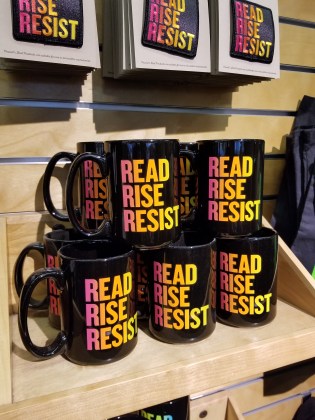 And so this past summer, I gave myself the justice – the assignment and the gift – I needed by setting out to read 50 books across the year – 50 books for myself and for no one else. I looked to book awards and Facebook lists and personal recommendations for my choices. I read collections by individual authors as well as academic texts and young adult novels. The majority of my books were fiction, and I’ve been surprised by how much reading fiction shaped my dreams at night, more so than even my work! In the end 46 of my books were by authors of color, with the other four being deeply shaped by communities of color. I am deeply indebted to the Seattle Public Library for its collection of audiobooks on Overdrive, graphic novels on Hoopla, and ebooks on the Kindle apps. This allowed me to “read” during my commutes on the light rail or biking along Lake Washington, while cooking dinner or out working in the garden, and in many cases to hear the texts in the authors’ own voices.

 This was my main winter break binge-watching show. Netflix is slated to remove it in January 2018, so I had to cram in four seasons in two weeks. I did it! If I didn’t reply to an email during this time it was because I was too busy following the cases of Olivia Benson and crew. What I learned as it relates to race and equity: When people say they have gone through something hard we should show compassion towards them. I also enjoyed watching how the SVU team trusted each other and had to constantly rebuild and test their trust within each other. Some episodes deal explicitly with race, sexism, gender-identity, and police-power dynamics, sometimes they get it right sometimes they flub and go with stereotypes.
 This is another great show recommended by Amy. The show follows African American siblings who inherit the family’s sugar plantation. Again, the show is majority African American actors and in watching the bonus features on DVD I learned the show was directed by women, many of them were women of color – hooray. From Queen Sugar we can think about how history and histories of racism shape where we are today, including the resiliency we have as communities and families of color.
