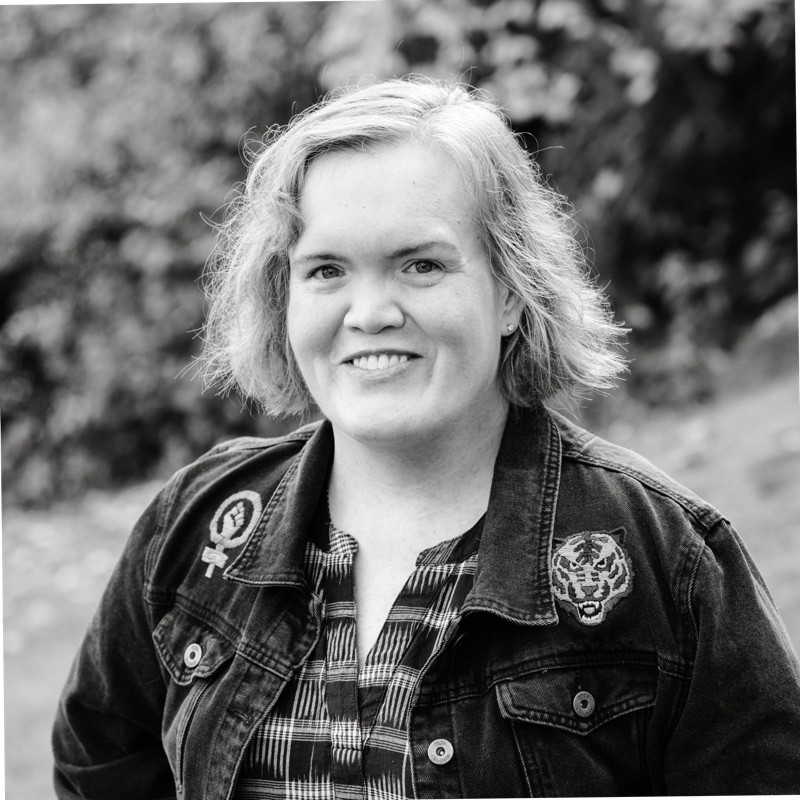
Graduation — Disability Pride

Description: Square black and white photo of Carrie outdoors wearing a dark demin jacket with a tiger face growling patch on the right, a patch of fist in a women’s symbol on the left, stud earring in one earlobe, other ear is covered by hair. Carrie has short hair above her shoulders, she’s looking at the camera and smiling. Background is blurry outdoor scene.

Carrie Basas returns with a guest blog post. Carrie delivered a graduation address at Harvard at the Disability Affinity Ceremony. She joins a storied league of graduation speakers imparting knowledge and hope to the next generation of ambassadors, doulas, and firestarters.

For allies, read her remarks and commit to undoing abelism and not asking our friends, colleagues, and relations for unpaid labor. Congrats to the graduates.


I never thought today would happen when I graduated 22 years ago. My time at Harvard shaped me, but maybe not in an inspiring way or one of healing– more like through a deep sense of feeling out of place. The good thing that came from it, however, was appreciating solidarity across communities, finding other misfits, repeatedly asking if we tracked alumni with disabilities, and organizing the parking garage attendants to get very mad and loyal when my access went astray here. Harvard made me realize that I needed a community, especially a disability community and mentors. But to be honest, I gave up on finding it at Harvard. So, for a person who is more snark than woo woo– which will become obvious quickly in our next few minutes together– I have been telling others for weeks that this experience that you all created, even though it’s 22 years late (We Harvard folks aren’t always perfect, either), is healing and wonderful– and I get to claim no credit for it, which is also great.

Let me explain why– today, I’d like to tell you about some unpaid labor you’re about to see increase as your career and personal lives move closer to my crone and curmudgeon status. Don’t worry– it’s going to be fun, well, sometimes, and I can promise you that you’ll have lots of stories. The good part is that everyone in this room who identifies as disabled or Deaf or living with a disability identity of any kind is also now employed in this free labor. You’ll have some choices to make along the way and that’s where my sparkling and snarky personality today can help you. You also might recognize some of these tasks, well, from just living as a person so far with a disability, but they’re about to become even more important, usually when you least expect it.

First unpaid labor role: Ambassador

Though we might have a few Kennedy School students here, when I say prepare to be an ambassador, I don’t mean it in an overachieving, on the payroll, negotiate a peace accord, kind of way. I mean you will– and probably already have– been an ambassador for how others view disability.

The ambassador role isn’t for introverts, but congrats, I am one, and sorry for those who cringe in recognition. The ambassador role is both constant in its hours and surprising in its workload peaks. If you have a visible disability or you’ve shared your disability story, you become more recognizable. Upside: You can just live into having a facial recognition disability because everyone already knows your name or thinks they do.

You’ll be approached in yogurt aisles (true stories, friends), courtrooms, playgrounds, and sidewalks with someone sharing how you’ve inspired them, maybe hugging you inappropriately, or wanting to share a story about their third cousin who had a disability that was nothing like yours but how he is happy every day. This will probably happen on a day when you are not happy, just warning you.

But here’s the upside: You will also be approached for the visible choices you make in community, for things you have said and done when you thought absolutely no one was watching, and for reminding people that disabled people belong in public everywhere, doing everything. While it is absolutely exhausting to be representing wherever you go, you should also remember that part of achieving our liberation is asserting our right to just be some days, to even be mediocre, as one of my disabled friends dreams of at times.

The second unpaid emotional labor role is: Disability Doula

Now, some of these intimate yogurt aisle conversations don’t just end in mistaken identity about which disabled person you are that they met, they are sometimes people really grappling with their own place and identity. While I highly encourage you to get a counseling license and charge hourly rates especially for impromptu sessions, I see these moments where someone is struggling with naming disability for themselves as beautiful opportunities for recruitment. See, one strategy for making this world more accessible and responsive is we’ve just got to raise our numbers, particularly among people with money and access to power.

One of my dear friends calls these my “foot moments” because while it’s way too early at least for this Pacific Time speaker to give you an inspiring speech about feet, a surprising number of people have shown their feet to me and told me they have disabilities. I have a doctorate in law, which makes me very confident about googling really any issue, but not as comfortable providing direct medical care. A law school friend said it was more like I ran a confessional. I’ve always threatened to print disability membership packets, but so far, I haven’t. Still, it is one of the coolest and most sacred moments when someone shares their disability with you, even if they haven’t figured out all the politics of it.

We know how much stigma there is about disability, particularly mental health disabilities. The reality, too, is that our disabilities evolve. When I was at Harvard, I only understood that I had physical disabilities, but in my 30s, I realized that maybe one of the reasons that I skipped class so often in law school was that I had ADHD and anxiety. It took me a while to feel like being neurospicy was not yet another thing someone would hold against me.

As one of my colleagues says, we need disability doulas– not just for the newcomers or the ones we’ve been waiting to realize were always members of our community. (Side note here: I play the long game.) We need them for ourselves as we sort through any internalized ableism. Community is hard to build and doing so will be one of the roles that I won’t get as much into today, but know, too, that some of our worst and best behavior comes from how we treat each other.

The third unpaid emotional labor role is: Firestarter

According to MA fire code, given the age of this building, and some supreme court cases involving shouting words about fire, I want to make clear that I am not asking you to start a fire today. Also, as a disability-proud group, we hold space for our siblings in this movement whose disability might be pyromania– please just mind our dogs, canes, and prescriptions with your matches.

There will be so many times when the ambassador and doula roles aren’t it, when you are shaking with righteous rage about an injustice, something that has been said, or something you need to say. I struggle with this one a lot. A nondisabled friend with an autistic young adult daughter told me that she just wants her daughter to not be treated as a “commodity” or object that services and providers move around and find inconvenient. I told her that I sometimes feel like I can’t be angry or fierce because I’m vulnerable to how nondisabled people– from my doctors to potential employers– will react. In case you haven’t gotten the memo, yet, one of the many stereotypes about disabled folks is that we’re a risk or litigious, or angry, or unproductive.

Do I feel like I have to make people comfortable often? Yes. Is it exhausting? Yes? Is it always productive toward people changing their behavior? No. Could I also spend every day burning everything down that was wrong or annoying? No. I think my righteous rage would consume me and I’d lose my general orientation toward joy and humor.

When you feel a fire rising within you, take a moment and ask yourself some questions:

  • Is this smoky heap of ableism a good place to roast a marshmallow and make a s’more, instead? If so, grab some friends– preferably cross-movement, cross-disability– and just have a tasty snack. Talk strategy. Who else is impacted? Is this where we need to spend our time right now? Should I take this on so someone else doesn’t have to who has less privilege and energy than me right now?
  • Do I have positional power to make a difference here? Don’t give yourself an easy out, either. You went to Harvard. You might not be the person in charge and you might feel vulnerable, but you could have less at stake than someone else who is just trying to survive a system.
  • And finally: a question that my husband (not disabled, but a man of color) has always asked me: Would you be fired (insert whatever verb here makes sense for your situation?) for the right reasons? By “right”—right to me.

Find mentors and friends who will support you when your heart is telling you it’s time to forget the s’mores and light a match. Or to quote one of my former colleagues: “I’m feeling the need to negotiate like a terrorist.” So, now I ask my cat if he is feeling the need to negotiate like a terrorist. That phrase brought me joy. I’ll hold her s’more while she does that.

Finally, I have paid labor to offer you: Now that you’ve made my Harvard dreams come true of gathering students with disabilities, I need you to be in charge of many things. I don’t care if it’s practicing tax law, becoming a plastic surgeon, building a family, or becoming an art history professor. I want our people everywhere making decisions because we’re creative problem-solvers who understand that access and belonging go beyond steepness of ramps and captioning. I want us to lead within disability rights and justice, too, because the reality is that so much of this work continues to be led by nondisabled people– which I hope will become unacceptable in my lifetime. I believe that systems change when the people making the decisions change, and so I’d ask you to take your ambassador skills, doula or foot analysis techniques, and matches wherever brings you joy.

Create spaces where you feel loved and seen. Realize that not all the work is yours or ours to do, and that we, too, have a responsibility to work in solidarity with other movements and dream for collective liberation. Our main duty is to live such that we honor our bodies, minds, disability and Deaf culture, and not wait for permission. Thank you.  


Thank you to our Patreon subscribers. At this time I don’t offer ‘extras’ or bonuses for Patreons. I blog after working a full-time job, volunteer and family commitments thus it is hard to find time to create more content. Whatever level you are comfortable giving pays for back-end costs, research costs, supporting other POC efforts, etc. If your financial situation changes please make this one of the first things you turn-off — you can still access the same content and when/if you can re-subscribe I’ll appreciate it.

Adrienne, Aimie, Alayna, Alessandra, Alexa, Aline, Alison FP, Alison P, Allison, Amanda, Amber, Amira, Amy, Amy K, Amy P, Amy R, Andie, Andrea J, Andrea JB, Andy, Angelica, Ashlie, Ashlie B., Barb, Barbara, Barrett, Beth, Betsy, Big Duck, Brad, Brenda, Bridget, Brooke B, Brooke DW, Cadence, Caitlin, Calandra, Callista, Cari, Carmen, Carolyn, Carrie B, Carrie C, Carrie S, Catherine, Cathy & David, Chelsea, Christina C, Clara, Clark, Clark G., Courtney, Dan, dana, Danielle, Danya, Debbie, Debbie S., Dede, DeEtta, Denyse, Dennis, Dennis F, Diane, Don, Ed, Edith, Eileen, Elizabeth, Emily, Erica J, Erin, Frances, Gene, Genita, Hannah, Hayden, Heidi and Laura, Heidi, Hilary, J Elizabeth, Jaime, Jake, James, Jane, Janet, Jelena, Jen C, Jen E, Jen H, Jena, Jenn, Jennet, Jennifer, Jess, Jessica F, Jessica G, Jillian, John, Jon, Julia, Juliet, June, Karen, Kate, Kathryn, Katie O, Kawai, Kelly, Kiki, Kimberly, Kyla, LA Progressive, Laura, Lauren, Leslie, Linda M, Lisa C, Lisa P-W, Lisa S, Liz, Lola, Lori, Lyn, Maegan, Maggie, Maile, Maki, Marc, Mareeha, Marilee, Matthew, Maura, Melissa, Melody, Michael, Mickey, Migee, Mike, Mindy, Misha, Molly, Nat, Nicole, paola, Peggy, PMM, Porsche, Rachel, Raquel, Rebecca, Robin, Ryan, Sally, Sally P., Sandra, Sarah B, Sarah D, Sarah H, Sarah KB, Sarah R, Sarah S, Sarita, Selma, Sharon B, Sharon Y, Shaun, Shawna, Siobhan, Steph, Stephanie, Stephanie J-T, Steve, Su, Sue, Sue C D, T Wang, Tania DSA, Tania TD, Tara, tash, Teddi, Tim, Tracy TG, Venu, virginia, Vivian, Wan-Lin, Ward, Wendy, and Zan

Thank you for subscribing. Please check fakequity.com for the most up-to-date version of the post. I often make grammatical and stylistic corrections after the first publishing which shows up in your inbox. To subscribe — on the right sidebar (desktop version) is a subscribe box. To see what I’m reading and recommended books check out the Fakequity Bookshop. I am an affiliate of Bookshop.org where your purchases support local bookstores. I earn a small commission if you click through and make a purchase. The commission goes into purchasing books by POC authors or about disabilities to donate to high-poverty public schools.

Stop Doing Everything

Word stop typed in red ink, on a manual typewriter
Photo by Karolina Grabowska on Pexels.com

A few weeks ago, I was on a panel with two colleagues I enjoy. It is always fun to be on a panel with smart, thoughtful, and honest colleagues. We riffed off each others answers, nodded, and every once in a while disagreed. As we were talking about public education it occurred to me we needed to have a conversation about what we need to stop doing.

Too often we think about what we can do, should do, and want to do. I’m a big fan of thinking about what we shouldn’t do and need to stop doing. People often say “dream big… what should we build if resources were available.” Those are worthy exercises. AND I’m also a proponent of thinking “What shouldn’t we do,” and “What should we stop doing?”

I’ll give some examples:

  • We shouldn’t cater to white people’s desires – programmatically this might mean ending popular programs that attract and support white students or students of color with a lot of privilege
  • We need to end programs if they aren’t achieving the desired racial equity outcomes
  • Stop giving attention and energy to someone who isn’t inline with your racial equity agenda
  • Stop funding white organizations or white people who claim to work on behalf of POCs, give directly to POCs

It is easy to allow inertia to keep us moving in ways that doesn’t align with racial equity agendas. Why stop something that is working, especially since the people who are benefitting may be the loudest and most annoying people when you stop.

It may be tempting to think, “let’s just leave it alone and start another project that will focus on our racial equity goals.” The problem is when we keep adding programs, projects, and activities without stopping what doesn’t work we end up with a sludge of stuff. A wise professor used the analogy of the weird mix of melted ice cream at the bottom of a sundae – each scoop looked great on its own, but over time they melt, and the bottom of the bowl is a sludge of ice cream that isn’t as pretty or appetizing. The ice cream sludge at the bottom often doesn’t help to advance people of color – it can feel like POCs are getting leftovers versus a truly focused experience.

Stopping

Stopping activities that aren’t working for your racial equity agenda can take a lot of time and effort. Conversations need to be had, feelings need to be dealt with and channeled, politics and political influence need to be factored in. No one likes to feel like they are losing something, especially something they are used to having, but this isn’t a reason enough to continue doing things that don’t work for people of color.  

Ways to End – Some tips

Write out, even if it just for you, why the activity you’re stopping isn’t aligned with racial equity work or goals – in other words practice this point. The more you can clearly articulate it to yourself the easier it will be when you communicate about it.

Honor the program and acknowledge the change.

Let key people know ahead of time and privately – they shouldn’t find out from a mass email or in the news. Take the time to explain why.

Be prepared for people to be upset, snarky, and to have feelings. If it is the type of program where you need to gather people to explain it in person, plan for it. I will also mention it is always good to have continuous conversations so hopefully this isn’t the first time you’re explaining program shifts, endings, etc.

Be gentle and hopeful. Change is hard, it can suck, but it also leads to new ways.


Thank you to our Patreon subscribers. At this time I don’t offer ‘extras’ or bonuses for Patreons. I blog after working a full-time job, volunteer and family commitments thus it is hard to find time to create more content. Whatever level you are comfortable giving pays for back-end costs, research costs, supporting other POC efforts, etc. If your financial situation changes please make this one of the first things you turn-off — you can still access the same content and when/if you can re-subscribe I’ll appreciate it.

Adrienne, Aimie, Alayna, Alessandra, Alexa, Aline, Alison FP, Alison P, Allison, Amanda, Amber, Amira, Amy, Amy K, Amy P, Amy R, Andie, Andrea J, Andrea JB, Andy, Angelica, Ashlie, Ashlie B., Barb, Barbara, Barrett, Betsy, Big Duck, Brad, Brenda, Bridget, Brooke B, Brooke DW, Cadence, Caitlin, Calandra, Callista, Cari, Carmen, Carolyn, Carrie B, Carrie C, Carrie S, Catherine, Cathy & David, Chelsea, Christina C, Clara, Clark, Clark G., Courtney, Dan, dana, Danielle, Danya, Debbie, Debbie S., Dede, DeEtta, Denyse, Dennis, Dennis F, Diane, Don, Ed, Edith, Eileen, Elizabeth, Emily, Erica J, Erin, Frances, Gene, Genita, Hannah, Hayden, Heidi and Laura, Heidi, Hilary, J Elizabeth, Jaime, Jake, James, Jane, Janet, Jelena, Jen C, Jen E, Jen H, Jena, Jenn, Jennet, Jennifer, Jess, Jessica F, Jessica G, Jillian, John, Jon, Julia, Juliet, June, Karen, Kate, Kathryn, Katie O, Kawai, Kelly, Kiki, Kimberly, Kyla, LA Progressive, Laura, Lauren, Leslie, Linda M, Lisa C, Lisa P-W, Lisa S, Liz, Lola, Lori, Lyn, Maegan, Maggie, Maile, Maki, Marc, Mareeha, Marilee, Matthew, Maura, Melissa, Melody, Michael, Mickey, Migee, Mike, Mindy, Misha, Molly, Nat, Nicole, paola, Peggy, PMM, Porsche, Rachel, Raquel, Rebecca, Robin, Ryan, Sally, Sally P., Sandra, Sarah B, Sarah D, Sarah H, Sarah KB, Sarah R, Sarah S, Sarita, Selma, Sharon B, Sharon Y, Shaun, Shawna, Siobhan, Steph, Stephanie, Stephanie J-T, Steve, Su, Sue, Sue C D, T Wang, Tania DSA, Tania TD, Tara, tash, Teddi, Tim, Tracy TG, Venu, virginia, Vivian, Wan-Lin, Ward, Wendy, and Zan

Thank you for subscribing. Please check fakequity.com for the most up-to-date version of the post. I often make grammatical and stylistic corrections after the first publishing which shows up in your inbox. To subscribe — on the right sidebar (desktop version) is a subscribe box. To see what I’m reading and recommended books check out the Fakequity Bookshop. I am an affiliate of Bookshop.org where your purchases support local bookstores. I earn a small commission if you click through and make a purchase. The commission goes into purchasing books by POC authors or about disabilities to donate to high-poverty public schools.

Asian American Native Hawaiian Pacific Islander Book List

A stack of books on a table with a white blurry background Photo by Alexander Grey on Pexels.com

It is AANHPI month, hooray! One of the many ways to celebrate is to refill your reading queue with some new books by AANHPI authors.

Here are a few recommendations, most I’ve read, a few are on my TBR list. The majority of the list are authored by Asians, Native Hawaiians, or Pacific Islanders. I noted the one book that is not by an AANHPI author. If you are purchasing books, please buy them from independent bookstores, especially POC owned bookstores. Bookshop.org is another good option for supporting independent bookstores. The links below are my affiliate links. All of the proceeds generated go into buying books, including many mentioned below, to donate to local public schools.

First up is George Takei’s, LGBTQ activist and former actor on Star Trek, latest children’s book My Freedom Lost: A Japanese American World WWII story. In this picture book Takei recalls his time incarcerated at two different internment camps because his family was of Japanese descent. The text of this picture book is dense, so better for second or third grade and up. His graphic memoir, They Called Us Enemy, is also very good and worth reading. Both of these are good books for talking about Asian American history in America and talking about xenophobia, and prejudice.

We Who Produce Pearls: An Anthem for Asian America is a new picture book by Joanna Ho. As I read it, it reminded me of the concept of ‘we’ as it relates to inclusion and diversity, since I had just heard a lecture on this concept. It also reminded me of the “We the People,” artwork campaign from several years ago.

I backed the Kickstarter for this project and so glad it is finally out. Aloha Everything is a gorgeous book steeped in Native Hawaiian culture and understanding. It centers around Ano learning to dance hula, and how she connects with different prats of her Native Hawaiian culture and identity through hula. Buy a copy for yourself or to share with a school classroom or library – Hawaiian history is American history and needs to be incorporated everywhere.

If you’re looking for a baby gift, Festival of Color, about Holi is now in board book format.

For the graphic novel and YA crowd, Lunar New Year Love Story, is written and illustrated by Gene Luen Yang and LeUyen Pham – two well known authors and illustrators. This is in my to-be-read pile and I’m looking forward to it.

Alice Wong’s newest anthology Disability Intimacy: Essays on Love, Care, and Desire was just released. It expands on her previous books about firsthand accounts of disabilities.

I saw this graphic novel at Mam’s bookstore, The Golden Voice: The Ballad of Cambodian Rock’s Lost Queen. I need to go back to get a copy because it looks so fascinating. The Asian American experience is diverse and the story of Cambodia is unique and important to learn about. (This is not authored by an Asian American.)

From Unincorporated Territory [Åmot] was a National Book Award winner. Authored by Craig Santos Perez from Guam and uses visual poetry in this book. I read it once, but need to re-read. Make sure to read his other poetry collections too – they are deep.

There are so many more books to share, I have at least three more in my head of new releases that deserve some hype, but I’ll stop here for the moment. Please make sure to read about Asian American, Native Hawaiian, and Pacific Islander authors. The experiences shared is rich and deserve to be learned about and shared with others.


Thank you to our Patreon subscribers. At this time I don’t offer ‘extras’ or bonuses for Patreons. I blog after working a full-time job, volunteer and family commitments thus it is hard to find time to create more content. Whatever level you are comfortable giving pays for back-end costs, research costs, supporting other POC efforts, etc. If your financial situation changes please make this one of the first things you turn-off — you can still access the same content and when/if you can re-subscribe I’ll appreciate it.

Adrienne, Aimie, Alayna, Alessandra, Alexa, Aline, Alison FP, Alison P, Allison, Amanda, Amber, Amira, Amy, Amy K, Amy P, Amy R, Andie, Andrea J, Andrea JB, Andy, Angelica, Ashlie, Ashlie B., Barb, Barbara, Barrett, Betsy, Big Duck, Brad, Brenda, Bridget, Brooke B, Brooke DW, Cadence, Caitlin, Calandra, Callista, Cari, Carmen, Carolyn, Carrie B, Carrie C, Carrie S, Catherine, Cathy & David, Chelsea, Christina C, Clara, Clark, Clark G., Courtney, Dan, dana, Danielle, Danya, Debbie, Debbie S., Dede, DeEtta, Denyse, Dennis, Dennis F, Diane, Don, Ed, Edith, Eileen, Elizabeth, Emily, Erica J, Erin, Frances, Gene, Genita, Hannah, Hayden, Heidi and Laura, Heidi, Hilary, J Elizabeth, Jaime, Jake, James, Jane, Janet, Jelena, Jen C, Jen E, Jen H, Jena, Jenn, Jennet, Jennifer, Jess, Jessica F, Jessica G, Jillian, John, Jon, Julia, Juliet, June, Karen, Kate, Kathryn, Katie O, Kawai, Kelly, Kiki, Kimberly, Kyla, LA Progressive, Laura, Lauren, Leslie, Linda M, Lisa C, Lisa P-W, Lisa S, Liz, Lola, Lori, Lyn, Maegan, Maggie, Maile, Maki, Marc, Mareeha, Marilee, Matthew, Maura, Melissa, Melody, Michael, Mickey, Migee, Mike, Mindy, Misha, Molly, Nat, Nicole, paola, Peggy, PMM, Porsche, Rachel, Raquel, Rebecca, Robin, Ryan, Sally, Sally P., Sandra, Sarah B, Sarah D, Sarah H, Sarah KB, Sarah R, Sarah S, Sarita, Selma, Sharon B, Sharon Y, Shaun, Shawna, Siobhan, Steph, Stephanie, Stephanie J-T, Steve, Su, Sue, Sue C D, T Wang, Tania DSA, Tania TD, Tara, tash, Teddi, Tim, Tracy TG, Venu, virginia, Vivian, Wan-Lin, Ward, Wendy, and Zan

Thank you for subscribing. Please check fakequity.com for the most up-to-date version of the post. I often make grammatical and stylistic corrections after the first publishing which shows up in your inbox. To subscribe — on the right sidebar (desktop version) is a subscribe box. To see what I’m reading and recommended books check out the Fakequity Bookshop. I am an affiliate of Bookshop.org where your purchases support local bookstores. I earn a small commission if you click through and make a purchase. The commission goes into purchasing books by POC authors or about disabilities to donate to high-poverty public schools.

Are We Too Comfortable?

Artwork of diverse multiracial people preparing a meal together. Words: We deserve to BELONG. Art from Amplifer Art by Alex Albadree

Welcome to May, Asian American Native Hawaiian and Pacific Islander Month. As you celebrate this month please make sure you honor the diversity within the AANHPI communities.

I’ve been reading the book Comfort Crisis by Michael Easter. It isn’t a book about race, and it is written by a white male author – not that great on the diversity scale, but it is a quick read and I’ve been extracting themes and ideas from it for other work. As I’ve been reading the book, I’ve been thinking about race and how comfortable we often feel or not feel regarding race.

The main premise of the first 100-ish pages (that is as far in as I’ve gotten) is we design our lives around being comfortable. Human evolution leads us to comfort. Being uncomfortable shakes us out of our known patterns which helps us learn. Being uncomfortable is important to growing in new ways. I’m oversimplifying the text, but those universal truths hold true.

For most of us in the Western world, we live in comfortable ways. We live in temperature controlled environments, we have access to basic needs – water, food, sanitation, we have access to information, and so forth. For many of us who are even more privileged we rarely are bored or without something to do. All of this leads to a very comfortable lives.

We also curate our comfort around identity.

How often are we with people who make us uncomfortable? Not very often. Many people choose who they associate with because it is comfortable — I don’t want to be with people who keep me on edge all of the time, no thank you.

Earlier today I listened to the keynote address given by Stacy Abrams at the Collective Impact Summit (a really good online conference, check it out next year). She talked about the power of diversity and how challenging it is to embed diversity into our work. Diversity is tolerated as long as it is proximate to the dominate narrative. Diversity challenges our comfort zones. Being around people who are different than us makes our brains work harder. It also challenges the status quo of groups when you layer in different viewpoints, ways of communicating, and other forms of diversity.

I know a lot of people who claim to like diversity, but when true diversity arises, they shrink back. Explained another way – people move into gentrifying neighborhood but keep their same friend group, only visit the gentrifier coffeeshops, hire diverse people but don’t retain or promote them, and so on.

Democracy demands we embrace a bigger ‘we,’ a learning from the Collective Impact conference. Embracing diversity and working through the discomfort of diversity is important to enacting and thriving in a democratic society. This can be uncomfortable for many who are used to being catered to, having their needs met first, and overall comfortable.

We can challenge ourselves to being more uncomfortable around race. Maybe you need baby steps to being uncomfortable with race – start with changing your media consumption. Or if you’re ready for bigger steps, find a group where you will not be in the majority and join in – please do this carefully so you aren’t gentrifying the space. If the space is meant as a Black only space, don’t try to join if you’re not Black. Challenge yourself to find ways to be uncomfortable with race and be ok with having moments where you feel lonely, unsure, or even like you failed in the space – you haven’t that is the learning moment of what it is like to not being catered to.  


Thank you to our Patreon subscribers. At this time I don’t offer ‘extras’ or bonuses for Patreons. I blog after working a full-time job, volunteer and family commitments thus it is hard to find time to create more content. Whatever level you are comfortable giving pays for back-end costs, research costs, supporting other POC efforts, etc. If your financial situation changes please make this one of the first things you turn-off — you can still access the same content and when/if you can re-subscribe I’ll appreciate it.

Adrienne, Aimie, Alayna, Alessandra, Alexa, Aline, Alison FP, Alison P, Allison, Amanda, Amber, Amira, Amy, Amy K, Amy P, Amy R, Andie, Andrea J, Andrea JB, Andy, Angelica, Ashlie, Ashlie B., Barb, Barbara, Barrett, Betsy, Big Duck, Brad, Brenda, Bridget, Brooke B, Brooke DW, Cadence, Caitlin, Calandra, Callista, Cari, Carmen, Carolyn, Carrie B, Carrie C, Carrie S, Catherine, Cathy & David, Chelsea, Christina C, Clara, Clark, Clark G., Courtney, Dan, dana, Danielle, Danya, Debbie, Debbie S., Dede, DeEtta, Denyse, Dennis, Dennis F, Diane, Don, Ed, Edith, Eileen, Elizabeth, Emily, Erica J, Erin, Frances, Gene, Genita, Hannah, Hayden, Heidi and Laura, Heidi, Hilary, J Elizabeth, Jaime, Jake, James, Jane, Janet, Jelena, Jen C, Jen E, Jen H, Jena, Jenn, Jennet, Jennifer, Jess, Jessica F, Jessica G, Jillian, John, Jon, Julia, Juliet, June, Karen, Kate, Kathryn, Katie O, Kawai, Kelly, Kiki, Kimberly, Kyla, LA Progressive, Laura, Lauren, Leslie, Linda M, Lisa C, Lisa P-W, Lisa S, Liz, Lola, Lori, Lyn, Maegan, Maggie, Maile, Maki, Marc, Mareeha, Marilee, Matthew, Maura, Melissa, Melody, Michael, Mickey, Migee, Mike, Mindy, Misha, Molly, Nat, Nicole, paola, Peggy, PMM, Porsche, Rachel, Raquel, Rebecca, Robin, Ryan, Sally, Sally P., Sandra, Sarah B, Sarah D, Sarah H, Sarah KB, Sarah R, Sarah S, Sarita, Selma, Sharon B, Sharon Y, Shaun, Shawna, Siobhan, Steph, Stephanie, Stephanie J-T, Steve, Su, Sue, Sue C D, T Wang, Tania DSA, Tania TD, Tara, tash, Teddi, Tim, Tracy TG, Venu, virginia, Vivian, Wan-Lin, Ward, Wendy, and Zan

Thank you for subscribing. Please check fakequity.com for the most up-to-date version of the post. I often make grammatical and stylistic corrections after the first publishing which shows up in your inbox. To subscribe — on the right sidebar (desktop version) is a subscribe box. To see what I’m reading and recommended books check out the Fakequity Bookshop. I am an affiliate of Bookshop.org where your purchases support local bookstores. I earn a small commission if you click through and make a purchase. The commission goes into purchasing books by POC authors or about disabilities to donate to high-poverty public schools.

Learning to Lead from Authors of Color

Black background words in blue to pink ombre Read Rise Resist.

A few weeks ago, a friend sent a text asking for suggestions for books on leadership. I messaged her a few titles and decided to expand on what I sent her to make this a full-fledge blog post.

The list is a mix of books. Some can be seen as traditional leadership type books, and others are books that I think have a lot of value for understanding how to ‘lead’ in diverse ways. All of the titles listed are by authors of color.

The Purpose of Power: How We Come Together When We Come Apart by Alicia Garza. Alicia Garza is a longtime organizer and was one of the founders of the Black Lives Matter movement. She shares her journey around organizing and how she ended up in the Black Lives Matter movement.

Eric Liu’s You Are More Powerful Than You Think is a nice companion to Alicia Garza’s book. Liu writes about political advocacy and how to understand power and use it for social good. His book and approach are good for understanding how to work to move institutional power bases.

Treaty Words: For as Long as the River Flows may make you wonder why this made the list. I consider it an important leadership book, because we have to remember leadership in the western world is just that – built on western concepts of capitalism, ownership, top down structures. We should learn from other communities about their values and ways of leading. Indigenous and Native people’s have relationships and reciprocal treaties we need to learn from and honor. This short but full-of-thoughtful words and pictures book is a good way to reframe how we think about leading.

If you’re going to lead, you need to understand disabilities and how to lead in the least ableist ways possible. Alice Wong’s Disability Visibility is a collection of first person narratives by people with diverse backgrounds and disabilities. It is a good starting point for learning more about disabilities. If you have a young adult in your life the young adult version of this book is very accessible and worth sharing with a young person too.

The Art of Gathering and Together are two books I highly recommend for leaders who convene people. I can’t think of any leader who doesn’t convene people in some way. These two books reframed how I think about bringing people together and working with people, especially people of color, in ways that are natural but also purposeful.

I haven’t read First Gen by Alejandra Campoverdi yet but it is on my list of books to read. I’m adding this to my list of books to learn from because I work in education and need to learn about how to create better systems for immigrants and to make sure Latino/Latinx students are visible. This is a leadership book because we should learn from first hand accounts.

What are some of your favorite books about leadership by authors of color?

The links in this post will take you to Fakequity’s Bookshop.org affiliate page. Bookshop supports independent bookstores, and any proceeds Fakequity makes from Bookshop is used to buy books by authors of color which are donated to Title 1 schools.


Thank you to our Patreon subscribers. At this time I don’t offer ‘extras’ or bonuses for Patreons. I blog after working a full-time job, volunteer and family commitments thus it is hard to find time to create more content. Whatever level you are comfortable giving pays for back-end costs, research costs, supporting other POC efforts, etc. If your financial situation changes please make this one of the first things you turn-off — you can still access the same content and when/if you can re-subscribe I’ll appreciate it.

Adrienne, Aimie, Alayna, Alessandra, Alexa, Aline, Alison FP, Alison P, Allison, Amanda, Amber, Amira, Amy, Amy K, Amy P, Amy R, Andie, Andrea J, Andrea JB, Andy, Angelica, Ashlie, Ashlie B., Barb, Barbara, Barrett, Betsy, Big Duck, Brad, Brenda, Bridget, Brooke B, Brooke DW, Cadence, Caitlin, Calandra, Callista, Cari, Carmen, Carolyn, Carrie B, Carrie C, Carrie S, Catherine, Cathy & David, Chelsea, Christina C, Clara, Clark, Clark G., Courtney, Dan, dana, Danielle, Danya, Debbie, Debbie S., Dede, DeEtta, Denyse, Dennis, Dennis F, Diane, Don, Ed, Edith, Eileen, Elizabeth, Emily, Erica J, Erin, Gene, Genita, Hannah, Hayden, Heidi and Laura, Heidi, Hilary, J Elizabeth, Jaime, Jake, James, Jane, Janet, Jelena, Jen C, Jen E, Jen H, Jena, Jenn, Jennet, Jennifer, Jess, Jessica F, Jessica G, Jillian, John, Jon, Julia, Juliet, June, Karen, Kate, Kathryn, Katie O, Kawai, Kelly, Kiki, Kimberly, Kyla, LA Progressive, Laura, Lauren, Leslie, Linda M, Lisa C, Lisa P-W, Lisa S, Liz, Lola, Lori, Lyn, Maegan, Maggie, Maile, Maki, Marc, Mareeha, Marilee, Matthew, Maura, Melissa, Melody, Michael, Mickey, Migee, Mike, Mindy, Misha, Molly, Nat, Nicole, paola, Peggy, PMM, Porsche, Rachel, Raquel, Rebecca, Robin, Ryan, Sally, Sally P., Sandra, Sarah B, Sarah D, Sarah H, Sarah KB, Sarah R, Sarah S, Sarita, Selma, Sharon B, Sharon Y, Shaun, Shawna, Siobhan, Steph, Stephanie, Stephanie J-T, Steve, Su, Sue, Sue C D, T Wang, Tania DSA, Tania TD, Tara, tash, Teddi, Tim, Tracy TG, Venu, virginia, Vivian, Wan-Lin, Ward, Wendy, and Zan

Thank you for subscribing. Please check fakequity.com for the most up-to-date version of the post. I often make grammatical and stylistic corrections after the first publishing which shows up in your inbox. To subscribe — on the right sidebar (desktop version) is a subscribe box. To see what I’m reading and recommended books check out the Fakequity Bookshop. I am an affiliate of Bookshop.org where your purchases support local bookstores. I earn a small commission if you click through and make a purchase. The commission goes into purchasing books by POC authors or about disabilities to donate to high-poverty public schools.

Keeping Boards Connected to the Mission

A multiracial group of adults pretending to be in a board meeting. Papers strewn over the table, two laptops, and a calculator on the table, white papercups on the table. In front of shelves that are empty with prop books. Photo by Tima Miroshnichenko on Pexels.com

Board service is one way to give time, talent, and relationships to nonprofits. I’ve been fortunate to serve on several nonprofit boards and have led an organization that was governed by a board of directors. Through these experiences I’ve figured out what I like in board service, and where I think boards and nonprofits need to do better.

My favorite board experience was serving on the board of Neighborhood House in Seattle. The organization provides wraparound services for low-income families in place-based communities. Neighborhood House could have gone the way of many large, historically white normed multimillion dollar organizations, but instead the Executive Director (who’s since retired) and the board kept the organization very rooted to communities of color. It wasn’t easy, but it was the right thing to do for those it served and to keep the board very mission aligned.

Thinking back, what made that board service experience meaningful was the intentionality that went into the board experience. As a board we were very thoughtful about who we recruited for the board. I chaired the nominating committee and worked closely with the Executive Director. He was very clear about who he wanted serving on the board – people who were no drama, committed to the work, connected to the community in multiple ways.

We also kept clear notes on the board makeup and composition and recruited to fill strategic gaps. As an example, a nominating committee meeting would sound like this: “We’re missing someone with a finance or legal background so we’re in compliance with XX grant. We’re also looking for people connected to the Amharic community (because that is who Neighborhood House served). Do you know anyone who can fit these categories?” When we were clear about who we served and why, we could recruit board members more strategically.

We didn’t recruit people just because they were friends of someone, were wealthy, or politically connected – we intentionally looked for people with leadership qualities and deeply believed in and had a track record of working in ways connected to the mission. Connections and connected to donors were important, but they weren’t the first criteria.

When I led an organization, I tried to do the same with who we recruited for our board. Since we were a place-based organization, every board member had to either live or work in the region. I also looked for board members who were connected to people and places we wanted to connect with. This kept us connected to the people and helped us get our work more right.

Fundraising

The flip side of board recruitment is trying to pit fundraising versus community based board recruitment. I do not believe in this line of thinking. A board member who can write a large check or is connected to wealth is not more valuable than a board member who is connected to communities of color.

Organizations with diverse boards, including socio-economic wealth, will have new and different connections which can open up new avenues for funding or connections. Earlier today I was talking with friends, all women of color, one of them mentioned the ‘invisible networks’ that sustain us. These informal, and sometimes formal networks, are where we share and receive information that leads to the next idea, funding opportunities, etc.

Nonprofit boards who are open to diversity and not just recruiting board members with access to familiar wealth will have a better chance of tapping into these invisible networks. There is the added benefit of perhaps being more mission aligned because their boards are more connected to the communities they serve.


Thank you to our Patreon subscribers. At this time I don’t offer ‘extras’ or bonuses for Patreons. I blog after working a full-time job, volunteer and family commitments thus it is hard to find time to create more content. Whatever level you are comfortable giving pays for back-end costs, research costs, supporting other POC efforts, etc. If your financial situation changes please make this one of the first things you turn-off — you can still access the same content and when/if you can re-subscribe I’ll appreciate it.

Adrienne, Aimie, Alayna, Alessandra, Alexa, Aline, Alison FP, Alison P, Allison, Amanda, Amber, Amira, Amy, Amy K, Amy P, Amy R, Andie, Andrea J, Andrea JB, Andy, Angelica, Ashlie, Ashlie B., Barb, Barbara, Barrett, Betsy, Big Duck, Brad, Brenda, Bridget, Brooke B, Brooke DW, Cadence, Caitlin, Calandra, Callista, Cari, Carmen, Carolyn, Carrie B, Carrie C, Carrie S, Catherine, Cathy & David, Chelsea, Christina C, Clara, Clark, Clark G., Courtney, Dan, dana, Danielle, Danya, Debbie, Debbie S., Dede, DeEtta, Denyse, Dennis, Dennis F, Diane, Don, Ed, Edith, Eileen, Elizabeth, Emily, Erica J, Erin, Gene, Genita, Hannah, Hayden, Heidi and Laura, Heidi, Hilary, J Elizabeth, Jaime, Jake, James, Jane, Janet, Jelena, Jen C, Jen E, Jen H, Jena, Jenn, Jennet, Jennifer, Jess, Jessica F, Jessica G, Jillian, John, Jon, Julia, Juliet, June, Karen, Kate, Kathryn, Katie O, Kawai, Kelly, Kiki, Kimberly, Kyla, LA Progressive, Laura, Lauren, Leslie, Linda M, Lisa C, Lisa P-W, Lisa S, Liz, Lola, Lori, Lyn, Maegan, Maggie, Maile, Maki, Marc, Mareeha, Marilee, Matthew, Maura, Melissa, Melody, Michael, Mickey, Migee, Mike, Mindy, Misha, Molly, Nat, Nicole, paola, Peggy, PMM, Porsche, Rachel, Raquel, Rebecca, Robin, Ryan, Sally, Sally P., Sandra, Sarah B, Sarah D, Sarah H, Sarah KB, Sarah R, Sarah S, Sarita, Selma, Sharon B, Sharon Y, Shaun, Shawna, Siobhan, Steph, Stephanie, Stephanie J-T, Steve, Su, Sue, Sue C D, T Wang, Tania DSA, Tania TD, Tara, tash, Teddi, Tim, Tracy TG, Venu, virginia, Vivian, Wan-Lin, Ward, Wendy, and Zan

Thank you for subscribing. Please check fakequity.com for the most up-to-date version of the post. I often make grammatical and stylistic corrections after the first publishing which shows up in your inbox. To subscribe — on the right sidebar (desktop version) is a subscribe box. To see what I’m reading and recommended books check out the Fakequity Bookshop. I am an affiliate of Bookshop.org where your purchases support local bookstores. I earn a small commission if you click through and make a purchase. The commission goes into purchasing books by POC authors or about disabilities to donate to high-poverty public schools.
Spring Cleaning

Five purple spring flowers, faded green grassy background. Photo by E.H.

Several years ago I made a spring cleaning list for Fakequity. It is time to make a part two, you can think of it as a rotational list, maybe you do this one on even years and the other list on odd years or some other fun rotation.

Start Cleaning

Clean out your hobby gear. Hobbies are great and often keep us connected to other parts of the community. Now is a good time to clean out your gear and make plans to share some of it with others. Maybe arrange a trade with others and make it a relational event, or a way to support POCs.

Evaluate your charity donations. Do the charities you support with time, money, or talent match your racial equity goals? If not maybe now is a good time to shift some of that time, talent, and funds to something more aligned with your beliefs.

Clean your entranceway. The entranceway is an often overlooked place of our house for a good cleaning. I recently wiped down the walls and dusted our entranceway, it made it look and feel much better. If your entranceway has a stairwell, make sure to wipe that down too, and baseboards.

Clean out your pantry. The other Fakequity spring cleaning list says to clean your refrigerator. This year clear out your dry goods pantry. Maybe you have extra noodles or rice paper wrappers from that time you tried a TikTok or Instagram recipe – are you really going to use the rest? I hope so, but if not pass the rest along or compost them.

Clean your vocabulary. We all use problematic language, maybe you let the word ‘guys’ even when speaking to not men. Or you say something ableist, now is a good time to make a conscious effort to be less racist and ableist.

While you’re cleaning your vocabulary, spring clean your keyboard. Pull out some alcohol wipes and literally wipe down your computer keys and phone. This has little to do with race, and more of the vein of a good hygiene practice, and I watched a reel of someone cleaning their keyboard so it is top of mind.

Spring clean your eating. We all need more veggies and fresh stuff in our diets, or maybe if you’re already on this path, you spring clean by trying something new. Stop by a farmer’s market or small ethnic grocery store and try some new to you produce. I recently tried nagaimo, a root veggie that becomes gummy when grated. I made Japanese okonomiyaki with it – a vegan version to get more veggies into the rotation.

Order your air filters for smoke and wild fire season. Some years we get lucky and don’t need air filters for smoke and wildfires, other years it is bad. Make sure you have a fresh filter on hand in case there is wildfire smoke. If you are economically privileged, make sure to donate to others who need this support too. Climate change is impacting fire risks. Learn about how Indigenous people around the world relate to fire and land management, and learn about how POCs are more heavily impacted by wildfires and other climate related disasters.

Finally, spring clean to make you feel good. Clean out things that don’t serve your social justice, racial equity, and overall life goals. Retiring an activity or possession that doesn’t align with your racial equity beliefs, may create space for something new to come in and bring you joy.


Thank you to our Patreon subscribers. At this time I don’t offer ‘extras’ or bonuses for Patreons. I blog after working a full-time job, volunteer and family commitments thus it is hard to find time to create more content. Whatever level you are comfortable giving pays for back-end costs, research costs, supporting other POC efforts, etc. If your financial situation changes please make this one of the first things you turn-off — you can still access the same content and when/if you can re-subscribe I’ll appreciate it.

Adrienne, Aimie, Alayna, Alessandra, Alexa, Aline, Alison FP, Alison P, Allison, Amanda, Amber, Amira, Amy, Amy K, Amy P, Amy R, Andie, Andrea J, Andrea JB, Andy, Angelica, Ashlie, Ashlie B., Barb, Barbara, Barrett, Betsy, Big Duck, Brad, Brenda, Bridget, Brooke B, Brooke DW, Cadence, Caitlin, Calandra, Callista, Cari, Carmen, Carolyn, Carrie B, Carrie C, Carrie S, Catherine, Cathy & David, Chelsea, Christina C, Clara, Clark, Clark G., Courtney, Dan, dana, Danielle, Danya, Debbie, Dede, DeEtta, Denyse, Dennis, Dennis F, Diane, Don, Ed, Edith, Eileen, Elizabeth, Emily, Erica J, Erin, Gene, Genita, Hannah, Hayden, Heidi and Laura, Heidi, Hilary, J Elizabeth, Jaime, Jake, James, Jane, Janet, Jelena, Jen C, Jen E, Jen H, Jena, Jenn, Jennet, Jennifer, Jess, Jessica F, Jessica G, Jillian, John, Jon, Julia, Juliet, June, Karen, Kate, Kathryn, Katie O, Kawai, Kelly, Kiki, Kimberly, Kyla, LA Progressive, Laura, Lauren, Leslie, Linda M, Lisa C, Lisa P-W, Lisa S, Liz, Lola, Lori, Lyn, Maegan, Maggie, Maile, Maki, Marc, Mareeha, Marilee, Matthew, Maura, Melissa, Melody, Michael, Mickey, Migee, Mike, Mindy, Misha, Molly, Nat, Nicole, paola, Peggy, PMM, Porsche, Rachel, Raquel, Rebecca, Robin, Ryan, Sally, Sally P., Sandra, Sarah B, Sarah D, Sarah H, Sarah KB, Sarah R, Sarah S, Sarita, Selma, Sharon B, Sharon Y, Shaun, Shawna, Siobhan, Steph, Stephanie, Stephanie J-T, Steve, Su, Sue, Sue C D, T Wang, Tania DSA, Tania TD, Tara, tash, Teddi, Tim, Tracy TG, Venu, virginia, Vivian, Wan-Lin, Ward, Wendy, and Zan

Thank you for subscribing. Please check fakequity.com for the most up-to-date version of the post. I often make grammatical and stylistic corrections after the first publishing which shows up in your inbox. To subscribe — on the right sidebar (desktop version) is a subscribe box. To see what I’m reading and recommended books check out the Fakequity Bookshop. I am an affiliate of Bookshop.org where your purchases support local bookstores. I earn a small commission if you click through and make a purchase. The commission goes into purchasing books by POC authors or about disabilities to donate to high-poverty public schools.

Diversity isn’t a Magic Bullet

Please donate to the relief efforts in Chuuk, Micronesia, the island was hit by flooding earlier this year. Pacific Islander Community Association of WA (PICA) and the First Chuukese WA Women Association are coordinating mutual aid. Please make a financial donation to support our Pacific Islander relations. If you are on Facebook or other social media, please share the post. Fakequity has made a contribution to the relief efforts, thank you to the Patreon supporters who made that possible.


Three hibiscus flowers nestled together Photo by Raquel Tinoco on Pexels.com

A few weeks ago, I had coffee with a younger women of color professional. She reached out asking for career advice and to network. Through conversation she shared where she works and it turns out I’m familiar with the organization. The organization is a white normed organization that has been around for a very long time. The organizations does good work and recognize the need to diversify, however, like many historically white organizations they have a lot more work to do around diversity and race.

Diversity isn’t a magic bullet

Diversity doesn’t magically make your work easier, better, or right. Another colleague said to me (paraphrasing) “You think if we attract and hire diverse people the work gets easier. In reality, it needs just as much management as before.”

Diversity often stretches skillsets and comfort levels. Managers need to learn and adapt to new ways of managing a changing team and coach the team through these changes too. It is hard work, but important work if you want long term success and retention of diverse employees.

Building and Belonging

The dynamics of a group always change when you add new members. As a manager and team members it is easy to know intellectualize this, but often exhaustion from having a vacancy, getting through the slog of the hiring process, and then onboarding the new member sets in. It is easy to want to believe the new person should make work life easier. But in reality, the new group is changing and this is where we need to spend time focused on those changing group dynamics – especially when folding in team members from different racial groups and different backgrounds.

Focusing on Building the Team and Belonging

When I had coffee with the younger colleague she shared her experience of being a ‘diversity hire’ at the historically white organization; it was clear she was feeling the impact of an organization that said it wanted her, but failed to show it. She talked about not feeling a sense of belonging and enjoyment in the workplace. She missed the sense of camaraderie and joviality she found at other workplaces – this place felt sterile with their unfamiliar whiteness.

As we talked, I asked about what led to the sense of isolation. She shared how meetings are structured and it is very business like, formal, and transactional – a format that worked before COVID when the organization was less diverse and had the benefit of being together in person more. The old team expected the new team members to slot into the previous structure versus bending, welcoming, and recognizing with diversity comes needing to adapt their practices as well. We talked about ways to survive the work environment. She shared she’s looking for other job opportunities, which I support since it takes organizations a long time to change. It is sad to see a talented person looking elsewhere when the onus is on the organization to change, not on people of color to change.

Building New Ways of Working

As your team diversifies here are some ideas to consider:

  • Continually invest in training related to understanding how people work—racial equity training, anti-abelism training, anti-Blackness training, etc.
  • An Executive Director colleague told me his organization invested in LinkedIn Learning and Masterclass. Their teams choose a few modules every quarter to review together, including modules related to race and justice.
  • Never start a meeting with work – Spend time with some relationship building or an activity to allow people to get to know each other.
  • Or never end a meeting with work — Another colleague said her department saves time at the end of every staff meeting for a “Two Truths and a Lie,” portion. She selects teammates ahead of time and emails them to see if they want to present, some opt-out. The entire team has fun and ends their meetings with some levity.  
  • Manage for a changing team – Conflicts will arise based on the changing racial dynamics. Be ready to address them. Ignoring them doesn’t help the POCs feel like they belong or can thrive long term.

Thank you to our Patreon subscribers. At this time I don’t offer ‘extras’ or bonuses for Patreons. I blog after working a full-time job, volunteer and family commitments thus it is hard to find time to create more content. Whatever level you are comfortable giving pays for back-end costs, research costs, supporting other POC efforts, etc. If your financial situation changes please make this one of the first things you turn-off — you can still access the same content and when/if you can re-subscribe I’ll appreciate it.

Adrienne, Aimie, Alayna, Alessandra, Alexa, Aline, Alison FP, Alison P, Allison, Amanda, Amber, Amira, Amy, Amy K, Amy P, Amy R, Andie, Andrea J, Andrea JB, Andy, Angelica, Ashlie, Ashlie B., Barb, Barbara, Barrett, Betsy, Big Duck, Brad, Brenda, Bridget, Brooke B, Brooke DW, Cadence, Caitlin, Calandra, Callista, Cari, Carmen, Carolyn, Carrie B, Carrie C, Carrie S, Catherine, Cathy & David, Chelsea, Christina C, Clara, Clark, Clark G., Courtney, Dan, dana, Danielle, Danya, Debbie, Dede, DeEtta, Denyse, Dennis, Dennis F, Diane, Don, Ed, Edith, Eileen, Elizabeth, Emily, Erica J, Erin, Gene, Genita, Hannah, Hayden, Heidi and Laura, Heidi, Hilary, J Elizabeth, Jaime, Jake, James, Jane, Janet, Jelena, Jen C, Jen E, Jen H, Jena, Jenn, Jennet, Jennifer, Jess, Jessica F, Jessica G, Jillian, John, Jon, Julia, Juliet, June, Karen, Kate, Kathryn, Katie O, Kawai, Kelly, Kiki, Kimberly, Kyla, LA Progressive, Laura, Lauren, Leslie, Linda M, Lisa C, Lisa P-W, Lisa S, Liz, Lola, Lori, Lyn, Maegan, Maggie, Maile, Maki, Marc, Mareeha, Marilee, Matthew, Maura, Melissa, Melody, Michael, Mickey, Migee, Mike, Mindy, Misha, Molly, Nat, Nicole, paola, Peggy, PMM, Porsche, Rachel, Raquel, Rebecca, Robin, Ryan, Sally, Sally P., Sandra, Sarah B, Sarah D, Sarah H, Sarah KB, Sarah R, Sarah S, Sarita, Selma, Sharon B, Sharon Y, Shaun, Shawna, Siobhan, Steph, Stephanie, Stephanie J-T, Steve, Su, Sue, Sue C D, T Wang, Tania DSA, Tania TD, Tara, tash, Teddi, Tim, Tracy TG, Venu, virginia, Vivian, Ward, Wendy, and Zan

Thank you for subscribing. Please check fakequity.com for the most up-to-date version of the post. I often make grammatical and stylistic corrections after the first publishing which shows up in your inbox. To subscribe — on the right sidebar (desktop version) is a subscribe box. To see what I’m reading and recommended books check out the Fakequity Bookshop. I am an affiliate of Bookshop.org where your purchases support local bookstores. I earn a small commission if you click through and make a purchase. The commission goes into purchasing books by POC authors or about disabilities to donate to high-poverty public schools.

Middle Schooler’s Must-Reads: Dive into a Diverse Selection of Books by Asian Authors, Including Graphic Novels, Chapter Books, and Web-Novels!

Stack of four books — Unordinary, K-Pop Confidential, I’ll Be the One, and Deserter

I invited my middle schooler to share some of her favorite books. This installment is books by Asian authors, including a mix of graphic novels, chapter books, and her favorite web-novels (webtoons). She hopes you enjoy all of these books. Make sure to also check out her previous list of POC authored books. She still re-reads many of her previous recommendations. The recommendations and descriptions are by my middle schooler, I’ve edited the list for readability.

The Book List:

Unordinary is a book that questions stereotypes, such as perfectionism, and why some people are on top. It is a graphic novel set in a fantasy world, where people have superpowers and special abilities like time manipulation, or copying other people’s special abilities. It is a good book.

I’ll Be the One is a book about a girl who is overweight and enters a K-Pop audition. She is judged by others about her looks and weight and challenges the K-Pop stereotypes. It is about her journey on how she gets past those barriers. It is a realistic fiction chapter book; the first chapter book I’ve read this year.

K-Pop Confidential, I’m only around page 80, but so far I’m hooked. It is about what a K-Pop trainee goes through to become a K-Pop idol. It goes into a behind-the-scenes look at the K-Pop industry. This is a realistic fiction book, sadly there are no pictures of K-Pop stars.

Shiver is a manga collection of short horror stories, written and illustrated by Junji Ito. I learned about it from my friend. She showed me the book and I took it from her to finish reading it. I liked it so much that I bought a different book in the same series so we could trade. It is a fantasy fictional horror book. My brother thinks those words are synonyms, but I disagree.

A Silent Voice is about a girl who is Deaf and wears hearing aids. When she starts a new school she is bullied. Eventually, the girl transfers, and plot-twist the bullier is then bullied. Plot twist two – they grow up and reunite and are now friends. It is a manga with six books in the series so far.

If you like Webtoons here are my favorites:

Dark Moon: The Blood Alter is based on a K-Pop group Enhpyen’s album Dark Blood. Vampires, a girl with superpowers who starts a new school. Read it to learn more.

Operation True Love is slightly sci-fi because there is a phone that will tell the main character who loves her. She is about to die by a villain if she doesn’t get her love points up. The main character goes on a quest to get ‘love points’ to save herself.

Villain with a Crush is another sci-fi. People have superpowers and abilities. Rosa develops superpowers and is then feared because others don’t understand her new abilities. Is she good, or bad, and who’s side is she on? The story is a giant string of misunderstandings.

Avatar: The Last Airbender my mom made me leave this one on the list. I read one chapter and so far it is good.

Erin here: I’ll add a few non-Asian middle grade books to the list to round out the list.

Healer of the Water Monster was on the Seattle Public Library Global Reading Challenge list this year. I listened to it while walking the dog and loved the story about a Native American boy and his quest to save a water monster and to restore the rains and water to a drought-stricken area. It brings climate change to life through fiction. The companion book Heroes of the Water Monster is a must read after reading book one. That one touches on family and step-brother relationships too.

The Lost Years is not by a POC author, I’m including it here since it is set in Ukraine which is currently at war. Set during the early years of the COVID pandemic a 13-year-old boy, Matthew, is stuck at home with his centenarian great-grandmother and overworked mother. Matthew learns about his great-grandmother’s life in Ukraine during the 1930s USSR, living through famine.

For a nonfiction short book, She Persisted Simone Biles, is a good introduction to biographies. The 2024 Summer Olympics is coming up, so this book might help a young reader prepare for the summer sports extravaganza. She Persisted Naomi Osaka is coming out in July 2024; I’m excited about this book too.


Thank you to our Patreon subscribers. At this time I don’t offer ‘extras’ or bonuses for Patreons. I blog after working a full-time job, volunteer and family commitments thus it is hard to find time to create more content. Whatever level you are comfortable giving pays for back-end costs, research costs, supporting other POC efforts, etc. If your financial situation changes please make this one of the first things you turn-off — you can still access the same content and when/if you can re-subscribe I’ll appreciate it.

Adrienne, Aimie, Alayna, Alessandra, Alexa, Aline, Alison FP, Alison P, Allison, Amanda, Amber, Amira, Amy, Amy K, Amy P, Amy R, Andie, Andrea J, Andrea JB, Andy, Angelica, Ashlie, Ashlie B., Barb, Barbara, Barrett, Betsy, Big Duck, Brad, Brenda, Bridget, Brooke B, Brooke DW, Cadence, Caitlin, Calandra, Callista, Cari, Carmen, Carolyn, Carrie B, Carrie C, Carrie S, Catherine, Cathy & David, Chelsea, Christina C, Clara, Clark, Clark G., Courtney, Dan, dana, Danielle, Danya, Debbie, Dede, DeEtta, Denyse, Dennis, Dennis F, Diane, Don, Ed, Edith, Eileen, Elizabeth, Emily, Erica J, Erin, Gene, Genita, Hannah, Hayden, Heidi and Laura, Heidi, Hilary, J Elizabeth, Jaime, Jake, James, Jane, Janet, Jelena, Jen C, Jen E, Jen H, Jena, Jenn, Jennet, Jennifer, Jess, Jessica F, Jessica G, Jillian, John, Jon, Julia, Juliet, June, Karen, Kate, Kathryn, Katie O, Kawai, Kelly, Kiki, Kimberly, Kyla, LA Progressive, Laura, Lauren, Leslie, Linda M, Lisa C, Lisa P-W, Lisa S, Liz, Lola, Lori, Lyn, Maegan, Maggie, Maile, Maki, Marc, Mareeha, Marilee, Matthew, Maura, Melissa, Melody, Michael, Mickey, Migee, Mike, Mindy, Misha, Molly, Nat, Nicole, paola, Peggy, PMM, Porsche, Rachel, Raquel, Rebecca, Robin, Ryan, Sally, Sally P., Sandra, Sarah B, Sarah D, Sarah H, Sarah KB, Sarah R, Sarah S, Sarita, Selma, Sharon B, Sharon Y, Shaun, Shawna, Siobhan, Steph, Stephanie, Stephanie J-T, Steve, Su, Sue, Sue C D, T Wang, Tania DSA, Tania TD, Tara, tash, Teddi, Tim, Tracy TG, Venu, virginia, Vivian, Ward, Wendy, and Zan

Thank you for subscribing. Please check fakequity.com for the most up-to-date version of the post. I often make grammatical and stylistic corrections after the first publishing which shows up in your inbox. To subscribe — on the right sidebar (desktop version) is a subscribe box. To see what I’m reading and recommended books check out the Fakequity Bookshop. I am an affiliate of Bookshop.org where your purchases support local bookstores. I earn a small commission if you click through and make a purchase. The commission goes into purchasing books by POC authors or about disabilities to donate to high-poverty public schools.

Is it about the statement or the discussion?

Artwork — Words Stronger Together written in cursive. Drawing of multiracial people with no faces holding long colorful flowers. Birds flying above in front of a yellow circle. Artwork from Amplier Art by Nina Yagual.

3/21 — when I’m writing, is World Down syndrome day, a good day, like everyday to work to learn more and to dismantle abelism.

I’ve written about this before, making statements after big tragic events – mass shootings, riots, disasters, war and violence. There is a formula – something happens, it is all over the news, people have feelings, statements are made saying there are thoughts and prayers, some may even say what they are doing to address the problem, then life goes back to normal.

A few weeks ago, I had lunch with a longtime friend. He was lamenting about how his organization is paralyzed about whether they should issue a statement about the devastation in Gaza, and the war between Israel and Hamas.  There are deep emotions on both sides.

As we talked, I mentioned I rarely issue statements. I don’t believe in making statements without action, and rarely are the conflicts in a space where we can directly impact the outcome. I do care, and I understand how statements and continued political pressure from many sides can create momentum. For me though that isn’t the right place to put my energy. I choose to reserve my time and energy into actions within my sphere of control. For others, statements are an important piece to creating political pressure and building a movement – I respect activists and organizers who move in those ways.

It’s about the conversations

International conflicts are not within my sphere of influence or control. I can’t stop the wars in Ukraine or Gaza. I can’t stop the killing of Black people by police. I can impact and influence people who I know and have relationships with.

In the immediate aftermath of the George Floyd killing many people had raw emotions— hurt, unease, disbelief, anger, denial, etc. I was feeling it too. I checked in with my team to see how we wanted to address the moment. As an organization we didn’t want to make a statement, instead we leaned on our collective skills and decided to host affinity groups to help people process what they were feeling – a non-Black POC space, Black people’s caucus, and a white people caucus.

After the 2016 presidential election, we did something similar. I called a friend and asked her to donate time and talent to facilitating a space for people to move through their feelings about the election of Trump. My friend skillfully facilitated a conversation and activity to help people move through their angst around Trump and move towards solidarity building. We asked the participants to extend their commitments further by supporting a POC led organization by volunteering or making a monetary donation.

These conversations and continued action were right for us. We leaned into how we operated with the principles of Color Brave Space – putting relationships first, creating a space for multiple truths and norms, focusing on collective goals, be kind and color brave, and to learn in public. Several friends have commented these principles were the heartbeat of our gatherings and we leaned into it through times of collective grieving and anger – the principles kept us ground and allowed us to have conversations that challenged each other’s perspectives.

Maybe for some of the people who participated in our past conversations, their views are deeper and if they do write a statement it is now more kind, color brave, and acknowledging of multiple truths.


Thank you to our Patreon subscribers. At this time I don’t offer ‘extras’ or bonuses for Patreons. I blog after working a full-time job, volunteer and family commitments thus it is hard to find time to create more content. Whatever level you are comfortable giving pays for back-end costs, research costs, supporting other POC efforts, etc. If your financial situation changes please make this one of the first things you turn-off — you can still access the same content and when/if you can re-subscribe I’ll appreciate it.

Adrienne, Agent001, Aimie, Alayna, Alessandra, Alessandra, Alex E, Alexa, Aline, Alison FP, Alison P, Allison, Amanda, Amber, Amira, Amy, Amy K, Amy P, Amy R, Andie, Andrea J, Andrea JB, Andy, Angelica, Angelina, Ashlie, Ashlie B., Aya, Barb, Barbara, Barrett, Betsy, Big Duck, Brad, Brenda, Bridget, Brooke B, Brooke DW, Cadence, Caitlin, Calandra, Callista, Cari, Carmen, Carolyn, Carrie B, Carrie C, Carrie S, Catherine, Cathy & David, Chelsea, Christa, Christina C, Christina S, Clara, Clark, Clark G., Courtney, Dan, dana, Danielle, Danya, Debbie, Dede, DeEtta, Denyse, Dennis, Dennis F, Diane, Don, Ed, Edith, Edith B, Eileen, Elizabeth, Emily, Erica J, Erica RB, Erin, Gene, Genita, Hannah, Hayden, Heather H, Heather M, Heidi and Laura, Heidi, Hilary, J Elizabeth, Jaime, Jake, James, Jane, Janet, Jelena, Jen C, Jen E,  Jen H, Jena, Jenn, Jennet, Jennifer, Jess, Jessica F, Jessica G, Jillian, Jody, John, Jon, Jordan L, Jordan S, Josie, Julia, Juliet, June, Karen, Kate, Katharine, Kathryn, Katie O, Kawai, Keisha, Kelly, Kiki, Kim, Kimberly, Kyla, LA Progressive, Laura, Lauren, Leah, Leslie, Lily, Liora, Lisa C, Lisa P-W, Lisa S, Liz, Lola, Lori, Lyn, Maegan, Maggie, Maile, Maka, Maki, Marc, Mareeha, Marilee, Mark, Matthew, Maura, McKenzie, Melissa, Melody, Meredith, Michael, Mickey, Migee, Mike, Milo, Mindy, Misha, Molly, Nat, Natasha, Nicole, paola, Peggy, PMM, Porsche, Rachel, Raquel, Rebecca, Robin, Ryan, Sally, Sally P., Sandra, Sarah B, Sarah D, Sarah H, Sarah KB, Sarah R, Sarah S, Sarita, Selma, Sharon B, Sharon Y, Shaun, Shawna, Siobhan, Steph, Stephanie, Stephanie J-T, Steve, Su, Sue, Sue C D, Susan, T Wang, Tania DSA, Tania TD, Tara, tash, Teddi, Tim, Titilayo, Tracy G, Tracy TG, Venu, virginia, Vivian, Ward, Wendy, Willow, and Zan

Thank you for subscribing. Please check fakequity.com for the most up-to-date version of the post. I often make grammatical and stylistic corrections after the first publishing which shows up in your inbox. To subscribe — on the right sidebar (desktop version) is a subscribe box. To see what I’m reading and recommended books check out the Fakequity Bookshop. I am an affiliate of Bookshop.org where your purchases support local bookstores. I earn a small commission if you click through and make a purchase. The commission goes into purchasing books by POC authors or about disabilities to donate to high-poverty public schools.