Partnerships Move at the Speed of Trust

Before I write this week’s fakequity post I want to address what is happening in the world. Last week I wrote about subtle forms of racism. This past week’s news is exploding with headlines about race—everything from Justice Anthony Scalia and his disparaging comments (he needs a historical lesson and to learn about structural racism), Donald Trump’s endless mean spirited comments towards Muslims, locally in Seattle hate crimes. I think we sometimes forget about the personal impact and the everyday experiences.

A friend, who is Somali, shared that her elementary age son came home from school saying another student told him: “All Muslims are bad people and they kill all of the Christians.” The vitriol and hate in this one line is enough to crush a parent’s soul.  My friend is now dealing with reassuring her son that Muslims are not bad people and they don’t all kill. She’s also having to talk to teachers, school leadership, and others about the implications of what is happening in her son’s school.

I grew up learning about the internment of Japanese-American after the bombing of Pearl Harbor, in fact I am writing this on 7 December—the anniversary of the bombing of Pearl Harbor. I remember watching in the days after 9/11 as then U.S. Secretary of Transportation Norman Mineta resoundingly say U.S. airlines were banning from practicing racial profiling or subjecting Middle Eastern or Muslim passengers to extra scrutiny in the wake of 9/11. I remember thinking despite the turmoil of 9/11 “we got this one right.” As a country we learned from history, we learned from the internment, we learned that we cannot project fear and hate on a group because of the actions of a few.

I am reminded that while we have made progress we still have to be intentional and persistent in calling out racism. To my friend and her son, while I haven’t personally experience internment, Islamaphobia, or bigotry of the overt nature you are experiencing, please know I will actively work to prevent history from repeating itself. Fakequity is about calling out fakeness and working to create better systems to prevent inequities. I challenge you as a fakequity follower and reader, what are you doing to call out the racism you see or hear?

312609

A flame that burns as hot and bright as Justice Scalia or Trump’s racism cannot sustain itself forever, and many of us will be working to douse it with a fire hose.


Partnerships move at the Speed of Trust
I’ve been thinking a lot about partnerships this week. I’ve been thinking about how amazing they are or how draining they can be. At the PolicyLink Equity Summit I heard the line “Partnerships move at the speed of trust.” This one phrase captures the sentiment so well. Within my organization we’ve brought great content and projects to our coalition quickly because of partnerships that we built or nurtured. In a few short months we’ve taken on more work and projects because we were able to partner and work with coalition partners.

Behind the Partnerships – Trust
Trust can be magical and soothing, like watching a baby panda roll around or torturous like listening to overly long and boring introductions at meetings. Trust starts with little things—returning an email even if it means you’re working while watching Master Chef, showing up on time (or within the five-minute grace period), picking up the phone even when you see on caller ID who it is and you’re thinking “crap this going to take a while,” to just being a nice person. My strongest community partners are those who I know have my back and I will do my best to support them as well.
Trust takes time to build and earn—If you want to go fast, you need to be patient
When I first started at my job we were approached by an organization that wanted to financially support us. We needed the funding, but I was hesitant to accept the money because they have strong political views and influences and I didn’t want to get caught in their politics. Because I was new I didn’t have relationships to help guide me, nor the trust with the leaders. Many questions ran through my head– were they going to use us, were they genuine, what do they expect in return, what would others think? We ended up accepting the funds and using them to support a community building event.

After the event we hosted a lunch between our organizations. We needed to build relationships and to get to know each other. We invited about a dozen diverse community partners, and on the funders side they brought a group of their members. Over papaya salad and rice noodle bowls we shared a meal. As I welcomed everyone, I told the group there wasn’t an agenda, there weren’t going to be formal remarks, we were there to get to know each other. I asked people to talk to each other, and to rotate seats so they could get to know each other. Spending time together and learning about each other was so important and the right work. Working towards racial equity was present at that meal because we were learning how to be together.

Spending time lingering over a noodle bowls and dessert allowed us to accelerate our work. A colleague just told me the phrase “If you want to go fast, you need to be patient.” By being patient and building the relationship we’ve been able to do more work together versus having it be a one-time opportunity. We’ve also been able to support each other through some tough times.

Vulnerability
A few weeks ago I flipped through my Netflix account and rediscovered the Tom Clancey movie Sum of All Fears. Towards the end of the movie Jack Ryan, a US intelligence officer, is covertly talking to the President of Russia (or the Soviet Union – can’t remember which) trying to convince him not to blow up America. Ryan basically says: you sort of know me but not really, I’m telling you America is vulnerable, please trust me when I say you need to stand down first, hopefully we won’t blow you up as you stand down. In the end Russia disarmed first and the countries went on to sign nuclear arms agreements. While trust in the nonprofit world is rarely this dramatic, the same idea of showing vulnerability in our sector. In my work I sometimes feel the pressure to impress others, the opposites of showing vulnerability. No one wants to go into partnership with a know-it-all.

The vulnerability has to go both ways. In order for trust to build I need my partners not to throw me under the bus when I say I don’t know. At some point I also hope they can feel equally vulnerable with me. This could be something as simple as saying “I trust you to choose where to eat cause you know where all the good food is,” to something more complex and saying “I’m stuck on a problem, can you help?”

Communities of Color and Building Trust and Partnerships
In communities of color we have to work to build trust in multifaceted ways. We have to work to build trust with mainstream organizations and funders. We have to prove to them that we can do the work and we are able to achieve the outcomes expected.

We also need to build trust within our own communities and often times across communities. Within my coalition I work to build partnerships across my community and to foster trust between partners. There are times we nail it, and there are an equal amount of times where we haven’t done our work on building trust and need to continue working. I continue to work at learning about communities different than my own. It is amazing how fast some of our projects have gone because we have built trusting relationships with partners.

I’ve also experienced how quickly a partnership falls apart because the trust was violated or not as strong as it needed to be to begin with. As an example, a colleague told me about a grant she recently wrote and invited another organization that works with a different immigrant community to join her in applying. Partnering allowed them to apply for more funding and leverage their work. However, when I last talked to my colleague the grant application was falling apart because they are both concern about how the work will happen and the funds will be handled—code for there isn’t enough trust in place yet to ensure both of their agendas and organizational needs will be met.

Be a Partner for Equity
Partnering for racial equity means partners need to ensure their partnership is equitable—not equal, but equitable. For larger established organizations this means looking at how money is distributed, are you passing through enough to make the work happen, are the outcomes being asked for proportional to the size of the grant, are the right conditions in place to make the partnership a trust building one, are all of the partners on board with what it means to work towards racial equity outcomes?

For smaller organizations we have to have the courage to say no to partnering when it doesn’t drive towards equitable outcomes or authentic partnerships. When I first took this job I almost said yes to a small grant that wasn’t aligned with our racial equity agenda. It was hard to say no, but I said no because we didn’t have a firm relationship and trust in place. We’ve since gone on to learning more about each other and having some hard conversations have led to better results. In many ways saying no to the grant upfront, has allowed us to build a stronger more equitable relationship.

Thanks for being a partner in our blog and for trusting us with five minutes of your time. We know you could have spent your five minutes looking at panda videos, but you trusted us with them—thank you.

I would like to give credit for the original quote, if anyone knows who said “partnerships move at the speed of trust,” please comment or email fakequity@gmail.com so we can properly acknowledge the originator.
Posted by Erin
The Racist Things People Say

Racism is that word that no one wants to talk about. A colleague said she went to a training on public speaking, specially to prepare for TED-like talks, and the advice given was “If you’re going to speak about race or racism, lower your voice.” We can’t lower our voices, it is time to call out racism and label it for what it is and for the harm it does. In that same conversation another colleague talked about hearing a white man say “Why aren’t more people angry? Why aren’t we all angry about racism?” My astute colleague calmly said “We are mad and we are angry, but we can’t always show our anger. We don’t always have the luxury of being angry.” She’s right sometimes as People of Color if we get angry and speak up about racism we’re labeled as ‘the Angry [fill in race],’ or if we get angry our anger is misinterpreted and seen as hostile, or if we speak up about race the burden shifts to People of Color who are then blamed for the problem.

If we say race matters, we also need to believe racism matters. Racism is insidious it shows up in big and little ways. It shows up in headline grabbing news stories, and it shows up in smaller ways that are harder to see, name, and define. When we don’t name racism we say it doesn’t matter, we give people a free pass in thinking they are exempt from dealing with racism.

Two Experiences in One Day—I’m Over Thanksgiving
The Friday after Thanksgiving killed the thanksgiving mood. I was home eating a bahn mi sandwich when the doorbell rang. Two women (not Chinese) said they were looking for Chinese speaking families to share religious information with in their native language. I was hangry (hungry-angry) and rude—no giving thanks here for their preying with prayer. The two women sulked off confused why I wasn’t receptive to their divine message. It had nothing to do with their message, it had to do with the delivery.

The racism they demonstrated was subtle and disguised as kindness, but it was still racism. When the women said they were looking for Chinese speaking people, they were preying upon a vulnerable group. Native Chinese speakers are most likely immigrants and at a disadvantage because of language, new-comer status, less community and family support, and not knowing the American culture. I’m also guessing the two missionaries are learning Chinese or at the least not native speakers, which means if they are looking to practice their language skills which will benefit them more than the Chinese immigrants.

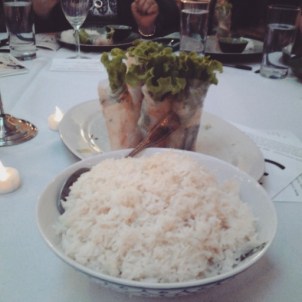
IMG_20150417_210706Earlier that same day I stopped by my favorite Vietnamese deli to pick up lunch. The shop is small so everyone is in everyone’s business. A White family stepped in and the father picked up tofu spring rolls and said to his teenagers “Let’s get these, what are they called? ‘hee hees’?” He was being serious-funny. I gave him the stink-eye. It was rude to insult another person’s food with a made up name that sounds like something a toddler would say. That behavior wouldn’t be condoned by children in a mainstream restaurant, yet when a White dude steps into a Vietnamese deli he can get away with it.

These two examples happened in one afternoon. These two examples didn’t lead to devastating consequences, but they demonstrate the underlying values that people in my community hold. I have so many other examples of individual, structural, and organizational racism. I’ll save those for another day, some of them are worth sharing because they are so painfully sad or just sad-funny.

Racism Matters
We have to own up to our actions. We also need to begin to see that sometimes we make mistakes but we also learn.

“We weren’t trained to admit we don’t know.  Most of us were taught to sound certain and confident, to state our opinion as if it were true. We haven’t been rewarded for being confused. Or for asking more question rather than giving quick answers. We’ve also spent many years listening to others mainly to determine whether we agree with them or not. We don’t have time or interest to sit and listen to those who think differently than we do.” — Meg Wheatley, Willing to be Disturbed

In order to undo racism we have to admit we don’t know. We don’t know what it is like to live in another person’s experience, we don’t know how a person will react, and we have to be ok with not being rewarded or having the answer. The rewards will show up in learning about others and creating a more inclusive community. We also have to learn to ask better questions and to ask why is it ok to make another person feel lesser because of their race.

When we admit we don’t know we begin to build an understand, we build relationships by being open to new ideas. When we admit we don’t know something we are also bringing voice to the unknown and breaking the code of silence. The silence is hurtful and is a tacit form of anger.

Racism Matters, our Collective Voice Matters
At a gathering of African American families I sat next to a high school principal. At one point he leaned over to me to tell me about the restorative justice work his school has undertaken. He said they started learning about restorative justice, but quickly pulled back. They didn’t pull back because they didn’t believe in restorative justice, instead they chose to lean in and do they work by starting with themselves. He realized that he and others had to heal themselves before they could create an environment conducive to restorative justice and community building.

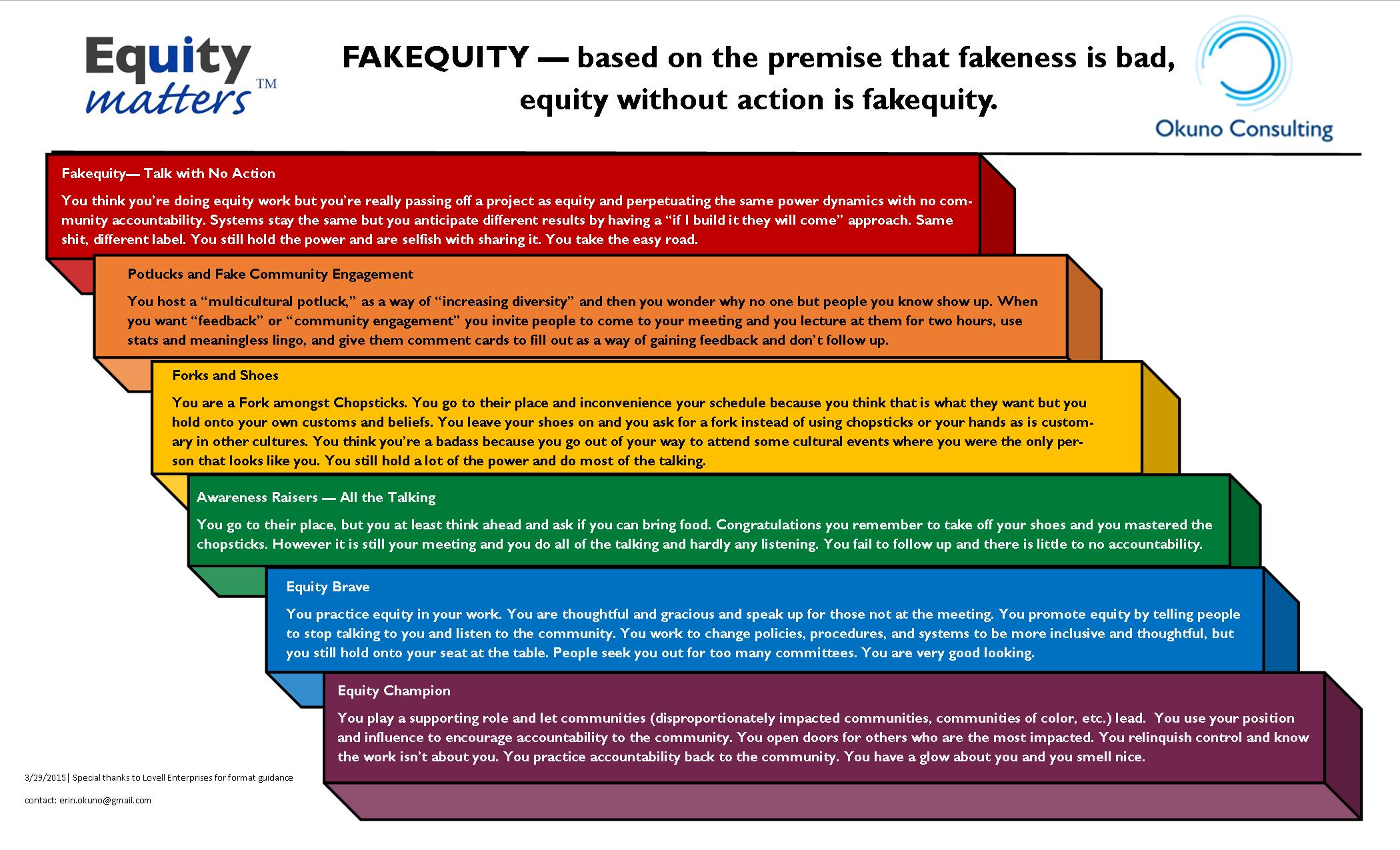
We need to do our own work around learning about race and racism, myself included. I need to grow as a person and stretch my thinking about race. Several years ago I would have been annoyed by the two incidents I wrote about earlier, but wouldn’t have been as pissed as I am now. On the positive side, several years ago I wouldn’t have known how to put together the Fakequity chart that guides me and others on how to work towards racial equity. I hope you’ll join me in continuing to learn so we can have a collective voice around calling out racism in its many forms.

We need our collective voice to rise up and call each other on the racism that exist. Sometimes this is in comments or actions that take place on a personal level, or in policies and within institutions. With enough collective voices we can begin to root out racism and build stronger communities.

Giving Thanks for Diverse Books

Happy Day After Thanksgiving! Hope you had a nice time with your family and friends or whomever or whatever you chose to celebrate with. We celebrated by renting a yurt at a state park. It was a great plan until the heat went out in the middle of the night and we froze in 30-degree weather. A two night stay turned into one, it was memorable and cold.

——

In the spirit of sharing something good and a project that brings me thanks, I will share what I’m reading. This past summer I took the Diverse Books Challenge, and pledged to read 15 books by authors of color. The We Need Diverse Books campaign started a few years ago to highlight the alfneed for more diversity in children’s literature. The campaign included a story in The New York Times showing how few authors of color and characters of color there are in children and young adult’s literature. One of my favorite pictures from the campaign said “We Need Diverse Books because there are more aliens/werewolves/vampires/yeti in books than People of Color.” If you are a yeti or a vampire you’ll feel good about seeing yourself reflected in American literature.

I took the diverse books challenge because I felt the need to diversify the media I hear from. I took it as a personal challenge and I control a lot of the books that come into our house, so it spilled over to my family. As the family library goer I control a lot of the books our children consume. As a result many of my 15 Diverse Book challenge books are children’s literature (plus children’s books are faster to read).

I want my funyuns (children) to see diverse characters, understand others, and to see themselves reflected in books. Seattle author Ken Mochizuki, author of several children’s and young adult books, writes “the value of fiction [is] it can sometimes prepare you for what happens in life.” My job as a parent is to prepare my children for life, and life beyond our home and family. Books are helping with this preparation.

The Diverse Books Challenge has exposed us to lots of new authors, and reread several favorites. Taking this challenge has forced me to be more mindful about my book choices, and open me to new authors. Instead of just picking books off of top-ten lists, or through recommendations, I spend time looking for authors of color.

What I’ve Learned

Authors of Color are in Every Genre—A few of my favorite books in this challenge have come in unexpected places, including a book about house cleaning by the Japanese cleaning phenom KonMari or the audio version of Oprah’s book What I know for Sure. Authors of Color aren’t relegated to only world literature or the entertainment or sports sections of the library, explore and wander the shelves.

Gatekeeping in Publishing—I think it was in a Star Trek episode I heard the line “History is written by the victor.” This means that many publishers cater to mainstream audiences because they have the power to publish. As a reader I have to push to have diverse stories featured in books and put on the shelves of bookstores and libraries. As People of Color we have the numbers, if we demand to see authors of color featured they will be. Be vocal and demand to see authors and authentic characters of color featured in books. Two publishers that currently standout are Blood Orange Press and Lee & Low. (I don’t work in the publishing world, I only keep track of this on a marginal level. Perhaps there are others I don’t know of.)

New Perspectives—Being exposed to books by authors of color has brought interesting viewpoints that I wouldn’t have thought of otherwise. For instance in the book Being Mortal by Atul Gawande made me think about aging across cultures. I also learned about the Freedom Rides from Senator John Lewis, I could have read about this period of history from a traditional history book, but reading Sen. Lewis’ version brought it to life in a real way.

Mindfulness—I just started Silence by Thich Nhat Hanh who writes about being mindful about the media we consume. This experience has shown me how mindful I have to be with exposing myself to different thoughts and perspectives. The We Need Diverse Books challenge has pushed me to dig deeper and to counter some of the noise. I still read the news and enjoy many mainstream media channels, but I try to ensure I keep different perspectives coming forward.

Requesting Books by Authors of Color—I’m fortunate to live in a city with a well-supplied library system. The Seattle Public Library provided me with almost all of the books I’ve read for the book challenge. Part of supporting authors of color and pushing publishers to publish more diverse authors is to get their books put into libraries and purchased overall. At the Seattle Public Library we can request books added to the collection through an easy online form. I’ve requested books for this challenge and the library has ordered them, a win-win-win. Win for the library that now has a more diverse collection, win for the author who has more readers, and win for the publisher with a higher book count.

Reading to Children—My children love being read to and I enjoy sharing books with them. About a month ago my kiddo said I could choose what we would read before his bedtime so I picked up a journal on racial equity. This is what he said “All I hear is word, word, word, word, word.” In other words he was tuning it out, he needs to see himself reflected in stories so he can understand the world around him. He recently brought home a book from his school library featuring a multiracial family. He chose the book because his teacher read it to him in class and he wanted to share it with me. He said he chose it because he wanted me to read it with him, he was in control and wanted to share it with me.

What this has to do with Equity— Diversifying what I read informs what I think. Equity work requires understanding others and realizing that our world view is only part of the picture.

Here is my list of 15 (and some bonus books) for the We Need Diverse Books that I’ve read over the past few months:

I hope you’ll join me in reading authors of color. Please share your favorite books either on Facebook, Twitter (@fakequity), or in the comments below.


Equity isn’t a Thing to Solve

I’ve spent the past few days in a training on equity. One of the lessons I learned from equity champions was: “Equity isn’t a thing to solve. We solve problems through equitable solutions.” The point the speaker was making is we can’t keep throwing the term equity around. It isn’t that we need to solve for equity, like an algebra problem: X + Equity = 209 happy children, but first we have to isolate equity so we can make sure we get it right – wrong/fakequity. We can’t isolate equity, equity is the process and the methods to get toward equitable results.

Equity isn’t a Thing to Solve or Isolate

One of the problems I continue to see is organizations trying to solve equity. They have separate line items or boxes on their workplans labeled equity with targets such as “recruit XX% of people of color,” or “hear from 10 communities during the community phase,” or my favorite phrase “it’s the equity factor.”

Equity isn’t the thing to solve, it is the solution to the problem. The problem should be defined by disaggregating data, communities most impacted, and asking the right questions to really understand the underlying systems in place that are holding people back. Once the problem is defined, equitable solutions begin to present themselves.

Slapping an Equity Label on – Bitter Lemons

bitter lemonA few years ago I was invited to be a grant reader for “equity grants.” The funder has a fancy theory of change; it is a really pretty infographic that is easy to understand through pictures. This grant round was a way for the foundation to flex their equity muscles. The organization was proud in pulling together the money to offer these equity grants.
As a grant reader I got my packet of applications and started reading. As I read I became more and more disappointed. The grants were from mainstream organizations and the projects were directives from their organization down to the community. There was little community voice, let alone communities of color defined solutions. From the community perspective the projects were lemons, pretty to look at on a tree from afar, but sour and tart when bitten into.

What Went Wrong

Slapping an equity label on the grant round and isolating the effort didn’t produce truly equitable results. What went wrong was the grant making process and the organization stayed the same—in other words the organizational and process systems didn’t change, but they were aiming for a different result.

By keeping equity isolated to the grants and not embedding it across the organization, it defaulted to what it knows and what is easy. In this case the funder started with what it knew, it knew mainstream organizations and partners, it knew how to do grant making through traditional means (i.e. send out Request For Propsals to people they know, expect properly formatted LOIs back, make grants, and expect reports back), and it was informed by voices from within the organization not the community.

How to Get it Right—How to Make Lemonade

Equity isn’t the problem to solve, equitable tools are needed to get to equitable results and solutions. In this case the funder didn’t define the problem correctly, it took the easy way out and said “we want to impact equity so we’ll give out equity grants.” There are no such thing as “equity grants.” This is the lazy way of doing things. What the funder should have done is look at disaggregated data, listen to the community, and allow the community to define its own problems. The funder, or whatever group is working on a problem, then uses its power to put together a process that targets the problem. The principles of racial equity should be embedded into all of their grants or plans, not isolated to one grant cycle or activity.

The grant making process needs to change to get equitable results. This is where we take those sour and bitter lemons and turn them into lemonade. In order to make lemonade we need to acknowledge not everyone or every group with lemons also has the right materials to make high quality sweet lemonade. In order to make lemonade you need clean water, sugar, and a pitcher—in grant terms does the organization have access to the grant, do leaders within the organization know how to write a grant and get it submitted, can the organization navigate a site visit and build relationships to receive funding, who is reading and scoring the grants, etc.? If the answer is no, then we’re stuck with lemons and won’t get lemonade.

We also need to acknowledge not everyone has the same access to the ingredients to make lemonade or win a grant. For some the burdens to get this access is greater. In order to get equitable results we need to change the structure of the grantmaking process.

  1. Define the problem correctly—disaggregate data, listen to the community, allow the most impacted groups to define the problem to solve.
  2. Redefine systems– Change the application process to allow those most impacted a fair chance at receiving a grant. Ask about distribution channels, ensure large organizations aren’t competing with smaller organizations for the same funding, look at who the grant readers and scorers are, do grant seekers have the tools and information they need to apply?
  3. Questions assumptions– Does it need to be a grant or are there other mechanisms to solve the problem? Is the grant structure right for accomplishing the goal and solving the problem?

In answering the questions we can begin to insert equitable changes into the process, which will help get to equitable results.

Redesigning the System to Embed Equity

In future posts we’ll explore examples of when this is done right. We all need something to look forward to and inspire to.

A special thanks to Bao N. for her thoughtful lemonade example and prompt. She offered the prompt as a dare to use it in a sermon. I’m not a sermonizer just a bitter old lemon, but I took the dare and hopefully made some lemonade.

Posted by Erin

Voting and Equity

I just got back from the PolicyLink Equity Summit in Los Angeles. Being surrounded by palm trees and so much talk about equity was like being drunk on jalapeno margaritas for three days.

Before I left I voted; I’ve been ruminating about this voting and equity for several days. Attending the Summit refined my thinking about why elections matter to People of Color and why we need to ensure our votes count.

Every Vote, Every Ballot Matters
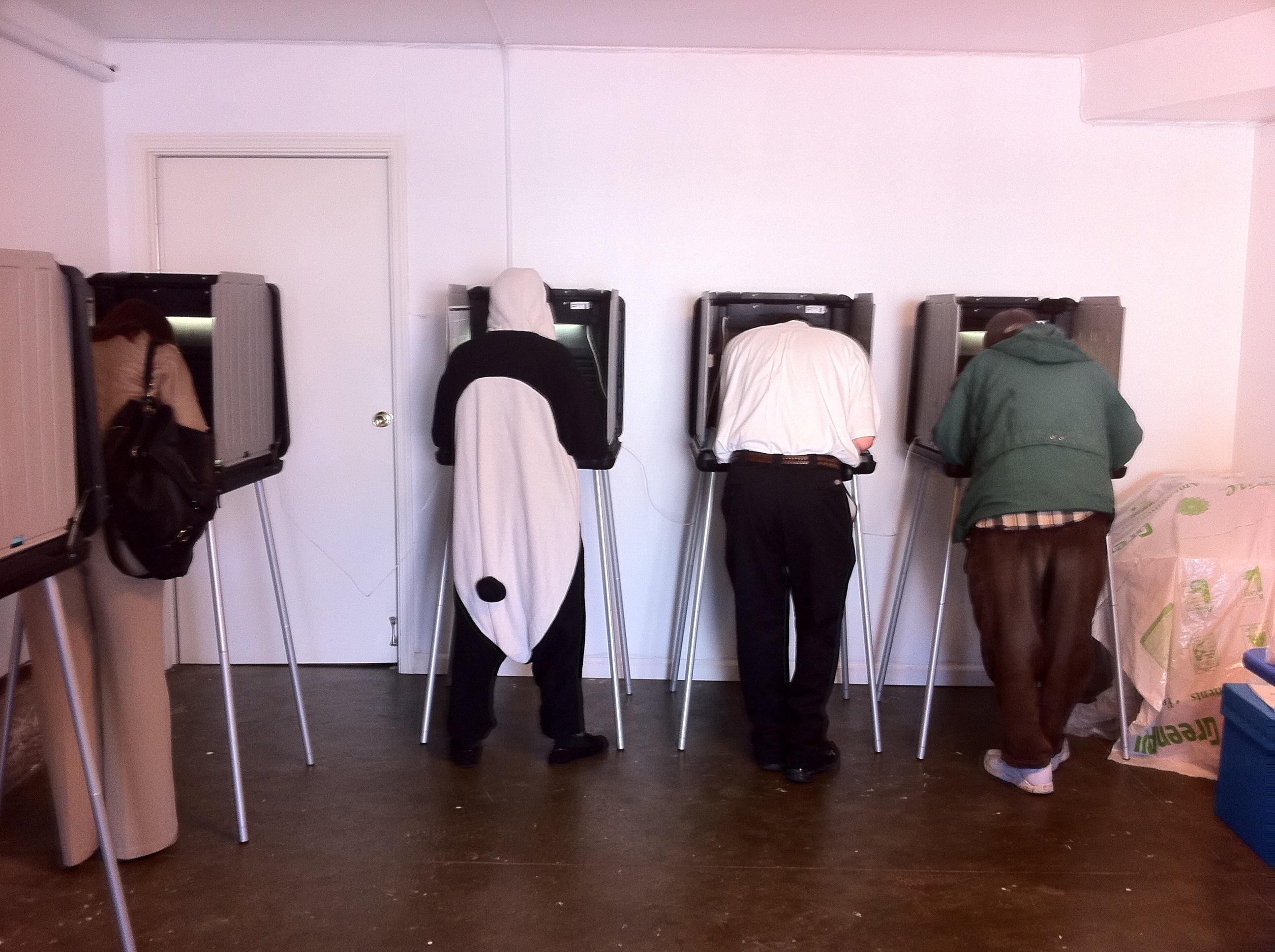
PandaButtVotePeople of Color need to take voting seriously. It is an important way for our communities to have our priorities heard, and a say in how we want to live our lives. As a society we have a long way to go to getting equity right in elections. As one speaker at the Summit said “If voting didn’t matter, they wouldn’t be trying to take away your vote.”

Elections and voting are not my everyday thinking, I spend more time thinking about the best banh mi sandwiches and equity in education. What I learned was problems are still prevalent in the election system. A panelist from Common Cause spoke about how an Assemblyperson called her during redistricting and said “I won’t have another f**ing Asian in my district,” she represented an area close to Chinatown in San Francisco, so it’s kinda hard not to have an f**ing Asian in her district. Another speaker told a story about an African American was denied a vote because she was expunged from the voter rolls because her name was the same as someone else, and because there was no same day registration she couldn’t vote. Or in another place during redistricting apartment buildings were split into two separate districts—I’m still scratching my head on that one. These aren’t the stories from the Civil Rights Era, these happened within recent history.

Every vote matters and we need to ensure we are counted. Here are my four take-aways from the Equity Summit around voting:

  • We need to vote—We need to band together and remind people to vote. We need to show up and cast our ballots, we need our ballots counted. Find someone who isn’t registered and hold their hand as they register, then remind them to vote.
  • Remove barriers to voting—We need to understand why People of Color aren’t voting. Is it because of crap-filled policies keeping voters away? We need to call government on their stupid policies that are keeping people from voting. We need to create greater access to voting (more on this later).
  • People of Color on Ballots—To my tribe, my ohana, we need to step up, we need to start getting ourselves elected to public offices. Every elected office from School Board Directors to President is important. Even if we don’t win running for office changes the conversation and puts a different narrative forward. I am so proud of my friends and colleagues who made the leap and ran for office—you are brave, you are speaking truth to power, and we are better because of you.
  • Census—2020 will be the next U.S. Census, and we need to be counted. I learned at the Summit how important the census is to People of Color. It is the one time where everyone in America counts. As the speaker said “It doesn’t matter if you are 1 day old or 100 years old, it doesn’t matter how or why you are here, you count as one.” We need to be counted so we can be seen. Start planning how you’ll reach out and get people into the census count.

Access to Voting
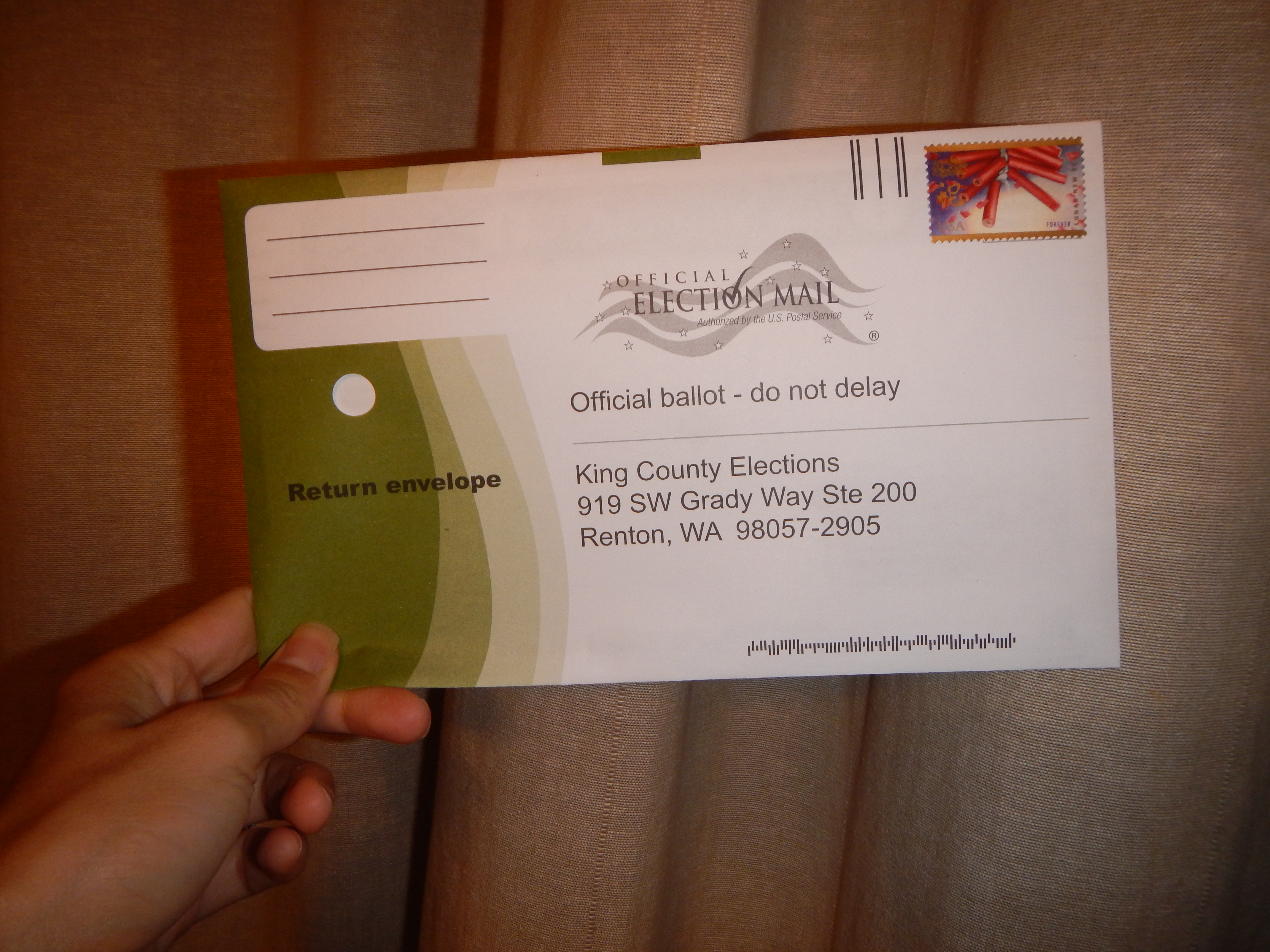
DSCN3414As I mentioned earlier I voted and I am annoyed, I had to stick a stamp on my ballot. I realized my problem is a privilege problem. No one took away my right to vote, I got my ballot, and I can afford the stamp. But I am calling fakequity on the lack of access to cast my ballot without the “stamp-tax.”

If we’re going get communities of color to vote en masse we need to create better access to voting. In King County there are no permanent ballot drop boxes in S Seattle, thus limiting early voting for an area with a high population of People of Color and higher poverty rates. Early voting is important in capturing more ballots. Here are two ideas to capture more votes:

  1. Give people the stamp, Universal Access to Voting: We need to remove barriers to voting and create systems where people purposefully opt-out. If we give people prepaid return envelopes it removes the cost and mobility (getting to a drop box) barriers. We already know from other sectors that prepaid envelopes yield higher returns, why do you think you get so many credit card offers with prepaid envelopes? If we value voting as much as we say we do than it should be fully funded out of general fund taxes or a small fee on something like the cost of getting a driver’s license. It is a small price to pay for a right that impacts all of our lives. I’ll tax myself the cost of a banh mi sandwich for greater equity in voting.
  2. Go Where the People Are, Ballot Boxes Everywhere: One of the simplest ideas in equitable design is you go where people are. On a weekly basis I’m at the library, grocery store, train station, and sandwich deli; we need ballot boxes where we live, work, and play. Now someone is going to say multiple ballot boxes will expose the system to fraud, this is a fakequity argument. Voter fraud, while it still exist, is rare so the argument that this might incite voting fraud shouldn’t trump fair access to voting.

Voting Movement
The final idea is we need a movement around voting. Voting is so important we can’t get complacent and believe that it is another person’s job to encourage communities of color to vote. Maybe we need a hashtag to start the movement: #POCVote or #FakequityVoting.

Go vote.

Posted by Erin

Meet the Fakequity Team

Jondou Chase Chen, PhD, is a storyteller but he disguises himself as an academic researcher. Dr. Jondou studied developmental psychology, and now works on equity in education. He came up with the term ‘weaponizing data’ and is currently working on a chart explaining this concept. On a perfect day he can be found out back splitting fire wood and building an outdoor oven for cooking.

Roxana Norouzi’s passport is filled with passport stamps; in some places they are three deep which gives her a unique perspective of the world. Roxana spends her days working for immigrant and refugee rights and voice. On the side Roxana dances better than the stars on Dancing With the Stars.

Cherry Cayabyab knows the community and they know her. As a community organizer and leader Cherry has worked with amazing grassroots leaders to keep communities rooted and thriving. Cherry fights Fakequity by doing hard-core community engagement and outreach. Cherry’s ideal vacation is to Hanalei, Kauai sitting beachside with a drink, poke, and a nice trade wind to keep things cool.

By day CiKeithia Pugh works in the early learning field connecting literacy resources to underserved communities. She’s a Race and Social Justice Initiative facilitator and works hard to infuse equity into her projects. CiKeithia believes Fakequity Fighters should call fakequity in style, and often wins the best dressed award when we gather.

Heidi Schillinger runs a consulting firm Equity Matters which provides equity training, consultation, and analysis to government agencies, nonprofits, and philanthropy. Heidi’s brain is uniquely wired to spot fakequity and work to remedy it. Heidi does some of her best fakequity spotting while riding her bike, including riding from Seattle to Portland (202 miles) and Seoul (S Korea) to Busan (633 km or 393 mi). Heidi’s claims to fame include coining the word fakequity.

Erin Okuno came up with the fakequity chart after getting mad at a meeting and channeled her annoyance into making fun of fake-equity. When not making up charts, Erin can be found working on education support and racial equity. Erin is an island girl at heart and likes to eat, but prefers places her non-profit salary can support with meals costing less than $12 per meal.

Honorary Membership
We are granting honorary membership to Vu Le because he speaks, writes, and fights fakequity as part of his nonprofitwithballs.com platform. Vu is pretty great, but we don’t tell him that too often before he thinks he’s a unicorn, which we all know don’t really exist. Besides fakequity pandas chomp the horns off of unicorns most days.

Welcome to the Fakequity Blog

Fakiequity Chart

Hi,

Welcome to the Fakequity blog. The Fakequity team has been throwing around the idea of a blog for several months. We finally did it. This blog may or may not be our final home, we are doing a trial to see how blogging fits into our professional and private lives, and if we have enough material to make it a quality blog.

We’ll blog about racial equity and its nemesis Fakequity. Some of the posts may veer off towards equity’s siblings and cousins diversity, inclusion, culture, community engagement, accountability, etc. They are all related and we need to understand and think about a lot of different things in order to get towards equity.

Sometimes we capitalize Fakequity, sometimes we won’t– don’t hate us for our inconsistency. Its a made-up word so the rules around its use are a little loose.

Some of the posts will be authored by member’s of the Fakequity team, others may be guest posts, and some will be posted under the cover of Fakequity. We envision some of the posts will push the boundaries and therefore having a name attached to it might not be the best for our professional careers. We aim to talk about what needs to be talked about, but we still need paying jobs and paychecks to buy ourselves tacos and pho.

We’ll aim to post about twice a month. Our Facebook page gets more action, check us out there for more current Fakequity thinking.

Settle in, grab a cup of tea, and get to know Fakequity. You can start by reading the Fakequity chart. We’ll post more blog posts soon.

Sincerely,
Erin and the Fakequity team