Treading Water in the Fakequity Pool

Hi, Last week we wrote about tacos and listening to diverse voices. We’re not alone in sharing that message. After you read this week’s post by CiKeithia, go check out Sheri Brady’s Building Many Stories into Collective Impact at the Stanford Social Innovation Review blog. She shares a similar message, but without a taco analogy. -erin

—————————–
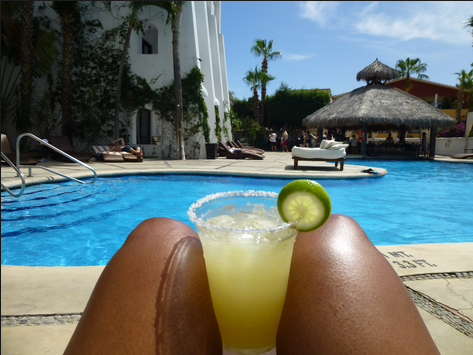
Pool-and-DrinksIt’s ironic that I would use the example of treading water because anyone one who knows me knows my feelings about swimming.  It’s not what you’re thinking, insert stereotype of black people and water here; I find pleasure sipping a drink in a cute glass poolside with an occasional dip of my toes in the water.

I’ve worked with children, and in support of children and families, for over ten years. I’ve learned many things from working with families, and it is my ongoing work in communities where I continue to learn. Lately, I’ve become overwhelmed by the idea that those of us doing this work think we know it all when it comes to community. I feel like I’m treading water in a fakequity pool.

Community Engagement the Fad
Community engagement is the new fad, like the return of the flare leg jeans. You’ve seen the announcements: “We want to hear from you,” take this online survey, flyers inviting you to see the new space, and my all-time favorite “Join us for a community conversation!”

Where do these ideas come from? I’ll award a few points for trying, but there’s more to understand. What good is the survey if it’s only available online? You’re only reaching people with access to computers and the internet. Are you planning on sharing the results?

What good is the flyer if it’s only shared in easily accessible communities and not accompanied by a personal invitation? Would you attend an event if you didn’t know anyone? Maybe if the food is really good or the speaker is outstanding, but a personal invitation makes you want to engage more.9063547_big

Finally, a community conversation is absolute nonsense. In order for it to be a conversation then both sides get to be heard, otherwise it is a presentation. And don’t collect feedback through collected index cards, the community doesn’t know what happens with that feedback.

Believing in Community Engagement, Here’s What to do

We need to create space for voices that are normally excluded to be heard. It’s tough to examine our current practices and turn the lens on ourselves. No one wants to have their positive intentions questioned, but it’s required if we want to get better. If you can’t receive the tough criticism you are most likely perpetuating fakequity.

I feel like I’m treading water because it’s the online surveys, flyers, and one-way community conversations that have me trying to keep my head above water. Truth is there is no single way to engage the community, but rather a variety of ways and if you are truly are invested in community you’ll do the hard work. Showing up and building relationships will get you better results than an online survey or a one-time conversation.

Working Towards Equity

Next time there’s a survey challenge the unintended results of only hearing from those who are loudest. Don’t just make a flyer, make personal connections beyond your usual networks, and finally stop with the community conversations if it only serves your agency’s purpose of checking the box that you offered it and now you can move on with the work.

My feeling of treading water will never completely go away. The frustration of trying to keep my head above water however will be eased when there are others around me who ask hard questions, listen, and challenge the status quo. After all I look much better sitting poolside sipping a cute drink rather than struggling to stay afloat.

posted by CiKeithia

The Danger of the Single Loud Noisy Story from a Community Perspective

If you haven’t watched the TED talk The Danger of the Single Story by Chimamanda Ngozi Adichie, watch it. Ms. Adichie is eloquent about why diverse stories matter. No single story encompasses a whole community’s narrative. Too often we listen to the loudest or nosiest stories. Sadly too often the loudest voices aren’t from communities the most impacted by hardship or furthest from opportunities.

When I started my current job Stephan, a mentor, asked me “Where are you getting your information?” I couldn’t answer him. I really didn’t know where I would get my information– from friends, people I like, colleagues, Facebook, the news. Benita Horn, a well-respected equity leader, calls this access F.B.I.– Friends, Brothers, and In-Laws. Quickly I realized the Yoda-like wisdom they gave me. They were telling me to be careful of listening to the loudest and nosiest voices or people whom I like and think like me.

Communities are diverse and sadly systems (government, institutions, organizations, etc.) are designed to hear the nosiest, loudest, and most organized voices. Change often comes via the majority or those who have connections. However the majority or those with access to power is not always the most impacted by a decision.

Here is an example…
tofu tacoA popular restaurant, Tacos for the People, decided to democratize their menu and are open to input from the community. I really love marinated tofu tacos with cilantro and want them kept on a menu, I’m flirting with vegan/vegetarianism so I will claim minority status (for the sake of this example). For Tuesday’s lunch I decide to “vote with my wallet” and order a fistful of tofu tacos.

When I arrive at Tacos for the People I can’t get past the front door because twenty people wearing matching colored shirts and holding signs are lined up to testify in favor of fish tacos. They knew to show up because they organized via Facebook and Twitter. A member of the group alerted the media, and others in the group went to college with the founder of Tacos for the People.

If we believe that tofu tacos versus fish tacos on a menu is a zero-sum-game, in other words only one taco will remain on the menu, the odds are much more in favor of the fish tacos. Tofu tacos, even though they serve an important need for a minority (vegan-vegetarian) community, has little chance of saving their place on the menu. This is the danger in only listening to the loud matching t-shirt people, their agendas rise up and overcast voices of others who have important needs.

“If you’re not at the table, it means you’re on the menu.”
Now before we start poking holes in the example and say the tofu taco lovers should organize and get their own shirts let’s add another layer to this example. Let’s say the tofu taco community is actually a community of color, an immigrant or refugee community, or another community such as foster care, special needs, etc. that have additional hurdles to overcome in order to mobilize and make their voices heard. Showing up to testify at a State Capitol or school board meeting often means having to rearrange work and parenting schedules quickly, figure out and budget for transportation, and navigate the weird politics of testifying (i.e. how to sign in, when to step forward, what to say in two-minutes, speaking in English if English isn’t their preferred language, etc.)—those are a lot of barriers. An equitable approach would be to have the system open up their table and ensure more voices are heard. A mentor told me “If you’re not at the table, it means you are on the menu,” which means you need to be at decision making tables to influence decision making.

How to Listen and Who to Listen to
Thinking back to the advice I received from my mentor, I’ve tried to act upon it. It is easy to get swept up in the voices of the majority and to think everyone thinks their way. It is also easy to default to those we know and their voices, this is fakequity. We have to remember communities are diverse and those farthest from opportunity have important stories we need to seek out. kungfu-panda

As leaders and community builders we need to seek out the voices and messages, not just the noisy voices. It takes time and effort to get out and find different voices, but the return on the investment of time and energy is worth it. Start with people you know then ask them to introduce you to others, and keep doing that. Ask someone to take you to a meeting you wouldn’t normally attend because their community is different and sit and listen, and go back again and again. Don’t talk at the meeting, just listen. Over time trust builds and people will share their thoughts with you and relationships start. Going fast and listening to noise is easy—fakequity. Going slow and building relationships is EQUITY.

UPDATE 10.20.15: We’re excited to see more voices reinforcing the message of the need for multiple stories. Sheri Brady, from the Aspen Forum, published Building Many Stories into Collective Impact which looks at the need for diverse stories in collective impact efforts. Check it out and leave her a comment, for that matter leave a comment here too.

posted by Erin

Why and How We Mourn as a Community

Hi, Thanks for returning to the Fakequity blog. Our colleague Vu at Nonprofit With Balls said we have to blog consistently so we don’t become a fakequiblog (fake-equity-blog). We’re taking his advice and will blog on Fridays, unless it is a holiday, school vacation, we get hungry, or the moon rises. Tell us what you think and that will make the fakequity team want to blog more, fakequity@gmail.com. -Erin

—————————-

This blog post is a sad one. We have to acknowledge the sad to get to the funny, the truth, and to build a community. How we mourn also says a lot about how we live and the communities we live in.

flowerEarlier this week a high school football player died after a tragic accident. I heard about the accident through the news and figured I would hear of someone who was connected to the family. That is what it is like in communities of color and when our work is in the community—we are all connected. The connection to the football player was through Heidi, a member of the Fakequity team. Heidi spent most of last year riding her bicycle with students from the same high school as the student who died. Yesterday, she was back on her bike with the kids because that is how they wanted to process the death of their classmate, they were sad but they wanted a sense of normalcy and to release some pent up energy. The ride was meaningful because the organizers and students acknowledged the death. They made space to talk about the loss, it sucked, and we are sad. They did what they needed to do together, the students asked to ride so that is what they did.

Death is like taxes— it happens, but unlike taxes we don’t know when. Unlike taxes it isn’t anonymous, we often know someone who is connected to the person. In communities of color this is doubly true and it requires sensitivity. I share office space with the Vietnamese Friendship Association. Last year one of their students died while swimming in Lake Washington. Like the football player it was tragic, sad, and the community came together. Even though I hadn’t met the teen, I heard stories about him and watched a video of his dancing at prom just weeks before the drowning. The hard part was seeing how this was affecting my colleagues, then jumping onto a conference call with people who had no idea about the death even though they live and work near Lake Washington. I remember joining the conference call and saying “Hi, how are you… yeah, I’ve been working with my colleagues to share information about a memorial fund…” I had to do some serious code switching on that call.

Often times after a death there is still work that needs to get done, there are still clients to serve, people who need something in order to keep organizations moving. Yet when we don’t pause to honor and reflect we lose a part of our community. We sometimes need to change course and be bolder and say “the work can wait,” people and our relationships are more important.

We Share the Burden
kodenCustoms around death are an important part of how we mourn, celebrate, and honor our colleagues and friends. I’m a Hawaii raised Japanese American, in my culture when someone dies we send koden, condolence money, to the family. It is an acknowledgement of the death and a way to say we want to share the burden. As my mother tells me (she’s not an anthropologist or a scholar on Japanese in Hawaii, so take this as mother-lore) the Hawaii version of this Japanese tradition stems from the plantation days where the community would come together to help pay for a funeral and help the family through the immediate future. I love this custom, I love that we come together in good and in bad times. I love that there is a tangible way to honor and say we want to help without being intrusive and with no expectation of reciprocity.

I decided to write this blog post because if I’m doing my job right I’ll meet lots of people. It also means life and death happens. I want to celebrate with friends and colleagues when babies are born, congratulate people on achieving milestones, and when death happens I want to be there to share the burden and loss. In community building, which is a part of equity work, it is the relationships that matter and the relationships that sustain us and bring about change. We need to nurture relationships and be there for the fun and the sad. If you only show up for the fun that is fakequity, equity requires embracing the full experience.

Grace Lee Boggs, the legendary centurion social justice philosopher and activist, said “The only way to survive is to take care of one another.” That is the epitome of equity work, we take care of each other, we value each other, and we work together. Next blog post we’ll talk about something more fun, unless I decide to blog about equity in the Washington state tax structure.

Posted by Erin

Luck Doesn’t Create Equity—Good Design Yields Better Results

The other day, mymoney-on-the-ground-thumb6979289 kid found $20 on the ground, we used that to buy pho for lunch– we got lucky. I can’t count on him finding money every day; that doesn’t sound like a sustainable system for eating. Same goes for children. I’ve heard stories of the really lucky children of color who grew up in poverty, found a great mentor, and graduated from an Ivy League university, goes on to a really great life. Guess what, that isn’t an equitable system, that is luck.

Luck doesn’t help all children, luck doesn’t ensure children or color have a fair chance at life, luck isn’t a system, luck isn’t sustainable, luck is just that luck. Relying on luck is synonymous with fakequity. The principles of racial equity ensure children farthest behind have the same chance as other ‘lucky’ or privileged children.

Luck Isn’t a System

Heidi, of Equity Matters and part of the fakequity team, said her goal for the lunar Year of the Ram is to think about how work is designed. How we design projects, physically arrange rooms or items, or how we design our lives says a lot about what we value. Designs also predict outcomes and solutions and serves as an anchor point for future work. This is why it is so important to embed the principles of racial equity into everything we do, the more anchor points in place the more equitable the long term results. Anchor points are components of a program, they can be anything from the leadership team to customer interaction, recruitment, to forms and data collected, location, etc. The fewer equitable anchor points, the more entrenched inequity becomes in the system and the harder it is to create positive change. Systems are there to preserve the status quo, which is why it is important to create policies that embed equity.

As an example of this, I facilitate a monthly coalition meeting around education. I love our coalition work together. At the meetings we have a wide mix of people; the attendees in the room are reflective of the community we aim to serve. We also have a wide variety of disciplines involved—government, educators, community and human service organizations, law enforcement, etc. It makes for a dynamic meeting. This diversity didn’t happen by luck or accident, it took cultivation and work to bring people together and to keep them coming back. Diversity isn’t equity, it is a component, like the shoe laces to the shoe it helps to tie the shoe to the foot (bad analogy, but it is what you get at 12.15 a.m.).

We design our meetlucky-charms-lucky-charms-mash-up-600-96371ings to capture the essence of our community, we can’t count on lucky charms to get us through. Everything from location, time, outreach efforts, agenda items, meeting format, etc.—in other words, we do our best to embed racial equity anchor points into our meetings. We don’t get everything right, but we try and we tinker with our format to get more and better anchor points in there. Our successes didn’t happen by luck, it happened by being intentional and creating systems that hold us accountable to our community.

Designing Better Systems

  1. Be clear about what you are designing and the outcomes—What is the ultimate outcome of your project/program? Are you clear about the goals as they relates to race? Aristotle said “A good style must, first of all, be clear.” Be clear in your racial equity goals, let that drive your system design.
  2. Think about your design as it relates to anchor points— Anchor points can be anything from where an engagement takes place such as recruitment to infrastructure such as are HR policies and recruitment. The more of these that are aligned the better the racial equity results.
  3. Design your systems to allow unheard voices to rise up—Are you intentionally allowing unheard voices time to share. How are you designing your meetings—are people sitting in a circle, small groups, or are they sitting by themselves isolated? Do you break people into small teams to work? Small group work allows for people to interact more. Are you breaking up cliques? When people walk into my meeting I strongly encourage (some would say I’m bossy about it) people who know each other to sit at different tables this forces new relationships to be built.
  4. Force accountability—Build in accountability both formal and informal. I am accountable to our coalition members and I remind them of this. At our meetings I force people to turn in exit cards, answering three questions: 1) what did they learn or like, 2) what didn’t work or they want changed, and 3) anything else they want me to know. I stand at the door and make people turn in exit cards before they leave. This builds in accountability for me, but it also builds accountability for coalition members to think about why they came and participated. Trust me when I say they didn’t come for the free food, our snacks are mediocre. In the future I may tweak the questions to be more explicit about equity.
  5. Fix your design as you go along—Some anchor points will be right, others will need to be tweaked. Is your design getting you the racial equity goals? If not make adjustments. Communities change and we have to adapt and change with them too.

Good design will bring, good results and after a while luck will be on your side. Just the other day, I got really lucky and a coalition member offered to bring a really great speaker to a future meeting. To some it may look like we got lucky, but it took a lot of hard work into designing and carrying out strong meetings that focus on equity. I’ll take the luck and keep working on equity.

Posted by Erin