Why we Need to Stop Using the Word Minority

2000803

Pride Asia Event in Seattle, photo by Erin O.

Before we share this week’s post, I want to say Happy Pride Week in Seattle. This year’s theme is The Future of Pride, a fitting theme.

I’m writing on a plane heading home from a week in Boston. It was a great week, even with the East Coast dress code (no slippas and Aloha shirts) and bias against West Coast time difference (7.00 a.m. start times– brutal). I spent the week with about a hundred talented and brilliant people from various sectors, working to make their cities great. One of the most interesting parts of the trip was hearing how people talked about their communities and the different problems different communities face. There is a whole blog post about how our problems are all the same and different, but that one will come at a later time. Being in Boston with peers from across the nation highlighted the differences in language we use and subtleties of perspectives.

In my writing and speaking I use the term ‘people of color,’ or abbreviated to PoC or if I’m lazy poc. Language changes and evolves over time. Just a few years ago we used the term minority to refer to what are now known as people of color, or one or two generations before my grandparents were called Jap as a commonly accepted to reference to Japanese, now it is a derogatory term. We need to pay attention to language and how it is used and preferred by communities of color.

To read about the history of the term people of color, here is Wikipedia’s page. No term is perfect and the term people of color has a history some may agree with and others will disagree with. That said it is still time to stop using the term minority and currently the popular term of choice is people of color. Until our language evolves again I want to see us phase out minority in favor of a people centered approach.

Stop Saying Minority
Throughout the week I heard people use the word minority to refer to people of color. I also saw people give me puzzled looks or a raised eyebrow when I said people of color versus minority. Language changes across regions and sectors, and we need to stop using the term minority no matter where we live, work, or play.

The word minority is problematic. At one time there might have been a minority group, as in fewer people of color, but those trends are rapidly changing. Across the nation few communities are untouched by demographic shifts – let’s face it our cities and communities are becoming more diverse and our language has to shift as well.

Quickly people of color are becoming the majority, hence the term minority no longer fits. Some call it a Majority Minority, which is ironic like the former Starbucks campaign #RaceTogether (get it, if we’re racing we’re not together). In the 2014-15 school year Seattle Public Schools students of color made up fifty-four percent of the student count. Schools are often a harbinger of change in our cities. The term minority does not adequately capture the changing student count, nor the collective need to shift educational experiences for children of color. It also doesn’t acknowledge the growing family base and collective base we have in communities.

The word minority denotes a minority or smaller status. As a person of color I’m not smaller nor  lesser than another; I may be shorter but my voice has equal status. I have the same rights as others in my community, not more or less but equal. The term minority is pejorative; we do not need to justify our status or make ourselves smaller to fill a label.

People of color are the majority or will quickly become the majority locally and nationally. As such we need to recognize the collective power and diversity in our joined experiences. The term people of color or communities of colors puts the emphasis back on people and communities. The term minority allows us to fall into an amorphous blob of otherness; we cease to be people and communities. In many ways we fall into the background.

We are In this Together – We need to Be a Majority
Changing language from minority to people of color also needs to include the notion of we are in this together. As people of color we are the majority and we need to support each other. We need to work together and build coalitions that push for change as coordinated ‘people.’ We need to do the cross-cultural and cross-sector and cross-cause work to be united.

Moving from a minority status into a majority count gives us a greater presence and a greater need to be seen as a unified voice and support for each other. As an example Heidi shared the words of Sonja Basha, a speaker at the Seattle Orlando Shooting Vigil: “The Muslim community and the LGBTQ community are not separate; we mourn together. I am Muslim, I am queer and I exist. The fact that I exist does not erase the fact that you exist.” Our existence together will bring greater prosperity to all, it also slows down or stops divide and conquer strategies to separate us by racial and ethnic groups, sexual identity status, or to be ‘othered’ in other labels.

Heidi also points out “Even in ‘majority minority’ school districts or cities, people of color may be the numeric ‘majority’ in the community, student and family population, but it is highly unlikely that they are the ‘majority’ of the power holders; teachers, administrators, school board members, funders, etc. This plays into the false dominant society narrative that we are all ‘equal’ in power, or will have the exact same experience if people of color held majority of leadership positions on a board or in an organization.”

Language Makes a Difference
Language makes a difference in how we see ourselves and how we see each other. One of the lessons I re-learned this week is how language helps to frame problems and helps us understand problems and see solutions. How we identify and frame a problem the labels we attach to it can positively or negatively frame a problem.

The collective term people of color doesn’t take away from our individual races and ethnicities. In my interpretation it doesn’t dismiss our histories or individual cultures as African American or Black or Latinx or Asian Pacific Islander or Native American or Mixed Race or however you choose to identify. It is a way to say collectively we matter and we collectively want to see an end to institutional and systemic racism. The term people of color is meant to say as poc we have shared experiences not common to whites, which sometimes involves racism, power grabs, or the reverse beautiful and joyful experiences because of our cultures and communities. Put another way, my experiences as a Asian-Japanese American adds to the collective experiences of being seen as a Person of Color, there are many times when I want to be part of the collective and to share in the joys and the heartaches.

When we speak with honor and acknowledgment for people of color and use language that sees us as people we are seen and heard. As Heidi wrote about last week in talking about love and emotions in our work, language can either evoke love or be used to tear us apart. Let’s choose to use language that sees us as people, communities, and in positive ways.

For some interesting videos on race and what people are saying check out these videos by The Seattle Times: Under Our Skin.

Posted by Erin Okuno, with liberal quoting from Heidi Schillinger

Love is a feeling. Love is a choice. Love is action.

3918713The Fakequity team wants to acknowledge the horrific mass killings at the Pulse Gay Nightclub in Orlando earlier this week. 49 mostly Queer and Trans People of Color, and disproportionately Latinx (with nearly half with ties to Puerto Rico) lives were taken. Too many lives have forever been affected by this unimaginable and preventable event. Let us remember their names, lives, memories, and the preciousness of space where people can be their whole, uncensored selves. We also want to support our Muslim friends and family who during this holy month of Ramadan, are yet again being targeted, ‘othered,’ and asked to bear the burden of the actions of one individual who professed to share their faith. And, for our queer and trans Muslim friends, we want you to know we see you. In the words of Sonja Basha, the speaker at the Seattle Vigil on Sunday, “The Muslim community and the LGBTQ community are not separate; we mourn together. I am Muslim, I am queer and I exist. The fact that I exist does not erase the fact that you exist.”

Erin told me no one is going to read a blog post on love. This is one time I really hope she is wrong. The odds are probably in Erin’s favor. Love, and emotions in general, don’t seem to be a hot topic in dominant society racial equity conversations. Most people I work with want a framework, definition, tools, practices, and data. In fact, I can’t ever recall someone asking me to support them in exploring love, emotional connections, or empathy. But really, aren’t emotions the real fuel for our racial and social justice work, even for white allies?

This post about love is a reminder to myself to stop intellectualizing everything and embrace the emotional parts for this work. I had been thinking about writing this post before the mass murders in Orlando. But that horrendous event served as yet another, too frequent reminder that we need really figure out how to move our racial justice work forward with more of a sense of urgency. Maybe more than urgency, I have been thinking that it is a sense of love and connection that is really missing from my work.

For people who know me, writing about love is a little (ok, a lot) out of character. I’m not usually one to talk about emotions. Not to get too personal (I guess if we are talking about love we really should be getting personal), but I really think one of the ways I’ve dealt with issues related to my being adopted has been to shut down and try to “control” all my feelings. It is easier to intellectualize an understanding of the choices that my biological mom/family made, rather than to feel the sadness, anger, and rejection. Those feelings suck, and I’ve been socialized to not be the “ungrateful adoptee.” I’ve been socialized well and “rewarded” for controlling my feelings and make things more “comfortable” for people in power.

But the question that has been keeping me up at night, is at what cost? What has been the personal cost of suppressing emotions in my work? What has been the cost to people of color? Even, what has been the cost for white people? Have I been upholding systems of racism by not working to bring the emotional, often messy parts of this work into dominant society spaces? Sometimes, I want to make excuses that as a women of color, my presence in those spaces is tenuous at best and bringing up emotions such as love is the quickest way to get shown the door. While there is probably some truth to that feeling, it should not be the excuse or pass that I use to exempt myself from digging into this hard, uncomfortable work.

So these are some of the commitments I am striving to integrate into my life and work.

Love is a Feeling
I want to remember love is a feeling. Love is about caring, connection, and empathy. Love as a feeling means I am connected to people impacted by racism (and other oppressions). If we are working toward educational racial equity/justice, our work will be much more meaningful, real, and urgent when we are actually emotionally connected in our everyday work. It is easy to criticize others, but I know many people doing work around racial equity who don’t have appear to have meaningful, real, and authentic relationships with people of color. How can we be working together for racial justice when we are not even connected and we are not really even talking with each other? I am just as guilty of living in a bubble, and am committed to working harder to build intentional relationships with people impacted at the intersection of racism and classism.

My partner sums up love as a feeling much more eloquently; she is the feeler in our family.

“When we think of Love we usually equate it to romantic love, the butterflies, the euphoria, the pangs in the pit of our stomach feeling. It is the one feeling that makes us feel like we can do pretty much anything, be better, care more for someone else other than ourselves. That is an amazing and powerful source of energy and motivation. Best of all, it’s free and there is no limit. You can’t buy it, sell it or steal it, but we all need it and we all have the capacity to give it to each other. Many people try to complicate the concept of love, but really it is just a feeling and a need. It is a feeling that is felt when our need for empathy, compassion and tolerance is being met. This formula can be applied to any type of relationship whether it is between lovers, family members, friends, colleagues, strangers or even sworn enemies. 

Love is the foundation for any relationship to thrive and survive because it connects us on the most biological primitive level. I challenge you to find a human being who would ever refuse to be accepted, understood or cared for in some way. If we make efforts to contribute to someone else’s needs knowing that we also have the same exact needs, imagine the all the possibilities of making our communities and our world a better place for everyone. No wars ever started from giving or receiving love. We reap what we sow, so start planting new seeds of compassion and tolerance for one another.”

Love is a Choice
I want to remember love is a choice. These are three choices I want to commit to making in my work.

Love is a choice to embrace discomfort. This means embracing the difficult feelings and along with the happy ones. The impact of racism is not pretty or happy, or even intellectual. It is emotional, messy, traumatic, and sometimes murderous. If we are doing our work through the true human connection of love, we have to be willing to embrace all the experiences, and not just pick and choose the happy or controlled ones.

Love is a choice to slow down. Earlier today I was locking up my bike in Little Saigon, and smiled at a guy walking past. He then stopped, smiled back, and stuck out his hand and introduced himself. That moment of slowing down almost scared me. But it was a magical moment of connection that ended up being the highlight of my busy day. So many times, I work with people who refuse to slow down. How can we make any significant or real changes to our work, if we are unwilling to slow down?

Love is a choice to NOT make it all about me. I recently watched a video called, “What Our Movement Can Learn from Penguins.” It shows how penguins take turns being on the inside and outside of a circle to keep the whole group warm. I love this idea that sometimes I need to take my turn on the outside for the greater good of the whole community. I, too often, encounter people of privilege who have a hard time taking their turn on the outside. When you’ve always been warm and comfortable it can feel awkward to take a turn on the outside. Almost like a script, the moment people of color begin to tell their truth, there are usually one or two (or more) white people who start saying they feel uncomfortable or attacked. This is that moment you need to make a choice to take your turn on the outside of the circle. For me, although I identify as a queer person of color, this moment after Orlando the Latinx LGBTQ community really needs to be at the center of our responses, along with the Muslim community, and Muslim LGBTQ community.

Love is an Action
Finally, I want to remember love is action. Real and concrete action that is connected to love.

In the wise words of Erin, “hashtags and social media posts don’t change the world, they bring attention but we need people to turn the sentiment into action. Policy and systems change lead to bigger changes than just hearts and sympathy. And, policy work in absence of relationship and love is meaningless. Relationships have a component of love in them, whether love for the person we are working with or love for the community we are working to support. Love is important for sustaining our work. It gives context and truth to the work. Love also holds us responsible to each other.”

  • Love as an action is knowing real names that connect with the numbers we collect.
  • Love as an action is calling your elected representative about gun control.
  • Love as an action is correcting people when they say Orlando is the worst mass shooting in U.S. history, because it ignores our nation’s violent, racist past.
  • Love as an action is being an accomplice more than an ally in word only.
  • Love as an action is giving blood.
  • Love as an action is speaking from a place of love.
  • Love as an action is supporting and cultivating spaces where people can be their whole selves.
  • Love as an action is financially giving to organizations led by people of color and rooted in communities of color, such as Entre Hermanos and Noor.

What does your love in action look like?

The next time you see me, ask me how I am doing on my commitments to love.

Posted by Heidi, with support and contributions from Dr. Christine and Erin

$100 Million Competition, equity or fakequity?

8755593_orig$100-million is an impressive number. It gets attention, has lots of zeroes and the imagination starts rolling when asked how to spend that amount of money. The MacArthur Foundation (the same people who give us an impressive list of Geniuses every year, a.k.a. the list that makes us feel like slackers) is hosting a competition asking people how they would spend that much to solve a social problem. It is great to see the foundation using their funds and not hoarding them. Now the question is will the this project embed the principles of equity into the project or are they going for sensationalism and a media splash?

What is $100-million and Change?
$100-million is a lot of money, like a lot. To give some perspective $100,000,000 could buy:

  • 177 houses at $560,000 (the median house price in Seattle)
  • 5,376 Honda Fit (sticker price is $18,600, I would know since I’m sitting at a Honda shop waiting for my car to be fixed) maybe a few less when you add in taxes, fees, and a few car floor mats
  • Fund a small organization ($200,000) for 500 years, maybe 400 years if we account for inflation

Does anyone really need 177 houses, 5,376 cars, or to be funded for 500 years? Guessing no so can we make sure the money is put to better equitable use. According to the MacArthur Foundation’s 100andchange.org website they want proposals to be bold in looking at social problems and what is needed to create social change. They are also opening it to any problem versus sticking to the fields they normally fund, one news article said this is to help expose them to new ideas from different fields. And they are clear this is a competition, they will hold another competition in three years. It is all very ambitious, news worthy, and I wonder can we get an equitable outcome out of a project proposal and design like this?

My organization probably won’t be competing for and as a result we won’t win anyway, so let’s start dissecting it for fakequity.

Who will apply or compete? We don’t know what to do with $100,000,000.
After the announcement came out I shared it with a few colleagues, if I’m not competing I might as well try to convince others to do so in the chance they win and I can be rich by proximity. Sadly, I doubt anyone I know will apply, and here is why.

We don’t know what to do with $100,000,000. Seriously, when I heard about the amount I couldn’t figure out what to do with that much money. I like money, my organization needs money to keep going and when I worked in philanthropy I liked to give out money. That said I know my organization can’t ethically or responsibly handle an influx of $100,000,000 in the near future. Small organizations who are doing important work and are scraping by would benefit from some transformative funding, but really this amount is so big many small organizations working in communities couldn’t handle a grant of that size.

Several of us on the Fakequity team are taking bets on who will compete and win. Top of the list are large universities and colleges, non-profits that operate more like consulting firms or think tanks, or medical research organizations. I’m not saying larger organizations aren’t racially equitable, I am saying often times organizations working closer to communities most impacted by disparities often understand problems differently and they are often smaller and closer to communities.

Several smaller size grants would be more inclusive of organizations who are doing important work, but not ready to take on $100-million. Right sizing a grant for community’s size and growth is an important way of acknowledging where communities are starting from and need different resources. As Heidi asked for who’s comfort is the $100-million (or really any grant) chosen? Is it for the comfort of the foundation who has to administer the grant or for the recipient? In this case it is for the comfort of the MacArthur Foundation who is trying to be bold and encourage others to be bold with them. One can argue boldness can be found in something as little as $500 or less.

Also thinking about the amount will make the winner a target for criticism. Many will start to question how they re using the funds and if it will be used for good or to perpetuate tired old systems. People will also start showing up with open hands asking for funding.

Judges
The list of judges is impressive, like unicorns but nicer and real. I hope they are working in small teams in different parts of the country and using technology to score applications since I don’t want them all in the same place, too many smart equity minds can’t be together in case there is an earthquake.

That said the judges panel is missing age and possibly sexual identity diversity. It is obvious the organizers paid attention to diversity of experience/professions and sectors, race, and gender balance. However, the average age of those listed has to be at least 45-50ish. Often times there is at least a token youth on panels; tokenizing is a whole different problem for a different blog post.

Heidi and I were talking about how cool it would be to have a beer with the judges since they are all distinguished and have long lists of accomplishments behind their names. As we were talking I mentioned I am fine with panels looking a certain way as long as it is called out. If the organizers were purposefully stacking the judging deck for expertise call it for what it is – “Panel of Elders,” (someone will hate I just called them an elder, but let’s face it you earned the right to be an elder), “Judges of Distinction and Accomplishment,” or “Grandeur Jury of Distinction.”

Language Matters
Language in these types of competitions and request for proposals matters. CiKeithia noted the 100andchange.org website is English only, which automatically screens out a huge portion of potential applicants and by virtue ideas from limited or non-English speaking people.

I understand how much harder it is to make information accessible in additional languages. The process slows down and more people are involved because you need translators and editors to ensure the translations are correct. But what you gain is access to a different community that may have the winning idea to ‘fix’ a problem. Using translators and editors also help to ensure the cultural nuances of a project are correctly identified.

Savior Complex
This grant is dripping with a savior complex, people swooping in to solve a problem, maybe not even their problem. Part of racial equity work is acknowledging that communities and people of color often know the solutions to our problems, but need resources, access, and allies or accomplices to support the cause. Communities of color don’t need people to swoop in with money to fix something only to leave after a few months to years. We need partners, allies, and accomplices who will be with us for the long haul and use their positions to influence systems changes.

I hope the $100-million scorers will place a priority and award points to applicants who work withcommunities to solve problems, not do things to them to solve a problem.

Quick Tips and a Re-Cap– Many of these are applicable to anyone running a selection process
Right size your grants and expectations – Yes to being bold and fully funding proposals, but also recognize some of the best solutions may not need an unrealistic infusion of cash.

Diversity comes in many forms—Racial diversity is important because race is a proxy for acknowledging different people have different experiences. When we only pay attention to racial diversity we may miss other forms of diversity such as age, sector, geographic, etc.

Language—Translation and interpretation services open up projects to people with limited- to no -English language skills. Language also includes using cultural brokers to help explain a project and create buy-in.

Savior Complex—Put away the ‘We can solve your problem mentality.” Let’s solve problems together.

Posted by Erin Okuno

Are We Stuck in the Past? Finding Joy in Letting Go, and Adding a Little Salt Along the Way

One of the benefits of sitting through high quality racial equity sessions/trainings is hearing new perspectives on race. At a training my colleague Melia shared this quote: “People are trapped in our history, and our history is trapped in us.” James Baldwin. This quote resonated with her and invited us to reflect on what it means to each of us. As we shared what the quote meant to us, it was interesting to hear different perspectives. I thought about a project Heidi and I collaborated on. We pulled historical documents around race and education in Seattle and used it to frame a conversation around race relations and educational equity today. We asked attendees to caucus by race and to analyze the past. The conversation showed we are having the same conversations around education and race, except with different language, no longer Orientals or Negros, now Asians and African Americans, University of Washington “Minority Students Feel Alienated from Campus,” and so on.

Our Histories Inform How we See the World427523
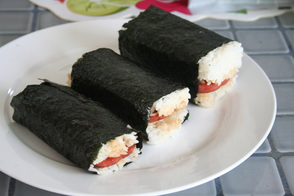
How we see the world is informed by our personal histories, our community’s history, and the historical narratives we listen to. This means our biases, our networks, our comforts and discomforts are shaped by our histories. As an example, I grew up in Hawaii and one of the reasons I am unable, or maybe I should fess up and say unwilling, to commit to vegetarianism is my love of “local-kine” food, especially SPAM. I grew up eating SPAM and to this day think of it as a treat. My history of SPAM eating, is already passed down to my kids who love a good SPAM musubi. For me expressing my culture and history are interlaced with food, and my taste buds seem to have a bias for SPAM triggering the reward center of my brain.

These histories and legacies inform how we see and think about our work. We all have biases and preferences, in many ways these biases and preferences keep us alive–they help us form communities, keep us away from danger, and keep our brains from becoming overwhelmed with data and inputs. But as we grow in our racial equity work we need to acknowledge our biases and consciously work to change. Biases don’t make us good or bad people, we all have biases. When we are aware of them we can work harder to see past our natural tendencies and be more open to receiving new information.

A Table of Leaders — Diverse but Not Diverse
Not too long ago Heidi and I went to a racial equity conference. Heidi noticed how many of the speakers, especially the ethnic commissioners are all men. I noticed how few times Pacific Islanders, Native Americans, and Asians were included in the panel and stage conversations. All of the speakers are leaders and deserved to be heard, but when we don’t unpack our biases we fail to challenge ourselves to think differently and purposefully reprogram ourselves and our work to be more inclusive. This is how history repeats itself and why we stay stuck.

Our work around racial equity is about shaking up the status quo and challenging ourselves to think differently, then working to change systems. We can’t just say “well, that sucks,” and leave it at that. We need to say “that really sucks for [fill in the blank – important to personalize the work], and this is what I’m going to do.” Before we do something or try to fix a problem we need to pause and acknowledge the histories and viewpoints contributing to the problems at hand. I know some are going to say “dude, we spend soooooo much time re-hashing histories, can we move on?” The answer is yes, but we still need to acknowledge how we got here and not let it paralyze us. We need to pay attention to the past so we can create new solutions and hopefully screw up less for the next generation of leaders.

How Do We Change?
Change is a conscious decision. We need to want to change. If you like where you are at and comfortable and don’t want to change, then don’t even attempt to do racial equity work. Seriously, do us all a favor and skip the ‘mandatory’ equity trainings hosted by your organization, stay in your bubble and be content. Change and moving away from what we know is hard and takes a lot of energy. The benefits of changing can be received if you want to, but it means moving past being content and comfortable.

Changing means letting go, like KonMaring your house (the en vogue Japanese way of cleaning and tidying). In the KonMari method you hold each object and ask yourself “does this bring me joy?” If yes you may keep it, if no then it is time to release it. In the KonMari method Marie Kondo (the creator and genesis behind this cult-like cleaning method) says we must honor the spirit of an item, in this case we should acknowledge how our histories and the past have anchored us, shaped our thinking, and now it is time to KonMari a thought/practice/or way of being to make room for new ways. In Japan and in the KonMari method she sprinkles salt on old socks as a way to release the spirit and essence. You may sprinkle salt to release the spirit of an old object or thought holding you back. Go ahead and find an old survey where you only got 2% return rate from people of color and say “thank you for trying survey, it wasn’t your fault for the crappy return rate we had some inequitable practices we are letting go of now,” sprinkle salt and delete. Don’t really sprinkle salt on your keyboard, maybe have a margarita on the side as you KonMari and put the salt there, or in my case a SPAM musubi full-sodium.

Bonus Reading and Viewing
TED Talk: How to overcome your biases, walk boldly toward them, by Vernā Myers
TED Talk: Why I love a country that once betrayed me, by George Takei
Kissing Your Socks Goodbye, Home Organization Advice from Marie Kondo, NY Times

Debunking Family and Community Engagement Myths

6167858Bob was one of my all time favorite colleagues; he served as deputy director of a state government agency. Bob was a jokester and prankster. Our work together was epic, during one conference call my co-worker Sarah and I sat in her car in the pouring rain listening in as Bob and Joel laughed for 45-minutes about little things, we managed to focus the last 15-minutes to talk about creating a parent focused leadership program. One of the lessons Bob taught me is “Any time the word parent or community shows up on a committee assignment, run the other way.” His point was family and community engagement takes a different skill set to do and get right.
Family and community engagement aren’t easy, it takes intentional effort to get right and it takes continuous work, it is really more about a values and belief system than a set of tasks. Families and communities are constantly changing and it takes leadership and dedication to continue to meet the changing needs. The rewards show up later when the investment of upfront time and work pays off with families feeling valued and have a sense of belonging. 

Family and community will be used interchangeably in this post. 

Debunking the Myths
Racial equity work requires us to engage with communities of color who are different than us and with communities who lack access, are further from opportunities, or have barriers to full participation. People want to be seen, heard, and have their experiences validated – this is at the heart of why we should practice community engagement. Here are a few myths we can debunk about community and family engagement:

MYTH — It is someone else’s job: True community engagement is someone’s job, and it is everyone’s job. Many schools and organizations have specific staff positions such as a “family engagement specialist” or “community organizer” whos job it is to go out and make connections with families and communities – this is great, and not enough. It is everyone’s job to engage with the community, from top leadership down to back office and maintenance staff. 

Front office staff are often the first people a community member meets when they walk into a school, health clinic, or office. When we greet a community member warmly, say hello in the person’s native language, and demonstrate we want to get to know the person it lends itself to a much more positive experience. Principals and leaders need to engage with families too and not delegate it to a family engagement specialist or others. We need to see and hear directly from our communities. Authentic community engagement starts with all of us believing and demonstrating how important engagement is. Another colleague who runs a school once told me everyone, including her janitor and back office staff, engage with students and families. She expects everyone on campus to know students and families and to be able to greet them by name.

MYTH — Family and Community Engagement isn’t an Initiative or a Shiny New Program: We have infatuations with shiny new programs stolen or borrowed from other communities — stop it. Don’t watch a YouTube clips about how a program engaged with a particular community and test scores jump up, crime went down, and all of the trees are saved and think bringing it to your community will be like the miracle drink kombuca solving your gut problems. Instead leave YouTube alone and go talk to someone new (preferably a person of color) and ask them about their experiences both good and bad. People want to talk about what isn’t working and how they can help to make it better, let them define a problem and most likely they can help to solve it in some way. 


MYTH — You Can Rely upon the Community to foot the bill, or Community Engagement is Free, or Why are they asking for Money to “Just Talk to their Community”: I recently opened an email asking if I could help recruit immigrant/refugee parents/ELL families for a task force. I emailed back asking if the organizers would provide translated documents, interpreters, child care, transportation stipends, and a stipend for participation. The answer was no – no money available. I let them know I would push out the announcement, but I wasn’t willing to do the harder work of asking my contacts to join the task force. I was ‘gatekeeping’ and this could be interpreted as fakequity, but I wasn’t willing to invite families in and burn a relationship if the experience wouldn’t be a quality one for families. If we say we want authentic engagement, then we need to provide the resources to make sure it is a great experience for families who need the most support. Do it right, offer to remove barriers to participation; put another way invest money in these efforts – offer stipends and value community members time, offer high quality interpretation, buy good food, provide child care if participants want it, etc.


MYTH — Check the Box and Call it Done: Things like “family engagement month” or “cultural week” are not good family engagement strategies. You can can’t confine engagement to a time period, you’ll never be done with community and family engagement. As long as your organization is alive you need to be engaging with the community. Events like family engagement month or cultural week are fine if they are the start or the culmination of ongoing work (such as the end of a school year or the end of a cohort), they should reinforce an ongoing relationship where communities and people of color have a voice and belong to the broader community.

What Community Engagement is: Creating a Sense of Belonging
We live in communities and we are predisposed to wanting to feel like we belong to something bigger and larger than ourselves. Good engagement validates a person’s experience and allows connections to be made. When we connect with people, especially people who aren’t who we usually hang out with or are easy to be with, we learn new things. 

We create authentic relationships when we value each other. This means we have to be open and we have to check our egos – communities of color and people of color have so much to offer to all of us when we are willing to suspend our agendas and power trips. Listen and validate people’s experiences, you don’t have to agree but you do need to acknowledge their experiences are valid.

Finally, one of the last lessons I learned from my former colleague Bob was how to have fun and still get work done. When we laugh and enjoy each other community engagement moves slower and faster. We slow down to enjoy each other, but the work moves faster. In another post I’ll have to share the story of Bob bringing a six-foot blow up zebra to a meeting – that was community engagement at its questionable best.

Posted by Erin Okuno. Special thanks to University of Washington College of Education Danforth 28 for helping to shape the post.

Fakequity in Surveys — Surveys are Not Community Engagement

Earlier this week I opened an email from someone I didn’t know asking me to take a survey about equity in education. I closed the email without taking the survey. I’m tired of taking surveys, especially from people I don’t know. I’m saying no more taking surveys unless I know the person sending it, or if there is a prize or compensation attached – I can be bought, often for the price of a taco. I realize I’m being a survey hypocrite since my organization just ran a large successful survey project. I know the value of a good survey and the data generated can be powerful. But I’m tired of being over-surveyed by askholes (people who ask questions and don’t listen to the answers); so many of the surveys are well intention but poorly designed or executed the data becomes meaningless and waste time, resources, and burns goodwill.

Surveys do not Substitute for Community Engagement
Often times organizations produce a survey “to hear” from the community. Just this week, I’ve gotten four request to complete surveys. All of these well-intention surveys are asking questions about topics important to them, but I don’t know what I’m gaining or what communities of color are gaining by filling out the survey. Is launching a survey a way of ‘checking the box’ and saying the community had a say in the project? Will things change because of the survey results? Is the survey collection method right for the community being asked? Asking without first listening is fakequity; good surveys are driven by the community and the community has ownership over the process and data.

How to do better surveys
A good survey design produces good survey results; vice versa crappy design produces crappy results, and fakequity in the design produces fakequity in results. Designing a survey rooted in the principles of equity will produce more equitable results. This isn’t hard, but it takes intentional thought and work.

One of the first steps is to look at who has a say in the survey design. The project should be centered in communities of color, which means you are doing the upfront work of gaining trust and buy-in, communities of color have a say on what is included and counted, and communities have control of the data. Inclusiveness is a key step in engaging the community.

My organization just completed a big survey project. Our design team was made up of a diverse group of stakeholders. We were thoughtful in putting together the team to include a mix of people, including parents of color, school partners, and community based organizations. We also invited partners to expand the table as we went along. This team guided the survey design process. They had a say and ownership around what data was captured, how questions were written and translated, and how surveys were disseminated and collected.

On the flip fakequity side, I recently reviewed survey data from a process put together by a small insular team. The return rate from people of color was so low it wasn’t a representative sample and the results were invalid for communities of color, essentially wasting the time of the people of color who took the survey.

Survey Delivery Methods – SurveyMonkey FTW (for the win), WRONG
Online surveys have become the default method of collecting surveys. Online methods definitely have their perks: cost effective, easy to put together, eliminates the need for data entry, and they are easy to disseminate. However, we need to ask is the ease of use still the right way to get results? One of the biggest limitations with online surveys is in-person engagement is lost. Online surveys are a one-way communication stream out then in, they don’t allow for dialogue to happen while taking the survey. Many people of color, especially non- or limited-English residents, benefit from having a translator and/or cultural broker who can explain the survey questions to gather the feedback.

My colleague Jondou shared a story about working on a survey translation into Somali. His Somali colleague looked at the survey and said “Somalis don’t talk like this. We are more direct and we ask open ended questions. You took an American survey and translated it into Somali, that doesn’t make it a Somali survey.” He also shared a similar story out of the Chinese community. Jondou was orally translating a survey and the survey taker was getting agitated. After a few questions he paused and said (in Chinese)  “I know this isn’t how Chinese people talk, these are American questions,” after  acknowledging the 4950589questions were biased and not culturally appropriate they were able to continue. These types of dialogues and exchanges can’t happen over a computer screen; they happen in person and where the experience is validated.

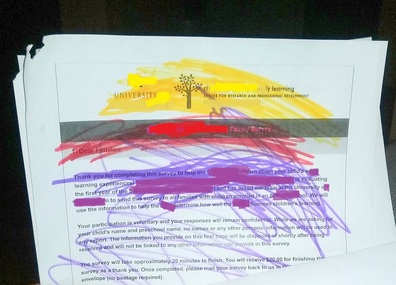
Paper surveys are much more adaptable for focus groups, interviews, and guided conversations around survey collection. Paper also wins when you have little children who want to ‘help’ you complete a survey – the picture is of a survey completed by a preschooler; can’t get that experience over a computer screen. Community engagement starts young.

Invest in People for Better Results
Racial equity work happens best when there is a relational component. When we invest in people we get better results. As you design surveys think about the people part of the project, what is the experience you want to give people? Don’t focus on the data, focus on people of color.

Quick tips:
Design team: Ensure you have diverse voices helping to write the questions.

Translation: Translate your survey to make it language accessible, and ensure the translation is appropriate and high quality (have a second person proof the translation). We also have to acknowledge having it translated is at best a minimum step, it is still an American/dominant culture survey and may need cultural brokers to help explain the nuances of the survey.

Allow for multiple ways to take a survey: Invest in multiple ways to take the survey, online, paper, focus groups, interviews, etc.

I have more to write about around survey designs and how to keep the experience positive for communities and people of color, but I’ll save the rest for future posts. Feel free to post questions or email us if you have thoughts or questions for a future post on surveys, fakequity@gmail.com.

Posted by Erin Okuno

We Don’t Work Together (yet), We Don’t Write a Grant Together

2704913_origSeveral months ago we wrote about the importance of trust in partnerships. We need to revisit the topic, especially as it relates to grants and grant application processes. Grant making and grant seeking are like dating, most people don’t marry someone after one date or after just seeing their Tinder profile. Grant making is very relationship driven, who you know and how you work with each other are telling, especially as it relates to race and equity. Relationships allow good organizational partnerships to develop.

Do Your Really know who you’re partnering with?
Fakequity shows up in the grant application process from the moment you ask a POC led or centered organization you haven’t worked with to partner with you on an application. We’re going to assume your intentions are in the right place, but it is completely the wrong approach. We think of it as being the same as the good old friend request on Facebook. You know the person you have to search to even see who you know in common? We may have met once or twice, but are we really friends? For the formal business people, like LinkedIn when you get an invitation to link to someone, but you have no idea who the person is, do you accept the invite to connect or hit delete? (For the record we only link to people we actually know. Very awkward getting a text from a colleague asking for a reference for someone we are connected to on LinkedIn and having to text back saying you have no idea who they are talking about — that um, never happened.)

Reaching out to an organization to partner in a grant without a meaningful connection is fakequity. If your organization is seeking to partner on a grant, stop and ask yourself if you’ve really done your own work to build a relationship with the organization. If you haven’t stop typing an email to [fill in the blank PoC centered organization], your organization has some work to do before asking if they will partner on a grant.

A grant cycle or a grant application shouldn’t drive how you form a partnership. The collaboration should begin long before an application is on the horizon. As an example, a few months ago a colleague met a professor at an event and exchanged business cards. Professor X invited us to his center to learn more about our organization and to share what he’s working on. Throughout the meeting we verbally danced, saying nice things and asking questions, finally at the end of meeting we asked “What are you hoping to gain?” Professor X answered truthfully: “access.” He wanted access to our networks since he wants to focus his research more on closing achievement gaps.

We don’t want to be seen as gatekeepers to communities of color, but in reality we sometimes have to. Our reputations are on the line, we don’t want to be seen as “the person who brings in bad partners.” We went back to Professor X and said we would like to get to know him and his work better and encouraged him and his team to attend our meetings and get to know us. Professor X said he would attend our meetings and he has. As a result, we’ve gotten to know each other and build relationships. Professor X has met with others in our network so they now know him as well. All of this led to us joining in on a grant proposal. We’re looking forward to connecting and working together.

The Approach – Like the First Date
If you are looking to collaborate with an organization centered in a community of color please be aware of how you are approaching a people of color based organization. Skip the ‘savior’ mentality of thinking you’re doing someone a favor, or the “you owe us, because we serve kids of color” entitlement and privilege lines. Be polite and say nice things.

Recently an organization called seeking to partner and gave us the worst first grant date pickup line ever, layer in a tone of judgment, annoyance, and privilege: “You never pay attention to us. You only pay attention to those kids over there. … We want you to be the lead partner on a grant that is due in three weeks.” Erin almost hung up on them, well it was only because she was trying to take them off of speaker phone. Not a great way to build a partnership. Starting with “Hi, we really appreciate the good work you’ve done with XXX, can we explore expanding?” is a nicer way to start.

Here are some examples of how to shift your thinking as well as your approach and some examples that highlight what this work looks like when done the right way.

1. Understanding everyone’s mission. Is the mission of each organization aligned? If it’s not, then stop here. You should not even be considering applying for a grant together. Collaboration implies we share similar goals for our work.

2. Do we have a history of collaborating in the past? What was the outcome of the project? What did you learn that could help inform future work together?

3. If you have no history of working together, what have you done to intentionally learn more about their work and more importantly the communities they serve that make it all possible?

4. What are the responsibilities of each agency? Is the project mutually beneficial?

Sealing the Deal – Marriage via a Grant
Equitable grant relationships are like panda bears – all shriveled with squinty eyes and tiny bits of fuzz, but when nurtured and fed a rich diet of bamboo and trust, they grow into cute and strong equity minded pandas. Part of growing a baby panda into a bear is knowing who is in charge of the feeding versus the licking the bear clean (or whatever you have to do to keep a panda alive). We’ve partnered together on several projects and a few grant funded projects. What made the grants work well was having a great working relationship to start with, we’ve also developed several short hand codes: “Hey can you do the outreach to your folks, and I’ll work with the coalition.” We also talk openly about race and push each other to do better. Since our early grant marriage has led to a genuine like of each other we can now partner on other things – like this blog and fighting fakequity.

Posted by CiKeithia Pugh and Erin Okuno

GiveBIG or GiveFAKEQUITY

5208223Wednesday was GiveBIG day in Seattle and about 50 other cities across America, also known as Give Local America! GiveBIG is a big day for a lot of nonprofits in the Seattle and Western Washington region. The Seattle Foundation, which runs the day, set a goal of having $20-million raised on the day, much of it driven by an incentive pool of funds – every gift given through the Foundation’s website will be ‘stretched’ by a pool of money the foundation raised. Hooray, for $20-million flowing to nonprofits.
A few members of the Fakequity team compared ‘equity’ notes about GiveBIG, including the good and the bad. We also consulted a few colleagues at nonprofits of various sizes and in different fields to get their perspectives.

GiveBIG – the Good
Despite all of the gripping about how many GiveBIG emails people got, I had over 65, it is a concentrated day of giving with excitement. When GiveBIG first started in Seattle it was during the middle of a recession and fundraising was hard. The day really shook people out of a giving malaise and raised important money to support the work of many nonprofits. We shouldn’t take this for granted.

For many smaller nonprofits, like the one I work for, the return on investment (ROI) of time and effort is decent. Collectively our staff put in about eight hours of work. With this investment of time we raised more than we would have if we had tried to pull together a special event, or write a grant for the amount of money we raised. GiveBIG is a great way for our small nonprofit to have an individual giving drive without creating one from scratch.

We also appreciated the outreach provided to smaller nonprofits. Before GiveBIG the Seattle Foundation staff reached out to many smaller nonprofits and invited us in for technical assistance/help sessions, which was great.

So with all of this said there are things that can be improved.

GiveFAKEQUITY – the We Can Do Better Part
We need to acknowledge not all nonprofits are starting from the same playing field. Small nonprofits don’t have the same staffing as a large hospital, university, or well-resourced institutional nonprofit. I know many of the larger nonprofits will complain that even they don’t have the level of resources they would like to take full advantage of the day, but we need to acknowledge some are better resourced than others. In reality the organizations with the least resources need the support of the GiveBIG platform the most.

Last year I got so annoyed with my alma mater’s GiveBIG emails; I wrote back and asked Social Justice Minded University to forgo taking the stretch gift because others need it more – they didn’t email back, shrug. As a university they have at least triple the staff a small nonprofit working on just fundraising which means they can raise more funds. I’m all for them raising loads of money to support their scholarship fund which in-turn may support students of color. From an equity and community minded lens, is it appropriate for larger organizations with more fundraising ability to draw down from the stretch donation pool at an equal proportion? Probably not.

Another example, a larger organization shared a tip, incentives work. In their case delicious cupcakes – I’ll admit I donated a few extra dollars to qualify for their cupcake gift certificate. I love this organization, but I also see their ability to tap into donors who can donate gift certificates as an advantage over other organizations. Smaller nonprofits don’t always have the same donor base.

Several colleagues mentioned GiveBIG is beginning to feel a little like a popularity contest and like the Hunger Games – May the GiveBIG Odds be Ever in Your Favor. I wonder when did we lose the feeling like we are coming together as a community to support our organizations. The excitement is great and important, but I still believe in the truism donations and gifts should be made in the spirit of giving and connecting.

GiveBIG Next Year – More Equity, Less Fakequity
Here are a few suggestions of ways to embed more equity into the day:

Use an equity filter: If the goal is to raise as much money as possible, great the current structure encourages this. If the goal is run through an equity filter then the goal needs to be adjusted and we need to acknowledge resources, especially the stretch donation pool, needs to be allocated differently. An equity lens shows smaller organizations, especially people of color centered organizations, will benefit MORE from the stretch gifts than larger more established nonprofits.

Reallocate the stretch pool: Cap the amount of funds larger organizations (i.e. universities, hospitals, etc.) qualify for. Such as allow them to participate but forgo the stretch, or cap the stretch to $5,000 or some number so they don’t water down the stretch that benefits smaller nonprofits more. Or once an org reaches $100,000 then the stretch stops. There are different formulas to help drive the funds towards smaller nonprofits.

More Equity: If part of the day is to promote racial equity, organizations should be required (or at least highly encouraged) to demonstrate their commitment to equity on their profiles. Questions such as: How many people of color are served, how are you working WITH communities of color, geographic area served will help donors understand where their donations are going.

Transparency: There is still confusion around the stretch donor pool – some people think it is a 1:1 match, challenge matches that individual organizations raise are confusing, and where are the match funds are coming from isn’t clear. Transparency is important in creating trust.

Community: As mentioned earlier a lot of the community spirit behind the day is waning. Can we create more community rallying spirit and the coming together versus a sense of competition?

Supporting Communities of Color: The current giving platform totally caters to English speaking, technology based donors. Communities of color are diverse and not all English or technology based. Can we adapt or open up the technology to accept non-English based pages? We also suggest asking people of color based organizations how their donors give and adapt GiveBIG to meet their needs?

Finally, I know my colleagues at the Seattle Foundation worked hard to bring us GiveBIG. I share this in the spirit of getting the work right over the long haul. Thank you for your work and thank you for giving. Here’s to next year and more equity in philanthropy and giving.

Posted by Erin Okuno, with thought partnership from Heidi Schillinger and colleagues in the nonprofit field.

No More Cold Chicken – Fakequity in Fundraising Events

9623463

At least the dessert comes with the chicken lunch. Photo by Erin

It is that time of year when I attend fundraising events for local organizations doing work on behalf of children and families. I used to attend quite a few fundraisers, but the list has become shorter over the years. If you had asked me some time ago why after doing work in the community for so many years have I stopped attending these annual celebrations of work I would have told you it’s my hectic schedule and dislike of cold chicken. Let’s be honest one can only stomach so much cold chicken. After attending two events within weeks of each other however, I have begun to explore this more deeply. Is it the cold chicken or everything else that I am being served?
To protect the organizations and to keep me from being un-invited, I will refer to them as Agency A – Big Name Intermediary Organization and Agency B – Local Education Org. Agency A typically hosts functions where you see a lot of what we call major stakeholders. Now I would argue your biggest stakeholder is the community in which you serve, however I am aware that it is a fundraiser and the purpose of the event is to make money. You have to intentionally invite folks with deep pockets and political influence. Agency A can really fill a room. Trust me when I tell you there were well over a 100 tables with cold chicken on the plate and a lot of networking and hobnobbing. Agency A also made the mistake of having diversity in their line of speakers but those speakers didn’t speak towards a racial equity agenda, in fact one of the speakers, a person of color, shared a story reinforcing racial stereotypes and the story wasn’t connected to the mission of the organization.

This was my first time attending Agency B’s event. I was invited by a trusted friend and colleague and was curious considering their work is focused in another community that I do not professionally work in, however I live in the community. The room was filled with energy and activity and guess what? It was a breakfast event so for once I didn’t have to give myself a pep talk convincing myself that I could eat another cold chicken meal.

You could say that both events had your typical fundraising components. There was the welcome followed by a list of accomplishments from the last year. Lots of heart melting pictures of young children, the stuff that makes you all warm and fuzzy inside. Agency A told their story in a very interesting way. I won’t bore you with specifics but as best as I could describe it I would say at times it was like watching an infomercial. I was unsure what I was buying but these people somehow made me think I needed it. Agency B however, told their story in a way that I had been longing to hear. What I experienced at Agency B’s event was in essence what every annual event should be which was truly centered in the community.

Agency B not only highlighted their overall work, but they intentionally created space to showcase the individual and collective contributions that make their work possible. They demonstrated contributions that flowed both ways. Yes, they work on behalf of children and families, but the families also gave them something and the family’s contributions were valued. What they learned from those experiences helped to expand their reach, and what was even better is they worked directly with those who accessed their programs to do it. Finally, there was an overwhelming acknowledgement that the greatest gift was being reminded of the unlimited potential and abilities of young children. So often those of us in the field focus so much on the outcomes that we lose sight of the true beauty of just being present.

My experience reaffirmed there was still hope. There were still agencies out there doing the work I was actually just not doing my part in being intentional in finding them. So I’ve vowed following Agency B’s event on that I am done with cold chicken. If I am not being served a real story, with real people I will decline to attend. If there is no presence of community I will not attend. I am less interested in the menu and more interested in the content of the program.

We need more events like Agency B’s. Here are some tips to work towards equity at fundraisers:

  • Share: Share power and control of the agenda. Allow participants and partners to help shape the agenda and showcase what they want to showcase. It is a fundraiser but there is room to allow communities to share their own priorities.
  • Don’t exploit communities or clients: Fundraisers tread the fine line of needing to highlight good work, but be careful not to turn it into the Hunger Games where clients are paraded out and showcased.
  • Food: No one wants to eat bad food, don’t get overly fancy or ambitious.  If you can taste it ahead of time.
  • Diversity doesn’t equal a good program: Just bringing in people of color into your program doesn’t equate to a compelling program centered in communities of color. Are the people on your program speaking authentically about experiences from communities of color? As an example at another event a video was shown on a training program for youth. There was diversity of people in the video but all of the adults doing the training were white while the youth recipients were students of color. The video reinforced a ‘savior’ complex – White adults, coming in and saving youth of color, not a great image for promoting racial equity.

Be thoughtful of your fundraising design and do your best to center the fundraiser in the experiences of communities of color. This will guarantee a better experience for all.

Posted by CiKeithia Pugh

Why Assimilation Sucks and Isn’t the Goal

8247590.jpgFirst, we need to pay tribute to Prince who died on Thursday. As Gen Xer/Millennial, Prince defined the music for many of us and our peers. Prince was unapologetic in fighting the call to assimilate and conform to music industry norms. This quote Heidi heard on the radio sums it up well “[Prince] resisted the pressure to do music like everyone else and that was freedom.” This article, Prince Was The Patron Saint Of Black Weirdos, also sums up Prince’s ability to stay true to himself: “He was a beacon for all of us who were told that we must cut out a part of ourselves in order to fit.”

Assimilation Isn’t the Goal and It Doesn’t Work
Every so often I do what I know not to do, read the comment section of a news story focused on race, immigration, or the like. I ‘armor up’ and think of the exercise as ‘opposition research,’ but I’m still blown away with the blatant racism and tenaciousness of commenters. On a recent story about a partner’s work advocating for language interpretation, the majority of the comments called for having immigrants and refugees to learn English, build a wall (as in the wall Donald Trump wants to build), and these comments:
“[O]ther countries do not pander to immigrants like the US.  If you want to live here, integrate and assimilate into American culture and stop being an outsider or go home.”

“We do not need to divert more of our school resources to bilingual education. The resource should instead be spent on things that could benefit all kids – sports after school, better science education, music, PE equipment, gifted education etc. Learn English if you want to stay here, otherwise, please go back to where you came from.”

Many immigrants and refugees want to learn English and want to fully participate in their communities. Racial equity work and creating a welcoming community for all, not just those whom we like, who understand what we’re saying, or have the ability to communicate with us. One of my favorite interpretations of the term racial equity comes from Junious Williams, a lawyer and Executive Director of Urban Strategies Council, while speaking on a panel at PolicyLink’s conference he said he thinks of the legal definition of equity “What it takes to make a person whole.” Language is an important part of a making us feel whole – language and culture help us connect and is an important part of the fabric that keeps our communities and ourselves whole.

In racial equity work we need to understand others, this is why we learn about history and need to once in a while crack open the ‘World’ section of the newspaper. Understanding our roles as US and global citizens also explains the good and bad we have contributed to why we need to step up and work with immigrants and refugees. Many immigrants and refugees would choose to remain in their home countries if given the choice, but make the painful choice of leaving to literally preserve their lives — war, persecution, famine , violence — and they seek a new home as a result.

Assimilation Works so Well it Destroys Communities — Dearly Departed We Gather Here today 2 Get Through this Thing Called Life
I’ve spent time with partners from various Native American communities in Washington. In getting to know different Native American communities, Elders shared how they or their grandparents were forced to assimilate to American ways. The most brutal of the assimilation practices involved ‘benevolent’ government agencies forcibly taking children from families and sending them to boarding schools. At the boarding school children were striped of their Native culture including clothing, families, and language. They were forbidden to speak their native languages and in some cases if they were caught speaking their home languages they were punished, sometimes with corporal punishment. Many Native American languages died and whole generations do not speak their family’s language because of these harmful assimilation practices. Heidi’s friend is half-Native Alaskan and grew up in a rural town. Lately she’s been thinking about how to preserve their Native language, but she also wonders has too much been lost. The last native speaker died last year. When a language dies culture dies as well. Assimilation worked so well it destroyed entire communities and many Native American communities are still reeling from these harmful practices.

In many ways the Japanese community experienced a similar forced assimilation during the World War II internment. Japanese families, including American citizens, were forced to leave their homes and put into internment camps. Others who weren’t interned, and other Asians (i.e. Chinese, Koreans, etc.) worked at assimilating more into dominant American culture so they wouldn’t be mistaken for Japanese. For children growing up at this time they were taught their culture was ‘wrong,’ they were less American, survival was tied to a standard not of their choosing. To use another Prince quote “Dearly departed we gather here today 2 get through this thing called life…” and now we watch as the “doves cry,” and mourn for a language and culture gone.

Assimilation practices don’t benefit communities. While many who think or are even so bold as to post comments saying: ‘they should learn English,’ ‘they need to become more American,’ ‘my grandparents came from Eastern Europe and learned how to read and write,’ need to ask themselves how much of who they are is also wrapped up in one’s ability to communicate, to feel a part of a community, and to feel seen- not marginalized. How much does a person change when we give up or lose parts of our culture and language? Is asking a person to change benefit themselves or are we forcing assimilation out of fear of non-conformity?

Prince: “Compassion is an action word with no boundaries,” in Fakequity terms “Equity without action is Fakequity.”
So much of our everyday dealings caters to the dominate culture and requires people to conform to norms. Instead of asking people to assimilate let’s adjust our actions to create ways where people can be valued, seen, and heard for who they are. When we create systems that default to these thing we help people become more whole, and as a result communities become stronger which is the goal.
Some suggestions of ways to open up and fight assimilative practices:

  • Hiring: Qualifications vs. Desired Qualifications. Why do we value technical skills over relational and racial equity skills? Technical skills are easier to quantify but is a person who can type, code, or with a lot of education better able to do the work than someone who understands the cultural nuances of a community? As an example instead of paying consulting firms for translation services we can invest that money in recruiting, hiring, and providing professional development for a bi/multi-lingual person which provides a family wage (hopefully) job.
  • Philanthropy: Written applications vs. Getting to Know a Community. Grantmaking isn’t a science there is a lot of discretion in who is awarded funding or support. The current system of using written applications shows a bias to organizations who ‘assimilated’ to the dominate culture of who understand grantmaking and has relationships with funders — in other words competing for grants can be like the Hunger Games (from the books of the same title) where contestants are forced to fight for scare resources and prohibited from working together. Getting to know a community and seeing who people turn to for information is a better signal of who is doing work and where support can be targeted.
  • Language Access: Mostly everything we do, including this blog, is in English only (sheepish). High quality translation and interpretation helps to make things accessible to a broader audience. Extend yourself and your services and ask immigrant and refugee communities if interpretation and translation will help to increase participation and understand. And we need to break the expectation and assumption everything is provided in English. A few months ago, I went to a  Somali event where English speakers were handed interpretation headsets. They ran out of headsets and the headsets malfunctioned which meant many of us English speakers experienced what it was like where we weren’t catered to and had to experience the stress of not understanding what was happening — that was a better lesson than the actual content of the event. Find an event where you aren’t in the majority and try to follow along, let alone participate, let us know what you learn.

Finally, in the words of Prince: “I don’t really care so much what people say about me because it usually is a reflection of who they are. For example, if people wish I would sound like I used to sound, then it says more about them than it does me.”

Posted by Erin Okuno and Heidi Schillinger (Written by Erin – all of the ‘I’ statements are from me. Heidi contributed heavily to this post and is the brains behind a lot of it.)