Ohia flowers indigenous to Hawai’i, photo credit mhgstan
A few years ago, I wrote a post about land acknowledgements. I learned a lot by researching that blog post and thinking more deeply about the practice. Since writing that post I’ve learned more about land acknowledgments, how Native Americans and Indigenous people want us non-Natives to participate in land acknowledgments, and the work we need to do to not be askholes.
It isn’t about the land acknowledgment
A land acknowledgment isn’t about the words we say, it is about recognizing and being in a just relationship with Native people and the land and place. It is about remembering we are guests and need to be respectful guests in other people’s homes. Being a guest means learning how to be a respectful guest, including learning whose home you’re entering. As an example, if you visit someone’s house you probably know the name of the person you’re visiting. Same here you should know the name of the ancestral land who you’re visiting.
The land acknowledgement is a moment to slow down and to acknowledge our Native relations.
Understand Context
Making a land acknowledgement is dipping into politics. In learning about the history of whose land you’re on and how the boundaries and boarders were drawn shows a history of migration, forced migration, politics, and colonization. Understanding this history also shows how complicated it can be in making a land acknowledgement. There isn’t always agreement on which tribes should be named when making an acknowledgement. As a non-Native person understanding this context is important to ensuring hurt, erasure, or more damage isn’t done.
If you’re a non-Native person, be thoughtful before asking a Native person to write or advise you on your land acknowledgement. Asking a Native person to advise you or write your land acknowledgment is asking for unpaid labor. It also puts them into awkward spots of having to decide who to name and not-name in the statement. Do your own work before consulting with Native people about a land acknowledgement.
If you are asking a Native person who’s land you’ll be on to speak at an event, they may prefer to do a welcome to their land and land education. They already acknowledge their land and a welcome may be more appropriate.
Land Education
For many Native people they would prefer we as non-Native people learn about their land – land education. That learning should be deep and meaningful, not a passive one-time reading of a prepared statement or even reciting who’s land we are on. It is about learning how they view and value their land, learning about their relationship with the place, nature, and geography.
This can also include learning about unceded land. A colleague showed me a map of her people’s traditional lands versus where their tribal nation lands are today. I was struck by how her traditional lands followed the waterways and were very fluid, the reservation map of today had straight lines and did not follow the river.
As I mentioned in my previous blog post on land acknowledgments, reading the treaties between the tribal nations and the US government is one place to start. Also read a lot of books by Native authors, especially authors from your area. If you need book suggestions, check out previous book lists on the blog.
Final Thoughts
I offer these thoughts as a non-Native person living on Native lands and working to stay educated and to be in more justice based relationships with diverse Native people. I cannot speak and will not speak for Native people. Please do your work of learning directly from Native people in your own community. Listen to them, learn respectfully, and be a good partner in learning.
Thank you to our Patreon subscribers. At this time I don’t offer ‘extras’ or bonuses for Patreons. I blog after working a full-time job, volunteer and family commitments thus it is hard to find time to create more content. Whatever level you are comfortable giving pays for back-end costs, research costs, supporting other POC efforts, etc. If your financial situation changes please make this one of the first things you turn-off — you can still access the same content and when/if you can re-subscribe I’ll appreciate it.
Adrienne, Aimie, Alayna, Alessandra, Alexa, Aline, Alison FP, Alison P, Allison, Amanda, Amber, Amira, Amy, Amy K, Amy P, Amy R, Andie, Andrea J, Andrea JB, Andy, Angelica, Ashlie, Ashlie B., Barb, Barbara, Barrett, Beth, Betsy, Big Duck, Brad, Brenda, Bridget, Brooke B, Brooke DW, Cadence, Caitlin, Calandra, Callista, Cari, Carmen, Carolyn, Carrie B, Carrie C, Carrie S, Catherine, Cathy & David, Chelsea, Christina C, Clara, Clark, Clark G., Courtney, Dan, dana, Danielle, Danya, Debbie, Debbie S., Dede, DeEtta, Denyse, Dennis, Dennis F, Diane, Don, Ed, Edith, Eileen, Elizabeth, Emily, Erica J, Erin, Frances, Gene, Genita, Hannah, Hayden, Heidi and Laura, Heidi, Hilary, J Elizabeth, Jaime, Jake, James, Jane, Janet, Jelena, Jen C, Jen E, Jen H, Jena, Jenn, Jennet, Jennifer, Jess, Jessica F, Jessica G, Jillian, John, Jon, Julia, Juliet, June, Karen, Kate, Kathryn, Katie O, Kawai, Kelly, Kiki, Kimberly, Kyla, LA Progressive, Laura, Laura B, Lauren, Leslie, Linda M, Lisa C, Lisa P-W, Lisa S, Liz, Lola, Lori, Lyn, Maegan, Maggie, Maile, Maki, Marc, Mareeha, Marilee, Matthew, Maura, Melissa, Melody, Michael, Mickey, Migee, Mike, Mindy, Misha, Molly, Nat, Nicole, paola, Peggy, PMM, Porsche, Rachel, Raquel, Rebecca, Robin, Ryan, Sally, Sally P., Sandra, Sarah B, Sarah D, Sarah H, Sarah KB, Sarah R, Sarah S, Sarita, Selma, Sharon B, Sharon Y, Shaun, Shawna, Siobhan, Steph, Stephanie, Stephanie J-T, Steve, Su, Sue, Sue C D, T Wang, Tamara, Tania DSA, Tania TD, Tara, tash, Teddi, Tim, Tracy TG, Venu, virginia, Vivian, Wan-Lin, Ward, Wendy, and Zan
Thank you for subscribing. Please check fakequity.com for the most up-to-date version of the post. I often make grammatical and stylistic corrections after the first publishing which shows up in your inbox. To subscribe — on the right sidebar (desktop version) is a subscribe box. To see what I’m reading and recommended books check out the Fakequity Bookshop. I am an affiliate of Bookshop.org where your purchases support local bookstores. I earn a small commission if you click through and make a purchase. The commission goes into purchasing books by POC authors or about disabilities to donate to high-poverty public schools.
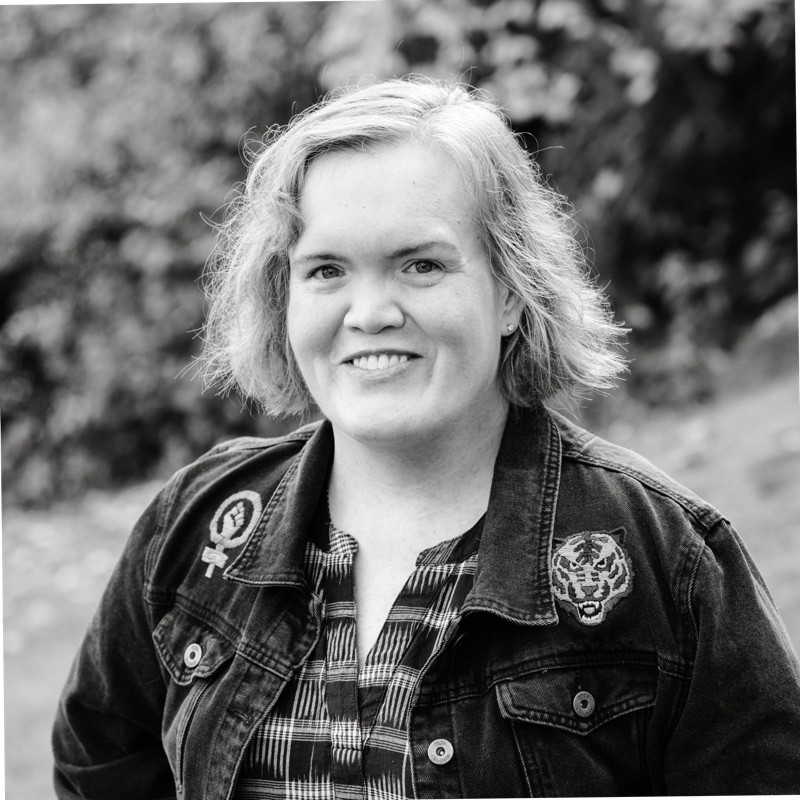
Description: Square black and white photo of Carrie outdoors wearing a dark demin jacket with a tiger face growling patch on the right, a patch of fist in a women’s symbol on the left, stud earring in one earlobe, other ear is covered by hair. Carrie has short hair above her shoulders, she’s looking at the camera and smiling. Background is blurry outdoor scene.
Carrie Basas returns with a guest blog post. Carrie delivered a graduation address at Harvard at the Disability Affinity Ceremony. She joins a storied league of graduation speakers imparting knowledge and hope to the next generation of ambassadors, doulas, and firestarters.
For allies, read her remarks and commit to undoing abelism and not asking our friends, colleagues, and relations for unpaid labor. Congrats to the graduates.
I never thought today would happen when I graduated 22 years ago. My time at Harvard shaped me, but maybe not in an inspiring way or one of healing– more like through a deep sense of feeling out of place. The good thing that came from it, however, was appreciating solidarity across communities, finding other misfits, repeatedly asking if we tracked alumni with disabilities, and organizing the parking garage attendants to get very mad and loyal when my access went astray here. Harvard made me realize that I needed a community, especially a disability community and mentors. But to be honest, I gave up on finding it at Harvard. So, for a person who is more snark than woo woo– which will become obvious quickly in our next few minutes together– I have been telling others for weeks that this experience that you all created, even though it’s 22 years late (We Harvard folks aren’t always perfect, either), is healing and wonderful– and I get to claim no credit for it, which is also great.
Let me explain why– today, I’d like to tell you about some unpaid labor you’re about to see increase as your career and personal lives move closer to my crone and curmudgeon status. Don’t worry– it’s going to be fun, well, sometimes, and I can promise you that you’ll have lots of stories. The good part is that everyone in this room who identifies as disabled or Deaf or living with a disability identity of any kind is also now employed in this free labor. You’ll have some choices to make along the way and that’s where my sparkling and snarky personality today can help you. You also might recognize some of these tasks, well, from just living as a person so far with a disability, but they’re about to become even more important, usually when you least expect it.
First unpaid labor role: Ambassador
Though we might have a few Kennedy School students here, when I say prepare to be an ambassador, I don’t mean it in an overachieving, on the payroll, negotiate a peace accord, kind of way. I mean you will– and probably already have– been an ambassador for how others view disability.
The ambassador role isn’t for introverts, but congrats, I am one, and sorry for those who cringe in recognition. The ambassador role is both constant in its hours and surprising in its workload peaks. If you have a visible disability or you’ve shared your disability story, you become more recognizable. Upside: You can just live into having a facial recognition disability because everyone already knows your name or thinks they do.
You’ll be approached in yogurt aisles (true stories, friends), courtrooms, playgrounds, and sidewalks with someone sharing how you’ve inspired them, maybe hugging you inappropriately, or wanting to share a story about their third cousin who had a disability that was nothing like yours but how he is happy every day. This will probably happen on a day when you are not happy, just warning you.
But here’s the upside: You will also be approached for the visible choices you make in community, for things you have said and done when you thought absolutely no one was watching, and for reminding people that disabled people belong in public everywhere, doing everything. While it is absolutely exhausting to be representing wherever you go, you should also remember that part of achieving our liberation is asserting our right to just be some days, to even be mediocre, as one of my disabled friends dreams of at times.
The second unpaid emotional labor role is: Disability Doula
Now, some of these intimate yogurt aisle conversations don’t just end in mistaken identity about which disabled person you are that they met, they are sometimes people really grappling with their own place and identity. While I highly encourage you to get a counseling license and charge hourly rates especially for impromptu sessions, I see these moments where someone is struggling with naming disability for themselves as beautiful opportunities for recruitment. See, one strategy for making this world more accessible and responsive is we’ve just got to raise our numbers, particularly among people with money and access to power.
One of my dear friends calls these my “foot moments” because while it’s way too early at least for this Pacific Time speaker to give you an inspiring speech about feet, a surprising number of people have shown their feet to me and told me they have disabilities. I have a doctorate in law, which makes me very confident about googling really any issue, but not as comfortable providing direct medical care. A law school friend said it was more like I ran a confessional. I’ve always threatened to print disability membership packets, but so far, I haven’t. Still, it is one of the coolest and most sacred moments when someone shares their disability with you, even if they haven’t figured out all the politics of it.
We know how much stigma there is about disability, particularly mental health disabilities. The reality, too, is that our disabilities evolve. When I was at Harvard, I only understood that I had physical disabilities, but in my 30s, I realized that maybe one of the reasons that I skipped class so often in law school was that I had ADHD and anxiety. It took me a while to feel like being neurospicy was not yet another thing someone would hold against me.
As one of my colleagues says, we need disability doulas– not just for the newcomers or the ones we’ve been waiting to realize were always members of our community. (Side note here: I play the long game.) We need them for ourselves as we sort through any internalized ableism. Community is hard to build and doing so will be one of the roles that I won’t get as much into today, but know, too, that some of our worst and best behavior comes from how we treat each other.
The third unpaid emotional labor role is: Firestarter
According to MA fire code, given the age of this building, and some supreme court cases involving shouting words about fire, I want to make clear that I am not asking you to start a fire today. Also, as a disability-proud group, we hold space for our siblings in this movement whose disability might be pyromania– please just mind our dogs, canes, and prescriptions with your matches.
There will be so many times when the ambassador and doula roles aren’t it, when you are shaking with righteous rage about an injustice, something that has been said, or something you need to say. I struggle with this one a lot. A nondisabled friend with an autistic young adult daughter told me that she just wants her daughter to not be treated as a “commodity” or object that services and providers move around and find inconvenient. I told her that I sometimes feel like I can’t be angry or fierce because I’m vulnerable to how nondisabled people– from my doctors to potential employers– will react. In case you haven’t gotten the memo, yet, one of the many stereotypes about disabled folks is that we’re a risk or litigious, or angry, or unproductive.
Do I feel like I have to make people comfortable often? Yes. Is it exhausting? Yes? Is it always productive toward people changing their behavior? No. Could I also spend every day burning everything down that was wrong or annoying? No. I think my righteous rage would consume me and I’d lose my general orientation toward joy and humor.
When you feel a fire rising within you, take a moment and ask yourself some questions:
Is this smoky heap of ableism a good place to roast a marshmallow and make a s’more, instead? If so, grab some friends– preferably cross-movement, cross-disability– and just have a tasty snack. Talk strategy. Who else is impacted? Is this where we need to spend our time right now? Should I take this on so someone else doesn’t have to who has less privilege and energy than me right now?
Do I have positional power to make a difference here? Don’t give yourself an easy out, either. You went to Harvard. You might not be the person in charge and you might feel vulnerable, but you could have less at stake than someone else who is just trying to survive a system.
And finally: a question that my husband (not disabled, but a man of color) has always asked me: Would you be fired (insert whatever verb here makes sense for your situation?) for the right reasons? By “right”—right to me.
Find mentors and friends who will support you when your heart is telling you it’s time to forget the s’mores and light a match. Or to quote one of my former colleagues: “I’m feeling the need to negotiate like a terrorist.” So, now I ask my cat if he is feeling the need to negotiate like a terrorist. That phrase brought me joy. I’ll hold her s’more while she does that.
Finally, I have paid labor to offer you: Now that you’ve made my Harvard dreams come true of gathering students with disabilities, I need you to be in charge of many things. I don’t care if it’s practicing tax law, becoming a plastic surgeon, building a family, or becoming an art history professor. I want our people everywhere making decisions because we’re creative problem-solvers who understand that access and belonging go beyond steepness of ramps and captioning. I want us to lead within disability rights and justice, too, because the reality is that so much of this work continues to be led by nondisabled people– which I hope will become unacceptable in my lifetime. I believe that systems change when the people making the decisions change, and so I’d ask you to take your ambassador skills, doula or foot analysis techniques, and matches wherever brings you joy.
Create spaces where you feel loved and seen. Realize that not all the work is yours or ours to do, and that we, too, have a responsibility to work in solidarity with other movements and dream for collective liberation. Our main duty is to live such that we honor our bodies, minds, disability and Deaf culture, and not wait for permission. Thank you.
Thank you to our Patreon subscribers. At this time I don’t offer ‘extras’ or bonuses for Patreons. I blog after working a full-time job, volunteer and family commitments thus it is hard to find time to create more content. Whatever level you are comfortable giving pays for back-end costs, research costs, supporting other POC efforts, etc. If your financial situation changes please make this one of the first things you turn-off — you can still access the same content and when/if you can re-subscribe I’ll appreciate it.
Adrienne, Aimie, Alayna, Alessandra, Alexa, Aline, Alison FP, Alison P, Allison, Amanda, Amber, Amira, Amy, Amy K, Amy P, Amy R, Andie, Andrea J, Andrea JB, Andy, Angelica, Ashlie, Ashlie B., Barb, Barbara, Barrett, Beth, Betsy, Big Duck, Brad, Brenda, Bridget, Brooke B, Brooke DW, Cadence, Caitlin, Calandra, Callista, Cari, Carmen, Carolyn, Carrie B, Carrie C, Carrie S, Catherine, Cathy & David, Chelsea, Christina C, Clara, Clark, Clark G., Courtney, Dan, dana, Danielle, Danya, Debbie, Debbie S., Dede, DeEtta, Denyse, Dennis, Dennis F, Diane, Don, Ed, Edith, Eileen, Elizabeth, Emily, Erica J, Erin, Frances, Gene, Genita, Hannah, Hayden, Heidi and Laura, Heidi, Hilary, J Elizabeth, Jaime, Jake, James, Jane, Janet, Jelena, Jen C, Jen E, Jen H, Jena, Jenn, Jennet, Jennifer, Jess, Jessica F, Jessica G, Jillian, John, Jon, Julia, Juliet, June, Karen, Kate, Kathryn, Katie O, Kawai, Kelly, Kiki, Kimberly, Kyla, LA Progressive, Laura, Lauren, Leslie, Linda M, Lisa C, Lisa P-W, Lisa S, Liz, Lola, Lori, Lyn, Maegan, Maggie, Maile, Maki, Marc, Mareeha, Marilee, Matthew, Maura, Melissa, Melody, Michael, Mickey, Migee, Mike, Mindy, Misha, Molly, Nat, Nicole, paola, Peggy, PMM, Porsche, Rachel, Raquel, Rebecca, Robin, Ryan, Sally, Sally P., Sandra, Sarah B, Sarah D, Sarah H, Sarah KB, Sarah R, Sarah S, Sarita, Selma, Sharon B, Sharon Y, Shaun, Shawna, Siobhan, Steph, Stephanie, Stephanie J-T, Steve, Su, Sue, Sue C D, T Wang, Tania DSA, Tania TD, Tara, tash, Teddi, Tim, Tracy TG, Venu, virginia, Vivian, Wan-Lin, Ward, Wendy, and Zan
Thank you for subscribing. Please check fakequity.com for the most up-to-date version of the post. I often make grammatical and stylistic corrections after the first publishing which shows up in your inbox. To subscribe — on the right sidebar (desktop version) is a subscribe box. To see what I’m reading and recommended books check out the Fakequity Bookshop. I am an affiliate of Bookshop.org where your purchases support local bookstores. I earn a small commission if you click through and make a purchase. The commission goes into purchasing books by POC authors or about disabilities to donate to high-poverty public schools.
Hi, Last week we wrote about tacos and listening to diverse voices. We’re not alone in sharing that message. After you read this week’s post by CiKeithia, go check out Sheri Brady’s Building Many Stories into Collective Impact at the Stanford Social Innovation Review blog. She shares a similar message, but without a taco analogy. -erin
—————————–
It’s ironic that I would use the example of treading water because anyone one who knows me knows my feelings about swimming. It’s not what you’re thinking, insert stereotype of black people and water here; I find pleasure sipping a drink in a cute glass poolside with an occasional dip of my toes in the water.
I’ve worked with children, and in support of children and families, for over ten years. I’ve learned many things from working with families, and it is my ongoing work in communities where I continue to learn. Lately, I’ve become overwhelmed by the idea that those of us doing this work think we know it all when it comes to community. I feel like I’m treading water in a fakequity pool.
Community Engagement the Fad
Community engagement is the new fad, like the return of the flare leg jeans. You’ve seen the announcements: “We want to hear from you,” take this online survey, flyers inviting you to see the new space, and my all-time favorite “Join us for a community conversation!”
Where do these ideas come from? I’ll award a few points for trying, but there’s more to understand. What good is the survey if it’s only available online? You’re only reaching people with access to computers and the internet. Are you planning on sharing the results?
What good is the flyer if it’s only shared in easily accessible communities and not accompanied by a personal invitation? Would you attend an event if you didn’t know anyone? Maybe if the food is really good or the speaker is outstanding, but a personal invitation makes you want to engage more.
Finally, a community conversation is absolute nonsense. In order for it to be a conversation then both sides get to be heard, otherwise it is a presentation. And don’t collect feedback through collected index cards, the community doesn’t know what happens with that feedback.
Believing in Community Engagement, Here’s What to do
We need to create space for voices that are normally excluded to be heard. It’s tough to examine our current practices and turn the lens on ourselves. No one wants to have their positive intentions questioned, but it’s required if we want to get better. If you can’t receive the tough criticism you are most likely perpetuating fakequity.
I feel like I’m treading water because it’s the online surveys, flyers, and one-way community conversations that have me trying to keep my head above water. Truth is there is no single way to engage the community, but rather a variety of ways and if you are truly are invested in community you’ll do the hard work. Showing up and building relationships will get you better results than an online survey or a one-time conversation.
Working Towards Equity
Next time there’s a survey challenge the unintended results of only hearing from those who are loudest. Don’t just make a flyer, make personal connections beyond your usual networks, and finally stop with the community conversations if it only serves your agency’s purpose of checking the box that you offered it and now you can move on with the work.
My feeling of treading water will never completely go away. The frustration of trying to keep my head above water however will be eased when there are others around me who ask hard questions, listen, and challenge the status quo. After all I look much better sitting poolside sipping a cute drink rather than struggling to stay afloat.
If you haven’t watched the TED talk The Danger of the Single Story by Chimamanda Ngozi Adichie, watch it. Ms. Adichie is eloquent about why diverse stories matter. No single story encompasses a whole community’s narrative. Too often we listen to the loudest or nosiest stories. Sadly too often the loudest voices aren’t from communities the most impacted by hardship or furthest from opportunities.
When I started my current job Stephan, a mentor, asked me “Where are you getting your information?” I couldn’t answer him. I really didn’t know where I would get my information– from friends, people I like, colleagues, Facebook, the news. Benita Horn, a well-respected equity leader, calls this access F.B.I.– Friends, Brothers, and In-Laws. Quickly I realized the Yoda-like wisdom they gave me. They were telling me to be careful of listening to the loudest and nosiest voices or people whom I like and think like me.
Communities are diverse and sadly systems (government, institutions, organizations, etc.) are designed to hear the nosiest, loudest, and most organized voices. Change often comes via the majority or those who have connections. However the majority or those with access to power is not always the most impacted by a decision.
Here is an example… A popular restaurant, Tacos for the People, decided to democratize their menu and are open to input from the community. I really love marinated tofu tacos with cilantro and want them kept on a menu, I’m flirting with vegan/vegetarianism so I will claim minority status (for the sake of this example). For Tuesday’s lunch I decide to “vote with my wallet” and order a fistful of tofu tacos.
When I arrive at Tacos for the People I can’t get past the front door because twenty people wearing matching colored shirts and holding signs are lined up to testify in favor of fish tacos. They knew to show up because they organized via Facebook and Twitter. A member of the group alerted the media, and others in the group went to college with the founder of Tacos for the People.
If we believe that tofu tacos versus fish tacos on a menu is a zero-sum-game, in other words only one taco will remain on the menu, the odds are much more in favor of the fish tacos. Tofu tacos, even though they serve an important need for a minority (vegan-vegetarian) community, has little chance of saving their place on the menu. This is the danger in only listening to the loud matching t-shirt people, their agendas rise up and overcast voices of others who have important needs.
“If you’re not at the table, it means you’re on the menu.”
Now before we start poking holes in the example and say the tofu taco lovers should organize and get their own shirts let’s add another layer to this example. Let’s say the tofu taco community is actually a community of color, an immigrant or refugee community, or another community such as foster care, special needs, etc. that have additional hurdles to overcome in order to mobilize and make their voices heard. Showing up to testify at a State Capitol or school board meeting often means having to rearrange work and parenting schedules quickly, figure out and budget for transportation, and navigate the weird politics of testifying (i.e. how to sign in, when to step forward, what to say in two-minutes, speaking in English if English isn’t their preferred language, etc.)—those are a lot of barriers. An equitable approach would be to have the system open up their table and ensure more voices are heard. A mentor told me “If you’re not at the table, it means you are on the menu,” which means you need to be at decision making tables to influence decision making.
How to Listen and Who to Listen to
Thinking back to the advice I received from my mentor, I’ve tried to act upon it. It is easy to get swept up in the voices of the majority and to think everyone thinks their way. It is also easy to default to those we know and their voices, this is fakequity. We have to remember communities are diverse and those farthest from opportunity have important stories we need to seek out.
As leaders and community builders we need to seek out the voices and messages, not just the noisy voices. It takes time and effort to get out and find different voices, but the return on the investment of time and energy is worth it. Start with people you know then ask them to introduce you to others, and keep doing that. Ask someone to take you to a meeting you wouldn’t normally attend because their community is different and sit and listen, and go back again and again. Don’t talk at the meeting, just listen. Over time trust builds and people will share their thoughts with you and relationships start. Going fast and listening to noise is easy—fakequity. Going slow and building relationships is EQUITY.
UPDATE 10.20.15: We’re excited to see more voices reinforcing the message of the need for multiple stories. Sheri Brady, from the Aspen Forum, published Building Many Stories into Collective Impact which looks at the need for diverse stories in collective impact efforts. Check it out and leave her a comment, for that matter leave a comment here too.
Hi, Thanks for returning to the Fakequity blog. Our colleague Vu at Nonprofit With Balls said we have to blog consistently so we don’t become a fakequiblog (fake-equity-blog). We’re taking his advice and will blog on Fridays, unless it is a holiday, school vacation, we get hungry, or the moon rises. Tell us what you think and that will make the fakequity team want to blog more, fakequity@gmail.com. -Erin
—————————-
This blog post is a sad one. We have to acknowledge the sad to get to the funny, the truth, and to build a community. How we mourn also says a lot about how we live and the communities we live in.
Earlier this week a high school football player died after a tragic accident. I heard about the accident through the news and figured I would hear of someone who was connected to the family. That is what it is like in communities of color and when our work is in the community—we are all connected. The connection to the football player was through Heidi, a member of the Fakequity team. Heidi spent most of last year riding her bicycle with students from the same high school as the student who died. Yesterday, she was back on her bike with the kids because that is how they wanted to process the death of their classmate, they were sad but they wanted a sense of normalcy and to release some pent up energy. The ride was meaningful because the organizers and students acknowledged the death. They made space to talk about the loss, it sucked, and we are sad. They did what they needed to do together, the students asked to ride so that is what they did.
Death is like taxes— it happens, but unlike taxes we don’t know when. Unlike taxes it isn’t anonymous, we often know someone who is connected to the person. In communities of color this is doubly true and it requires sensitivity. I share office space with the Vietnamese Friendship Association. Last year one of their students died while swimming in Lake Washington. Like the football player it was tragic, sad, and the community came together. Even though I hadn’t met the teen, I heard stories about him and watched a video of his dancing at prom just weeks before the drowning. The hard part was seeing how this was affecting my colleagues, then jumping onto a conference call with people who had no idea about the death even though they live and work near Lake Washington. I remember joining the conference call and saying “Hi, how are you… yeah, I’ve been working with my colleagues to share information about a memorial fund…” I had to do some serious code switching on that call.
Often times after a death there is still work that needs to get done, there are still clients to serve, people who need something in order to keep organizations moving. Yet when we don’t pause to honor and reflect we lose a part of our community. We sometimes need to change course and be bolder and say “the work can wait,” people and our relationships are more important.
We Share the Burden Customs around death are an important part of how we mourn, celebrate, and honor our colleagues and friends. I’m a Hawaii raised Japanese American, in my culture when someone dies we send koden, condolence money, to the family. It is an acknowledgement of the death and a way to say we want to share the burden. As my mother tells me (she’s not an anthropologist or a scholar on Japanese in Hawaii, so take this as mother-lore) the Hawaii version of this Japanese tradition stems from the plantation days where the community would come together to help pay for a funeral and help the family through the immediate future. I love this custom, I love that we come together in good and in bad times. I love that there is a tangible way to honor and say we want to help without being intrusive and with no expectation of reciprocity.
I decided to write this blog post because if I’m doing my job right I’ll meet lots of people. It also means life and death happens. I want to celebrate with friends and colleagues when babies are born, congratulate people on achieving milestones, and when death happens I want to be there to share the burden and loss. In community building, which is a part of equity work, it is the relationships that matter and the relationships that sustain us and bring about change. We need to nurture relationships and be there for the fun and the sad. If you only show up for the fun that is fakequity, equity requires embracing the full experience.
Grace Lee Boggs, the legendary centurion social justice philosopher and activist, said “The only way to survive is to take care of one another.” That is the epitome of equity work, we take care of each other, we value each other, and we work together. Next blog post we’ll talk about something more fun, unless I decide to blog about equity in the Washington state tax structure.
Jondou Chase Chen, PhD, is a storyteller but he disguises himself as an academic researcher. Dr. Jondou studied developmental psychology, and now works on equity in education. He came up with the term ‘weaponizing data’ and is currently working on a chart explaining this concept. On a perfect day he can be found out back splitting fire wood and building an outdoor oven for cooking.
Roxana Norouzi’s passport is filled with passport stamps; in some places they are three deep which gives her a unique perspective of the world. Roxana spends her days working for immigrant and refugee rights and voice. On the side Roxana dances better than the stars on Dancing With the Stars.
Cherry Cayabyab knows the community and they know her. As a community organizer and leader Cherry has worked with amazing grassroots leaders to keep communities rooted and thriving. Cherry fights Fakequity by doing hard-core community engagement and outreach. Cherry’s ideal vacation is to Hanalei, Kauai sitting beachside with a drink, poke, and a nice trade wind to keep things cool.
By day CiKeithia Pugh works in the early learning field connecting literacy resources to underserved communities. She’s a Race and Social Justice Initiative facilitator and works hard to infuse equity into her projects. CiKeithia believes Fakequity Fighters should call fakequity in style, and often wins the best dressed award when we gather.
Heidi Schillinger runs a consulting firm Equity Matters which provides equity training, consultation, and analysis to government agencies, nonprofits, and philanthropy. Heidi’s brain is uniquely wired to spot fakequity and work to remedy it. Heidi does some of her best fakequity spotting while riding her bike, including riding from Seattle to Portland (202 miles) and Seoul (S Korea) to Busan (633 km or 393 mi). Heidi’s claims to fame include coining the word fakequity.
Erin Okuno came up with the fakequity chart after getting mad at a meeting and channeled her annoyance into making fun of fake-equity. When not making up charts, Erin can be found working on education support and racial equity. Erin is an island girl at heart and likes to eat, but prefers places her non-profit salary can support with meals costing less than $12 per meal.
Honorary Membership We are granting honorary membership to Vu Le because he speaks, writes, and fights fakequity as part of his nonprofitwithballs.com platform. Vu is pretty great, but we don’t tell him that too often before he thinks he’s a unicorn, which we all know don’t really exist. Besides fakequity pandas chomp the horns off of unicorns most days.






 FAKEQUITY