Welcome to our new subscribers. Thank you to Vu, our friend and fakequity fighter colleague, at the blog Nonprofit AF for sharing Fakequity in his last blog post. If you aren’t reading Nonprofit AF start doing so. He blogs on Mondays, so start there and end your week here.

Image from Amplifier’s new campaign on the 52nd Anniversary of the Voters Right Act. Read and take part in it: https://amplifier.org/campaigns/voting-rights/
It is election season again and with it comes a lot of rhetoric. I spent part of yesterday watching online recast of debates of school board candidates, mayoral candidates, and reading a lot of local news. The candidates, even the candidates of color, sounded the same after a while. “We want to partner… Closing the achievement gap is important… We can’t… We can… We believe… This great city has the money, we just need to…” My poor officemates had to listen to me yell at random moments, it was awkward since I had headphones on so they had no idea what I was yelling about.
This got me thinking do communities of color really matter in elections or are we the new version of props. Hold the baby and take a photo, now stand next to a poc and say you were at a community event. It has probably always been somewhat like this, but with social media, it is now even more important to demonstrate diversity in campaigning. As people of color become the majority, we need candidates to shift their attention to communities of color.
A colleague who works primarily with newly arrived immigrant and refugees said immigrants are often powerless in political and resource allocation conversations because they can’t vote, don’t have a lot of money, and often can’t even access the conversations because of language barriers. Because of this power differential, many of the immigrants he knows are more concerned with their daily survival than an election they can’t vote in.
There are other subtle signals that people of color don’t really matter in elections. I watched a mayoral candidate forum at my alma mater, a school that proclaims to have a social justice focus. All the people on stage were white – the candidates, the moderators, the host. Reaching for diversity is one of the easiest forms of moving towards saying people of color matter, couldn’t they have found one or two people of color to join them on stage as a moderator or host? Without pocs on the panel the questions were race-neutral, there was talk about income inequality but not racial equity, talk about Amazon’s HQ2 but not about job creation for people of color who are struggling to find jobs and stay in the city.
In this article in the South Seattle Emerald the writer talks about how South Seattle is often ignored when it comes to elections. As a simple exercise take light rail or ride a bus through the affluent parts of town than through a lower income part and look for campaign yard signs. What I noticed are fewer yard signs in the less affluent part, a small signal of where candidates put their attention. Perhaps if candidates and electeds spent more time listening and building relationships with communities of color and acting on our priorities more pocs would vote.
Stop Telling Us to Come to You, Go to the Community Instead
I attended the opening session of Board Sources Ignite conference this morning. The opening talk touched on why diversity matters and working towards racial equity. The speaker talked about listening to Sonia Campion, of the Campion Foundation, talk about how she was listening to elected officials talk about how important it is for nonprofits and board members to step into advocacy roles. The elected official was making the point that organizations, causes, and people who show up have their issues and causes heard. As I listened I thought “yeah, I get this. Glad they are talking about representation and advocacy,” and I thought “yep, totally catering to the same power dynamics.”
Preaching to communities of color that we should advocate is playing into the same power dynamics that have held communities of color down. Instead of saying we should accept the burden of advocating for our needs, why not flip the power dynamics and say elected officials should accept the burden of learning, understanding, and building relationships with communities of color. I get they are busy and elected officials have millions of decisions to make and many issues to understand. People of color have many decisions too and no or more less time than electeds.
If people of color really mattered in this election it would look and feel different. We would see a greater emphasis on talking about what pocs want to talk about. In listening to a mayoral debate the candidates talked about police reform but from a policy and government perspective not what it means for unarmed African American/Black and Brown people, I heard candidates talk about their policies but very rarely talking about race and why it matters, I heard talk about housing but not gentrification which comes up consistently for communities of color.
If communities of color really mattered we would hear talk about closing the achievement and opportunity gaps with concrete actions that shifts resources to students who need it the most rather than talking about charter schools, blaming everyone and no one, and other adult non-sense. We would hear talk about living wage jobs close to home with career ladder paths – this is also an environmental justice issue, less time traveling for work saves fuel. We would see candidates more than just when they swoop in for a candidate event hosted by communities of color. If communities of color mattered we’d also see immigrants and refugees reflected in the conversation even though many cannot vote because they aren’t citizens. Language diversity would also play a large part of changing the campaign narrative. The campaign fliers and online campaign media posts have all been in English. If elected and candidates value communities of color then they must also embrace language diversity and work harder to translate and reach out to non-English speaking communities.
Reaching out to communities of color isn’t hard, it is just different and the traditional political scripts can’t be used for this. Different is good since it will force us to think differently and think beyond ourselves and what we know.
Posted by Erin Okuno
Fakequity Fridays: If you subscribe to the blog, thank you. Please check fakequity.com for the most up to date version of the post. We often make grammatical and stylistic corrections after the first publishing which shows up in your inbox. If you would like to subscribe there is a sign-up box on the right sidebar – start your Friday with a little fakequity.

 White people, please stop giving. Every few weeks I’ll be in a meeting and someone will say “we want to give…” and I tune out. The act of giving can feel noble, but only if the gift is wanted and well received.
 In this
 This has been a marathon meeting week. I’ve been in all-day meetings for most of the week and my introvert self is ready to find my hidey-hole and settle in with Netflix and headphones. One of the reoccurring themes from these meetings is how uncomfortable white people get when they are asked about why they aren’t talking about race. In more than one meeting I noticed white people getting defensive, then shut down the conversation when asked about race. I’m accustomed to listening to unsatisfactory answers and knowing my job is to ask and sit through these conversations.
 CiKeithia and I have a new joke called #dangerzone. It comes from my kid butchering the lyrics to the Top Gun anthem “Highway to the Danger Zone,” my kid sings it “I went to the Danger Zone.” Before or after hard meetings we’ll text each other #dangerzone. As people of color we enter danger zones all the time – meetings where we’re one of the few people of color, there to be the ‘strong voice for equity,’ or even just walking on the streets in mostly white neighborhoods. People of color don’t have the luxury of saying “that didn’t feel good, so I’m not going back into the danger zone,” if we did this there wouldn’t be very many places to go.
 Considering it is the Friday before a long weekend and Erin is taking a nap and eating at buffets, I decided I am going to be a little cheeky. And, if cheeky is not your thing, feel free to stop reading. Also, if you find yourself wondering if an example shared here is about you, it’s not. Well, it’s not specifically about you, but these are all things I see or hear on a fairly regular basis in my racial equity workshops. We’ll see if this post gets past the chief Fakequity editor.
 I’ve spent the last month exercising self-care and middle-class privilege; getting off the grid in Mongolia and riding my bike up the East Coast in Korea. I have a lot of stories to share but for most of these, you’ll have to meet me for happy hour. Before I leave Korea and submerge myself in the constant noise of the U.S. media, I wanted to share some perspectives from the Korean Peninsula. And, if I’m being honest, I owe Erin a lot of blog posts, so I’m trying to take advantage of some renewed energy while I have it.
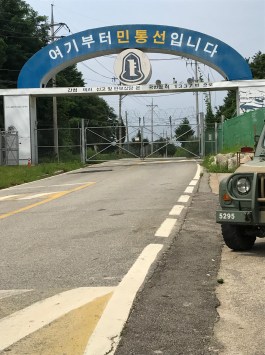 This militarized reality is not new. Technically the Koreas are still at war and have been for over 60 years. South Koreans (and North Koreans I am guessing) have lived with this precarious situation for multiple generations. Over the past 20 years, I have seen friends and family members who seem to have grown accustomed to the carefully choreographed dangerous dance that happens on a regular basis between the Koreas. In most cases, life goes on as normal, especially in Seoul.
 FAKEQUITY