Guest Post: Failing International Adoptees

Editor’s Note: This week we welcome another guest blog post by Marki Schillinger. Marki writes about a current event involving a transracial international adoptee and failures of our adoption systems and government to embrace adoptees. Broadening our views and being made aware of different experiences and lives is an important of racial equity work. Today we share a perspective from the international transracial adoption community.

Please also take a moment to vote. This is the last Fakequity blog post before the 2016 presidential election. Every election is important, but this one is really important. We won’t tell you who and what to vote for, but we will give you a virtual high five or fakequity onion (an old joke for longtime folllowers) for voting. -Erin, fakequity editor
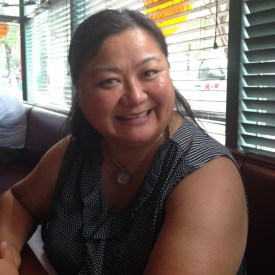
marki-photo

Imagine a three-year-old boy. Maybe it’s your own child, a neighbor boy, or your nephew. Can you picture him? Maybe he has dark curly hair, beautiful eyelashes, or that little crooked smile. Is he speaking yet? What are his favorite words? Does he know the A-B-C song? Isn’t it cute, the way he sings it, but misses some of the letters? Take a moment to picture that child you know, and hold him in your mind. Now imagine that everyone is telling the mother or caretakers of that child that sending him overseas will improve his life. He will have opportunities not available to him here. The child is moved to a foreign country to live with a new mother, father, and family.

The boy is being adopted. The adoption agency has arranged for him to travel and live with his new family in a foreign country. The new family makes promises to embrace the boy and raise him as their own with all the rights, responsibilities, and privileges of that country. The adoption agency accepts money to help the new adoptive parents make the boy their son. Maybe he’s packed his favorite toy, bundled in a jacket, and you sneak a few of his favorite crackers into a bag for him. You give him his favorite book and tuck a picture of the two of you inside. You hope and pray he doesn’t forget you. In the new country, the little boy tries to communicate with his new family. The new family speaks a different language and doesn’t understand what he is asking. The boy starts to cry. The boy cries harder, because the people all around him look so different, they don’t look like the people back home. The new mother offers the boy something to eat, hoping he will calm down. The boy cries even harder, because it doesn’t look like food, it doesn’t smell familiar, and he wants to go home. Home to a country now lost to him. The boy’s experience is familiar for many transnational adoptees.

Adam Crasper, a 40-year old Korean Adoptee who is pending deportation back to South Korea, a country he has not called home since being adopted at three. Adam was adopted from South Korea with his older sister. His first American family gave up, and returned Adam and his sister to foster care when Adam was 10 years old. His parents and American systems failed to naturalize Adam and make him an American citizen. After bouncing around several foster homes, at age 12 Adam and his sister were separated and Adam was adopted by his second American family, Dolly and Thomas Crasper. Adam joined several kids already in the Crasper’s care, as many as 10 other kids at one time. However, at the age of 16, it Adam was kicked out of the Crasper home and alleged the Craspers abused him. News articles report Dolly and Thomas Crasper were arrested for physical and sexual abuse, and rape. The Craspers also failed to ensure Adam was naturalized as an American citizen. After being kicked out of the Crasper home, Adam tried to survive, but either did not have the skills and/or made poor decisions and was convicted of crimes including burglary and assault.

Later, as an adult who had put his criminal past behind him, Adam found that he did not have American citizenship. He tried to start the process by applying for a Green Card. However, his attempts were cut short, when Federal Authorities realized Adam was not an American Citizen and based on his criminal history, he would be deported back to South Korea, the Country he had not called home since the age of three.

Adam was legally bought and paid for by American parents so he could be raised here in the USA as their son. Adam was forced to migrate to the USA. This was not Adam’s decision.  Adults made this decision and Adam’s life was radically altered. Adam’s American parents, likely white and definitely not Korean, made promises. They promised to raise Adam as an American with all the benefits and responsibilities of an American citizen. Not only did they fail, but I don’t see that they have taken any responsibility for this failure.  Our judicial system has given them a pass. They bear no legal responsibility, nor consequences for their failure to protect Adam from deportation.

Adam’s second American family, likely required Adam to live up to American standards and assimilate into their American lifestyle. Their failures are attached to Adam as he sits without American citizenship awaiting deportation. They added to the complicated emotional toll that Adam already faced having lost his family in Korea, rejected from his first adoptive home, and separation from his only biological relative, his older sister. Adam was made responsible for this heavy emotional toll, furthermore, the Crasper’s do not appear to bear any responsibility for Adam’s failure to gain citizenship.

I wonder, is this the American life that South Korea envisioned when they promoted the adoption? As Adam faces deportation, are adoption agencies bearing any responsibility for their failures to ensure safe and competent adoption placements? Adam appears the sole recipient of consequences related to failures of the adults in his life to help him gain and/or ensure he gained American Citizenship.

Yes, Adam broke the law and yes he owes a debt to society. Those are his responsibilities. However, if the adults in his life had met their responsibilities he would pay his debt and move forward rather than now face deportation to a country he was taken from once before. In our racial equity work, we must think about the potential consequences of our actions or inactions. We should think about those who need a voice and work to fix systems to ensure harm isn’t done.

Our American adoption system failed Adam and other international adoptees of color. I don’t want to fail Adam. I want my voice heard – I want Adam and countless other transnational adoptees, who do not have citizenship, to know that I support them and know they are American citizens who deserve those rights and responsibilities. Please join me in supporting the Adoptee Citizenship Act (ACA), which will bestow citizenship to countless adoptees who, like Adam, had adults fail to ensure they received it after adopting them. Please sign the Adoptee Citizenship Act postcard by November 21, 2016 to add your voice to protecting international adoptees.

Written by Marki Schillinger.
Marki is a Korean Adoptee who grew up in the fabulous Pacific Northwest. She is fan of most sports, a WNBA season ticket-holder– Go Storm!, and works in public service in order to support her bike-touring adventures.


Guest Post: The million-dollar question: am I a catalyst for change?

Editor’s Note from Erin: We welcome a guest post from Lilliann Paine from Milwaukee, Wisconsin. We’re excited to have a fresh point-of-view, and one from outside of Washington State. Much of racial equity work includes diversifying who we hear from, so thank you Lilliann for sharing your thoughts and broadening our views outside of Washington.

paine2016There is a high cost along with the toll of emotional labor that comes with being a catalyst for change. I am learning to “speak up and speak out” without losing myself. There are moments when I protect myself with silence. There are other moments when I do my damnedest not to succumb to the bulling of elitist elders and privileged peers. At this point in life, I want to learn and practice being more strategic.

It’s not easy being the first “anything.” Legacies are sustained intergenerationally, or so my elders say. However, if each generation speaks a different language and there are no translators, how does the work get done? How are legacies passed down? A generation frustrated with potential is the result of it all; how can change be promoted when it is not understood?

I am also the beneficiary of the Chapter 220 program, a state led solution to de-segregate public schools. From kindergarten through high school, I was shaped in an environment that wasn’t always fair or just. Consequently, there were few people who looked like me. As a Chapter 220 student, I learned to navigate spaces that were racially isolating, while simultaneously helping to change the spaces just by being present as part of the counter-culture—being the opposite of what the dominate counterpart considers to be the “other.” My Chapter 220 experience prepared me for the real world—academically, socially, and professionally. This is important to know as the lens through which I am interpreting my lived experience.

ADDING UP THE COST
When I became aware of power structures and the role I played in maintaining them, I wanted things to change. I encountered some moments that required me to add up the cost of daring greatly, you may experience them too:

1)      You will be called names – described as feisty, being intimidating, threatening or practicing relational aggression.

2)      You will be misunderstood – Reyna Biddy said it best: “soon you’ll realize that many people will love the idea of you but lack the maturity to handle the reality of you.”

3)      You will experience isolation – everyone wants to be radical until they see what it actually entails.

4)      Elitist Elder Syndrome, aka bad mentor of a certain age and generation – a) they will make you feel small for having big ideas; b) they will exhibit the psychological defense mechanism of projection (“I was just like you when I was your age therefore I know exactly what you are going through and what you need to do”); c) they will exploit – take advantage of rather than develop your skill set; d) they will undermine you by taking your ideas to be their own; e) render you invisible or make you hyper-visible out of their fear of being replaced or forgotten.

5)      Your lived experience will be discredited/disrespected/devalued.

I AM A CATALYST FOR CHANGE!
Living every single day with institutionalized racism and then having to argue its very existence is taxing. I should not be expected to speak on behalf of people of color everywhere. I should not be the barometer of racism.

My academic training is in public health. Once you opt into public health, one does not simply opt out, but leads and leads daringly. My public health experience has a foundation in community building. I convened groups that service “the economically vulnerable and disenfranchised” with a collective interest in reducing infant mortality. I helped to push the urgency for change around how individuals and organizations think about health and social determinants of health. I have the honor of amplifying the voice of communities with whom I have a shared lived experience, while being a resource to my academic peers and colleagues.

A few things to consider when you are a catalyst for change:
1) A heightened sense of emotional intelligence, empathy and capacity for collaboration as it relates to our concepts of inclusion, diversity and equity is required of you.

2) You can’t do this work alone. Alicia Garza #BlackLivesMatter Co-Founder said it best: “Co-conspiracy is about what we do in action, not just in language.” Black Girl Dangerous paints a perfect picture of the difference between taking action verses performance.

3) Professionally, academically and socially do not create cultural exceptionalism dynamics. I don’t know how many times I’ve been hit with “you’re different than the others,” or “you make for a great ambassador,” or even been straight out called a token! The benefits of creating a pathway to success and equitable representation outweigh the tokenism of tasteful diversity.

4) As a person of color, I have to remind myself that I have to care about people, not for them! I’ve been put in environments where it was an unspoken rule that I protect people from their ignorance, whether it is willful or not around racial justice. Cultural awareness is like a virtue!

5) Allow people to do their own research! Or be prepared for the emotional labor it will take to build capacity on an individual level before creating change on an organizational or global level.

I accept that racial injustice/battle fatigue could be a medical diagnosis and that self-care is a form of self-love. Folks in informal and/or formal positions of leadership must come correct about social justice work. This work cannot be viewed as a burden, but a clarion call to be the change you want to see. Justice does not come without consequences.

Posted by Lilliann Paine, is a public health advocate. She says: Public Health is my life! I have held various positions in the health field, having worked in local government, academic settings and the healthcare systems. I have advocated for equity, justice and fairness. I am energetic and cordial, yet grounded with a work ethic that is guided by integrity and productivity. Myers-Briggs: ESTJ (Extraversion, Sensing, Thinking, Judgment) – I flex from Sensing to Intuition; Thinking to Feeling. I’m a CoreAlign Alum: Speak Race to Power Fellow.

The views I am expressing are my own and do not reflect any past or current institutional affiliation. I am positioned in age between Gen X and the Millennials. I’m on the older end of the millennial spectrum. I was born and raised in Milwaukee, Wisconsin! I grew up in a city with poor health rankings, unabated poverty, seemingly intractable unemployment and deteriorating urban core beset with socioeconomic disparities that challenge the best thinking for place-based solutions.

Guest Poet: You Don’t Even Know Me

We’re excited to share a bonus Fakequity post. Dillon Prevo is our first guest writer and poet, and our first youth writer. Dillon is a middle school student and wrote this as part of a class assignment. Thank you Dillon.

By Dillon Prevo20160907_081149

I’m calm in your class
I listen to the rules
I’m big
I’m mixed
But I don’t look that fit
Music is my thing
Science goes by like a dream
But it doesn’t bother me too much
When I get a B
You know
I’ve been wondering lately
Trying to figure out just how it could be
That you’re around me so often
And still don’t know a thing about me
You see me on TV
Catching a 20 yard TD
Then you change the channel
And you see me there again
I’m a doctor
Helping a sick person
The police say I’m a bad person
But at the same time
My friends think I’m doing something right
When I reach in my pocket
You think I’m grabbing for a knife
But I’m just grabbing for a candy bar at night
I’m wearing big T-shirts
To hide from that one fact
But you still say to me
I’m really not that fat
You know
I’ve been wondering lately
How we’re close knit like scarves
But you don’t know a thing about me
I live right next door to you
We say “hi” all the time
You say you like when I play my drums
But you really want me to hush
I walk down the street with my dog
You think it’s aggressive
Just because I’m black
All it wants is some love
But you shun it
Then turn your back
You’re walking down the street
With your baby in hand
Grip as tight as a python
I’m walking towards you
My phone yells at me
I pick it up
You think I’m gonna hurt you
I think you’re gonna hurt me
But yet,
We pass peacefully
I’ve been wondering lately
Trying to figure out just how it could be
That we’re around each other so often
And still don’t know a thing about me
I’m hanging out at your house
You say
“Yo fam, wanna play some B-Ball”
But I just wanna chill
You’re wanting to get lit
When I just wanna sit
You call me slow as a slug
I think you’re just being a bug
When I’m at practice
You’re telling me I suck
But I’m pretty happy getting on B team
You’re only friendly to me
When we’re alone
You know I’ve been wondering lately
How you are around me so much
But still don’t know a thing about me
Last night I had a dream
That I was flying in the sky
People were waving like I was a king
No one was checking their bags
Gripping their children with their long veiny hands
The sun was smiling at me
The planets, spinning like Frisbees
Spaceships wooshing past me
Tiny planets on my left
Big ones on my right
I see myself in in pre-school
Playing with my blocks
The nostalgia hits me like a soft rock
I see myself in peace sleeping by the teams of geese
I see myself hitting someone
Then getting sad
Because of that one golden rule
Now I’m running
Fast as Usain Bolt
I see myself in the future
Shaking the hand of the crown
I see myself with my son, Will
Wondering how well off Will will be
But now night turns to day
I return to my still body
But just lay
As I wake up
I try to remember
The bright summer day.

Dillon Prevo is an 8th grader at Washington Middle School. He lives with his family and their dog Zoey in south Seattle. When he’s not at school or on the ultimate frisbee field, he enjoys reading and playing video games.


White Fragility – No, it is Using Power to Hoard Emotional Attention

white-fragilityI just finished watching the final presidential debate. What was that? I need another beer.

According to one report, Republican candidate Donald Trump had around forty “fleeting interjections.” You know the little jabs, such as “such a nasty woman.” For reference, Secretary Clinton had less than five fleeting interjections. That was even a new record for Trump. I’ll save policy commentary and thoughts about why there is widespread support for Trump as a presidential candidate for another post. Tonight, I want to focus on why just calling his behavior “interruptions” or “fleeting interjections” masks what is really happening. It creates an audience that tolerates and comes to expect that type of behavior as typical, or at the very least see it as acceptable/accepted. What would happen if journalist and media framed that behavior as “rudely mansplaining” or “unpresidential behavior.” Even if Trump doesn’t or won’t stop, we stop sending the message that this is acceptable behavior.

I don’t believe there is “neutral” terminology, especially in the realm of racial equity. By using terms that appear more “neutral” or less triggering, what we are really communicating is we are comfortable for white superiority and white people in power. A racial justice speaker I highly respect said, we need to stop talking about racism, and talk more about “structural racialization” because talking about racism shuts down conversations.”

Who shuts down when we talk about racism?
I’ve started talking about both structural racialization and systems of white supremacy and racism, as a way to have audiences get used to hearing different terms. Participants don’t have to agree or even use the terms white supremacy and racism, but I do ask them to acknowledge and create a space for how others frame these conversations. When we continue to use language or approaches that make white people in power feel comfortable, we uphold the systems we hope to dismantle and continue to (unintentionally) center whiteness.

If we don’t work hard and stay vigilant we default to centering whiteness. Here is one example from my own work I noticed a couple years ago. I work hard to share books and resources that are written by people of color; I want to intentionally raise the narratives of people of color. With books, it is fairly easy to know if the author is a person of color, but with articles, it not as easy and often takes extra time to conduct some internet sleuthing. When I started searching for the authors of recent racial equity articles I was sharing and recommending, I found most of the authors are white. Yes, even in the racial equity field most of the authors are white. If I stop to think about who has access to publishing and media this shouldn’t come as a surprise, even on the topic of racism white people have a louder public platform.

Too Much Emphasis on White Fragility
Recently, I’ve noticed a lot of emphasis on white fragility. I appreciate the term brings an awareness to a phenomenon that is all too common in conversations about racism. Yet, one of the unintended consequences is that this new trendy term has created another way to continue to center whiteness in conversations about racism. Don’t get me wrong, understanding whiteness as a social construction is an important part of understanding racism. The thing is systems default to centering whiteness, and the focus on white fragility has given some white people and white institutions the ability to continue to center whiteness under the banner of racial equity. I’ve heard of numerous organizations that are giddy about the idea of talking about white fragility and happily dedicate a lot of resources to a white facilitator to come talk about it. My question is if your organization is serious about racial equity and dismantling systems of racism, why aren’t you giddy about hearing from people of color, you know the ones most directly impacted by racism? Are you paying consultants of color fair rates or rates that compare to white facilitators? The idea that white people need to hear about racism from another white person is the very system that we are trying to dismantle. I also understand whites need to do their ‘own work,’ but be careful in doing your own work you’re not perpetuating the same system of inequities that got us here.

We need to start talking about concepts like white fragility in terms that more accurately describe how the behavior is upholding racism. White fragility isn’t a state, it actually is a chosen action/reaction. We all realize that white people aren’t really fragile, right? The system just treats white people as if they are fragile. The system is set up to value white folks feelings more than the lives of people of color.

Here are a few draft suggestions to move racial equity concepts that center whiteness to more descriptive terms that move us closer to racial justice.

  • White Fragility = Hoarding of Emotional Attention
  • White Defensiveness = Refusing to Believe People of Color
  • White Guilt = Stalling Until I Feel Better 
  • White Silence = I Don’t Care Enough to Say Something 
  • White Tears = Please Feel Sorry for Me Too

If you tell someone, they are “displaying signs of white fragility” they might just be a little embarrassed and the shrug it off. But if you tell someone, they are using their privilege to “hoard emotional attention” they might pause to reflect on their behavior and make adjustments, especially if they are really a true ally/advocate for racial equity.

Posted by Heidi Schillinger

Calling Out and Calling In, we need to practice both

pandaHi, I’m going to ask for a little forgiveness with this week’s post. I need to get to bed at a reasonable hour, midnight, I had a migraine today and sleep is what is needed to recover. I didn’t proofread the post very well. So if you are an early reader try to ignore the odd sentences.



I’m listening to First Lady Michelle Obama’s campaign speech at Southern New Hampshire University. In many ways her speech broke out of the usual campaign stump speech and instead she called out bad behavior, and called in the audience to use their voice to say what they stand for. I’m not going to get into politics or breakdown this election. I will instead write about how we need to be bold and call out when things aren’t racially equitable or even equal.

Oh those Meetings
A good majority of meetings I go to a list of group norms, agreements, values, or practices will be generated. They often have words like “We agree to: Confidentiality, stepping back and leaning in, practice best intention, silence cell phones, etc.” Even within the meetings I run we put out table tents with the Color Brave Space meeting format Heidi created and we borrow and model our meeting on. The intention of these values is good – to create a standard and accountability practice for us to use.

However, I don’t think we’re particularly good about living these values in ways that create and promote racial equity. Too often we continue to default to the same practices and power dynamics we always do. The same people speak or speak first, set the agenda, control the clock, and we don’t stop to call it out. We all need to get better about slowing down meetings and recognizing when we fall into these familiar patterns.

Recently at a meeting I hosted we opened up the meeting inviting people to abide by the Color Brave Space principles. One of the points says: “Notice Power Dynamics in the Room.” Power shows up in who speaks, who disengages, who gets emotional, and in our word choices. At the meeting our presenter, an African American/Black, asked the group a question. An African American well-respected woman, answered and gave feedback. After she spoke, a white man followed up to add to her statement. The presenter stopped and asked the first person to answer how she felt about having her comment followed up on. She said “I felt like he was using his power to change what I said.” The interaction made many uncomfortable, but it was in the uncomfortable moment that learning happened. The presenter was bold to follow up and hold everyone accountable to the Color Brave Space principles and creating space in his presentation to dive headfirst into looking at how power dynamics play out. This is something we need to do more – slow down and check in with people.

Calling In
The term ‘calling in’ means we can’t always be mean and call out people – the scorched earth method of racial equity work leaves a lot of victims in its wake.

In the video clip of First Lady Michelle Obama she called in people to stand with her and to take a stand against bigotry and women-hating. She asked people to use their power as voters to women and girls need to be seen and valued. We all need to do this, to call in and invite allies to share and stand with us.

I need to get better about calling in people to support racial equity work. The more I do racial justice and community building work, I find myself getting more bitter, tired, stressed, and jaded. This isn’t a great formula for wanting to partner and build relationships with people who don’t have the same world views or are starting their journey on racial equity. Calling in and asking people to learn alongside me is a better long term strategy and it takes intentional slowing down and patience. I also recognize as people of color the burden often falls to us to be in the role of  educator which is taxing and tiring, but maybe if we invest time on the front end in the long term we will see better results.

I also need to call in partners to share the burden. It is easy to want to be seen as the champion for racial equity, we get invited to sit on too many task forces, to share our opinions, sometimes we get invited to cool events and we get to meet amazing people. All of this is fun but we need to share and invite people along otherwise we’ll burn out. We need to build a movement which means sharing. We need to share access to information and meetings, we need to be patient and kind in explaining why things need to change, and we need to be generous with forgiveness.  This doesn’t mean we stop calling out bad behavior, but it means once we call out, we also call in people to change and join in the movement to create more inclusive and welcoming communities for people of color.

Prioritize Equity? I Don’t Know What that Means.

Before we start, let’s talk about voting. If you aren’t registered to vote stop reading and get registered to vote. Monday, 10 October is the last day in Washington to register to vote by mail or online, in-person voter registration accepted until 31 October.

I’ve been reading Congressman John Lewis’ book March Part 3. In the graphic novel he shares how African Americans in the 1960s stood in line in the scorching sun with no water to register to vote. They were threatened, harassed, and belittled for wanting to vote. 1960s was in the lifetime of many in our friends, neighbors, and elders. Voting is how we have a voice in systems and government, we need to use our vote. MomsRising.org is offering these cool reminder postcards. Sign up for a pack of postcards and mail them to someone who might need a reminder to vote.

No to Equity-Pretty

8988899

Um no, don’t study equity. Learn about the experiences of people of color.

In graduate school my speech professor said “People don’t have issues, they have problems. Stop using the word issues.” I feel the same way about equity. We don’t have equity; we work toward equitable solutions. Let’s get more precise with our language and stop verbally dancing around and trying to make our language equity-pretty.

“It’s the Equity Factor” NOT
Every few meetings I’ll hear someone say “we need to pay attention to equity,” “it’s the equity factor,” or I read this on a political rally sign “prioritize equity.” When I hear these statements I screw my face and feign a sneeze to cover my inadequate poker face. The sentiment of these statements are correct we should prioritize equitable strategies and we should pay attention to the outcomes of inequitable practices. And there is no such thing as an ‘equity factor’ (we’ve already blogged about that).

We need to be more precise in our language around race and racial equity. When we speak in generalities we don’t confront the real problems and the solutions are harder to find. First can we agree to stop saying equity, and be more precise and define the equity we’re talking about – say racial equity, or whatever form of equity you’re talking about – gender equity, socio-economical equity, etc. I once gave a presentation to a room full of wanna-be-philanthropist. I kept saying equity and they gave me blank looks, I finally asked “What does equity mean to you?” One bold person said “financial equity, as in we make money.” I regretted asking the question.

Let’s break down how to be more precise with the three statements above:

  • “We need to pay attention to equity” – translated into more precise language: We need to pay attention to institutional and systemic practices holding back people of color, or We need to pay attention to racist practices allowing institutional and systemic racism to prevail.
  • “It’s the equity factor” – becomes: There isn’t an ‘equity factor,’ there are barriers for people of color.
  • “Prioritize equity” – Prioritize people of color.

Many times we speak in coded language around race because it is safer and easier to use words such as diversity, equity, and to talk about everything but people of color. When I rewrote the statements they also became more pointed and used people of color, racism, and barriers – all words that make some people uncomfortable. Sometimes we have to be uncomfortable in order to fix problems.

What to Say and Do Instead
A few months ago I attended a session around cross-racial coalition building. During the day we met in our self-identified racial groups to caucus. During the report out each of the racial caucuses presented what they wanted other groups to know about their race group. Two of the underlying threads that ran through all of the caucuses was people of color want to be seen, and we want people to stop making assumptions about our experiences. My personal take away was each racial caucus wanted to feel a sense of belonging to each other and accountable to each other including in our language.

Instead of talking about equity, talk about people of color. People of color want to be seen, not grouped into an ‘equity’ bucket. Systems and dominant white culture are uncomfortable talking about race in explicit and clear terms. My buddy Kirk and I were joking that people still want to whisper when we talk about race, hushed tones “he’s the Black man,” or “she’s the short one with dark hair, maybe Asian.” Kirk said “We’re adults we can say Black, we can say Asian, and White.”

When we use precise language we see people and we can use our words to create solutions that hold us accountable to each other. In the examples above when we have clarity with our racial language the solutions to inequitable problems become clearer. Such as we identify who is part of the problem. Institution or system that should be named and are able to hold them more accountable to working toward equitable solutions. We can also use language to call out racism. Calling out racism is a good thing, despite the cringe factor. When we call out racist practices we can help to undo-the practices that allow racism to prevail. And precise language around race makes visible people of color.

Take down all of your signs that say “Prioritize Equity” and change them to “Prioritize People of Color.” Rewrite the workplan and eliminate the column that says “equity” and start writing in strategies that put people of color at the center of your work.

Posted by Erin Okuno

Whose in Power and Power Racial Equity Rangers

soupThe 1990s and 2000s were all about diversity efforts. Diversity committees were as common as Seinfeld references or Power Rangers for the Millennials. Somewhere along the way people realized diversifying organizations wasn’t enough and added the term diversity and inclusion. Today we are recognizing inclusion isn’t enough, we have to pay attention to power and call out power dynamics.

Power shows up in many different ways, the basic concept is who is in control. Such as who is in control of the agenda, who’s speaking and not speaking, who is in control of money and resources, who controls decision making. Power is all around us – such as right now at home I have the power of the remote control and I want to watch Grey’s Anatomy, not Frozen for the 600 time.

The Numbers
Recently, I was at a meeting with many notable community leaders of color. At one point I did the silent count, the one that always happens – how many pocs are in the room, it is something I unconsciously do then becomes a conscious thought. I count to see if the ‘numbers’ are there, to see if I am alone or with others; am I alone or in the safety of others who may have similar lived experiences. In this meeting I noticed pocs were in the majority. We had the numbers, including many white allies, and we had a cross-racial and cross-cultural group. Yet I also noticed while pocs were in the majority, we were still having to push a racial equity agenda because we were operating in a dominate society framework, in this case a government process. We had to jump through procedural hoops, justify our asks, and prove our requests are justified. I slipped a note to a friend saying “Majority pocs but still the same conversation.” She nodded, while we had the numbers we couldn’t impact change quickly enough because of power dynamics.

It isn’t enough to invite a diverse group of people to a table, we need to be aware of power dynamics and work to redistribute power as much as possible. At the meeting I was surrounded by so many leaders that have helped to shape Seattle, yet because we were working on a project on behalf of a government body the power dynamics were still present — we knew our place was to give input on someone else’s plan, call out where things could be stronger, and push for incremental change. We weren’t there to propose anything too radical or not politically feasible, we had the power to propose such ideas but we knew ultimately it wasn’t going to happen so why spend time on ideas that would eventually get vetoed. It was exhausting, but at least we had the numbers to share the burden.

Who’s Table – Redistributing Power
Diversity isn’t enough, in the meeting I mentioned above pocs had the numbers, but we didn’t have enough power to change the power dynamics. We understood we were participating in someone else’s process and brought in to give feedback and suggestions, but ultimately we didn’t have decision making power. We had a lot of other forms of power – access to a very select process, proximity to power, ability to influence but not control. All of this is to say sometimes we need to change power dynamics to get different results.

Last year my organization ran a large survey project to look at family engagement. In that project we worked to try to distribute power and other resources, we also used the value of building trust. We actively worked to redistribute power and resources. Such as parents and partners wrote and edited the survey questions, we shared funds using an equitable model (not equal funding) to make the survey work possible, we opened up the process and allowed partners to shape their survey collection methods versus a very prescribed methodology. We got more buy-in and better long lasting results because of our open process. I also feel I have better and deeper relationships with some of our partners because they saw our organization as a trusting partner.

power-rangersPower Racial Equity Rangers
Can we all become more attuned to power dynamics, like a modern day version of the 1990s Power Rangers? We can become the Power Racial Equity Rangers and wear colored tight and masks, just like the TV version. Maybe not, bad visuals, but we need to be like the TV Power Rangers in fighting for justice, in this case racial justice. We need to get better about sharing power in its many forms, calling each other out when we hog and take up too much power including resources, and we should acknowledge sometimes power is stepping back and saying I don’t need something if it means we can share with others.

I hear the Power Rangers are making a come back, I hope they share the secrets of their powers as a way of redistributing their powers so I can stop sitting in meetings where I’m in the majority but still part of a dominant landscape.

Posted by Erin Okuno

Things that are Effed Up

Heidi is biking and this means we won’t nag her about equity and analyzing power, community engagement, and all of the stuff that makes this blog fun. CiKeithia and I are left to our own analysis of race, equity, and power. So this week you get a little less social work niceness and more calling b.s. as b.s.

This post isn’t for you if you want deep understanding about race or a power analysis. This week’s blog post is full of things that are effed up. If you don’t like crabby-cranky and blunt blog posts, click out and peace out until next week when Heidi is back to help give us some balance and perspective. Heidi, I have a beer waiting for you — a really big one, so come back, the blog needs you.

A List of Things that are Effed Up:

the_panda_scream_by_ringtailmaki-d4n960r1

Picture credit: deviant art, the panda scream by ringtailmaki

A ‘brain trust’ formed around serving English language learners and everyone speaks English as a first language? That’s Effed Up. Really? We’re going to talk about learning English with other English speakers?

Staff at an organization wrote ‘diversity’ into their values, yet a white senior manager changed the word to ‘respect’ because ‘diversity’ is too ‘loaded.’ That’s Effed Up. Yo, Senior Manager: Your uncomfortableness with the word diversity is your problem; we’re not here to make you comfortable, you’ve been more-or-less comfortable your entire life. What do you want some chardonnay to make your ‘diversity’ statement sound better? Quit with the tone policing.

Having a training around race, diversity, and equity and having a white person argue the statistics presented are not valid in this scenario. In other words, he didn’t want to acknowledge race is a problem. That’s effed up. Dude, stick out the training, you might learn something. Show what you’re learning, not what you already know– we don’t need know-it-alls.

Being invited to review a grant process and analyze it for ‘equity’ from an organization that has a racial equity theory of change, but has never shared a dollar with community groups closest to communities of color. That’s effed up. Really, you’re going to ask for more, but not bother to build relationships or share – no thanks.

Listening to a friend who tells me her son being called a terrorist because he’s an immigrant. He’s in elementary school and now has to defend himself, his culture, his heritage, and his faith. Effed up.

The marketing department emailed a staff person of color asking about the languages spoken in the Somali community. The poc staff person isn’t Somali and only speaks English – was she supposed to know any more than a white person is expected to know? That’s effed up. Do your own work, instead of emailing use the same computer to ask Google what languages Somali’s speak, or better yet get out of the building and meet some people in the community.

An intermediary organization keeps inviting poc organizers to meetings as “thought partners,” without offering compensation. This same organization spent thousands of dollars hiring outside racial equity consultants, several of the consultants were white people. They don’t know how to think their own thoughts around race, or they don’t listen to their consultants and community partners.  Stop spending money on large consultants and pass that through to smaller poc organizations. That’s effed up!

Listening to an excuse from a white person. Her organization couldn’t focus on racial equity until now because they are just now stable enough to tackle race. That’s effed up. Couldn’t it be focusing only on one narrow segment of society (whites) contributed to the almost near death of the org in the first place.

What to Do About it?

Normally in the Fakequity blog posts we try to offer some solutions or some tips. This week I’m not going to do that, my heart isn’t into it. This week I’m sitting with the effed up feeling and letting it linger for a moment. This week, I’m tired. I’m tired of having to think critically about race and ‘helping’ white people, and some pocs, validate their thinking or ‘gently’ tell them they are wrong. When things are effed up, I don’t bring my best self. I get annoyed and I don’t want to be annoyed, so instead of being annoyed I’m going to just sit with the effed up-ness and say ‘its effed up.’ I can’t fix it all and it’s not my job to validate, fix, or think for others.

Tomorrow, after some sleep, I’ll put on my game face and go back out and do what I’m ‘supposed to do.’ I’m supposed to listen, politely wait for a break in the conversation, then ask a probing question to redirect others to understand race a little more thoroughly and thoughtfully. I’m supposed to sit in meetings about regulations, grants, and policies and say “tell me about your community engagement plan… do you have one? Let’s figure it out…” I’m supposed to spend time with white allies in evening meetings to plan or watch board meetings, even though I long to be home with my own kids. I’ll keep doing it because I can’t figure out how to undo the effed up-ness without doing what I’m supposed to do. Maybe the week after and the week after will be a little less messed up and I can stop doing what ‘I’m supposed to’ and start doing something that nourishes and feeds my relations more.

Tonight, I’m going to let this sit in my brain and in my heart a little longer and be sad for a moment – there is so much to be sad about. Tomorrow it will be better – cause it always is, cause we always have hope, and we have each other.

Posted by Erin Okuno, with help from CiKeithia Pugh

Back to Basic: Equality, Equity, and How to Spot the Differences

2016-07-05 10.50.32.jpg

Analogy: While all of these LEGO fish are equal size, one might need something different to achieve the same prosperity.

Today we’re going to look at the difference between equality and equity. And because this is the Fakequity blog, we’ll throw in some real life examples. Sorry bro (as in my real-life bro) no infographic or web-comic since those take a little longer to develop, you’ll actually have to read.

Equality versus Equity

A few weeks ago I was playing a matching game with my two kids, they are three years apart which makes finding a game we can enjoy more challenging. My older kid has a strong sense of fairness and doesn’t understand or fully empathize his younger sister can’t play at the same level. My older one caught me helping the younger and said “Hey! No cheating!” I shot back: “It’s not cheating, it’s [age/development] equity [when I help], we’re not practicing equality.” He gave me a look of annoyance and went back to playing, he’s seven so I’m sure most of the conversation was lost on him. Even I’m surprised I reflectively gave him that answer, might as well start his social justice education young.

Most people understand what equal looks like – give everyone exactly the same thing, cut a sandwich in half and you have two equal parts, order two milk teas and they mostly have equal amounts of boba tapioca balls. Equality has its place, there are times when equal is the right thing to do. When we are in meetings giving everyone equal speaking time ensures we are all heard, or we set a meeting location equally between people to equally inconvenience everyone, or giving equal funds to two identical organizations is fair.

Equity is very different than equality. Equity takes more practice to understand and achieve. My favorite definition of equity is from Junious Williams who shared it when we were on a panel together at PolicyLink’s conference. He said “I go back to my law school definition of equity: What will it take to make a person whole?” I like this definition because it allows us to think imaginatively and roots us back in the sense of giving differently to different people which is at the heart of what equity work is about – changing systems, processes, and allowing people and communities of color to say what is important and what is needed to make ourselves and communities whole.

Don’t Confuse Equity and Equlity or I’ll Throw a Pen at You

Here is where it gets tricky. Equity has also become the latest buzz word, so it gets thrown around and misused all the time. Here is an example: “…school librarians have founded a Library Equity Team over the last few months. They plan to work together to demand a $10 per student budget for every school in Seattle.” Can you spot the misuse of the word equity? The Equity Team wants to demand $10 per student regardless of race, social economic status, etc. This demand is actually equality because it is demanding the same for every student. If they had said they are demanding a base rate of say $3 per student, and an additional $7 for students in schools with higher rates of free an reduced lunch (code for students of color), Title 1 school (again code for students of color), etc. that would be equity. Equity work is harder than trying to achieve equality. In the example above it is easy to say we’ll demand $10/per head. It will be harder to try to figure out which students need more or less.

I sometimes fall into the trap of equality versus equity too, so easy, so enticing like halo halo, a Filipino sweet treat, that is easy to drink and mysteriously disappears just like equality work. About a year ago I put together a project budget and set aside $5,000 to provide stipends to five partner organizations. I was planning on giving them each $1,000 to make it fair and simple, but in the long run the results don’t last. I had a moment of clarity while running off my halo halo drink; giving each partner $1,000 each was equal, some of our partners were better resourced, were serving fewer children, others had student populations that needed more services, etc. I went back to the group and explained the dilemma and asked if we could switch the system to ‘just request what you need upfront and we’ll work together to allocate the funds.’ In the end everyone’s requests were fully funded and the total ask amount was $5,000 – it is neat when things work out that way and the results are actually sticking because the group gave each other what we collectively needed.

In communities of color we have to pay attention to the nuances of equality versus equity. If we give every community of color the same, we screw over our smaller communities of color. For instance, if we give all ethnic and language based organizations the same stipend amount, we screw over smaller communities which may have more needs because they are newer to the country, have smaller donor bases, less political power to advocate for themselves. As communities of color we have to go into these situations looking for the overall good, which sometimes means saying we will take less to give more to communities who need more. An example is taking a pot of money and saying every community will take a base pay of XX% and smaller communities will get additional funds because they have more needs, higher overhead cost, and less ability to fundraise. This is what equity looks like – again harder to do, but the right solution.

One final thought about equity, every few meetings I hear someone say “It’s the equity factor…” and I want to throw a pen at them. There is no such thing as the “equity factor,” that is code for saying it’s about race or some other judgment we want to make. Be clear in your communication and don’t say equity unless you really know what it means – don’t make me throw a pen at you across a meeting room.

Posted by Erin

Invest in Coalitions, They Work

Before we start I want to honor the passing of Bob Santos. Uncle Bob was one of the Four Amigos or Gang of Four (Asian, Native American, African American, and Hispanic/Latino), who modeled how to work cross racially and cross culturally. The Four Amigos united communities of color and shaped Seattle into the city it is today – a place many of people of color call home and feel connected to because our cultural bonds are intact and we’ve held on a sense of place. While I didn’t know Bob, I know I wouldn’t be where I am without his work. I will do my part to honor his legacy, although I will have to leave the karaoke singing for which he was known to others. Rest in peace and power.

1-2016-07-19-18-09-30

Original Thinking
I recently took a trip to my home state. While packing I grabbed the book Original by Adam Grant and threw it into my carry on – beach reading right? Nah, I finally cracked it open on the flight back when the kid hogged the tablet with all of the downloaded shows. In reading the book, which wasn’t about race or equity, I started thinking about how to apply the ideas to racial equity work. Several chapters in I had the thought “we need original thinking around race in order to change” (albeit this wasn’t a wholly original thought, many others have thought it before). The old and current systems aren’t working for communities of color. We need to nurture and undo traditional power structures that stifle ‘new’ thinking and doing.

In the book the author talks about groupthink and how it kills original/new ideas. I agree, I see it all of the time when working with government agencies and larger organizations. Where I don’t see groupthink happening as much is within coalitions centered in communities of color (it does happen but I see it less). I might be biased here since I work for a coalition centered in communities of color, but I can say with certainty the conversations that take place in our coalition meetings happen because we center our work in communities of color and we talk about race.

Well attuned coalitions bring diverse people together, building towards a common purpose and goal. Divergent thoughts are allowed and explored so we can emerge with better results and a more united front. In other words, the policy work or end product has more equity built into it because more people of color have a chance to weigh in, play with the idea, and the outcome is a more original idea, not a boilerplate product coming out of a monolithic group. While it sounds easy, in reality it is harder to do. It takes a lot of time and energy. Timelines are blown, we have to slow down and redo work to get it more right, coalition work gets messy, people’s feelings sometimes get hurt, we have to report to superiors that work is delayed, but in the end the work is right.

How to Get a Coalition Right – Stopping the Echo Chamber
Coalitions centered in communities of color serve as places where communities of color can emphasize our collective values over the procedural rules that continue to hold us in boxes and uphold institutional racism. As the author of Original (the book) shares, “Rules [procedures] set limits that teach children [and adults] to adopt fixed views of the world. Values encourage children [and adults] to internalize principles for themselves.” When we talk about our values around community, culture, and race we’re getting to the heart of who we are and the type of community we want to create for ourselves. This is so much more interesting than talking about the things talked about at so many mainstream task force meetings.

Focusing on values versus procedures is hard for people who are used to movement and action. Constantly doing versus asking why we are doing something different or trying something new is a way we uphold institutional and systemic racism – the doing without attributing it to values keeps the same broken actions from repeating itself. As an example, why do we constantly send out online surveys to ask for opinions? We can say the value is to hear back from the community, but is this how the community wants to be heard – on paper asking pre-scripted questions, probably not. This type of opposition may be more keenly heard within a coalition than in an insular meeting.

Investing in Coalitions
Investing in coalitions can happen in so many different ways. One of the best ways is to join a coalition – invest time. If you have to give something up to make time for coalition work, look at your calendar and decide which meetings are white/mainstream echo chamber meetings – in other words which ones are a chorus of the like-minded and you’re not hearing anything new. The people at the ‘echo meetings’ may be great but you can still see them at lunch or at happy hour. Instead invest in coalitions that are making a difference for communities of color — open doors to a great supporter, bring new people into the coalition,  for our white partners and allies attend to your white coalition partners so their needs are met (outside of the coalition meeting) and they don’t overshadow the coalitions values and focus. Coalitions take work to sustain and thrive. The end result will be better returns on your investment of time and energy than going the old easy route.

Posted by Erin Okuno